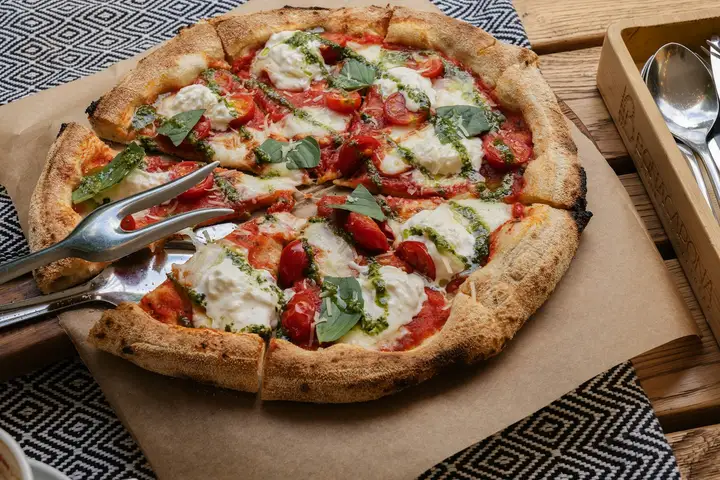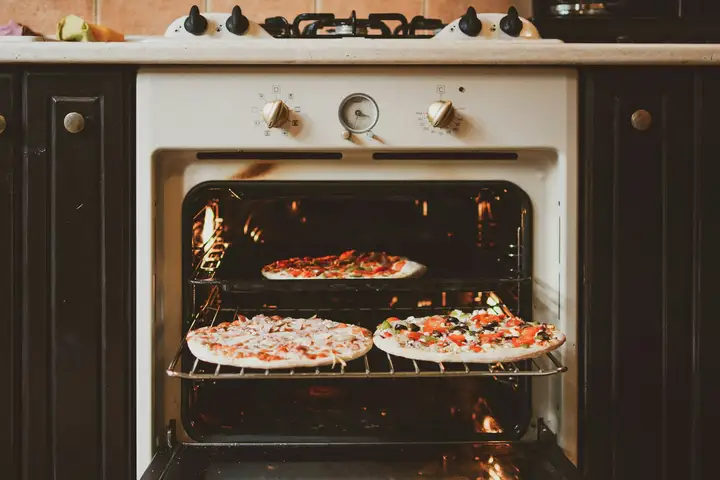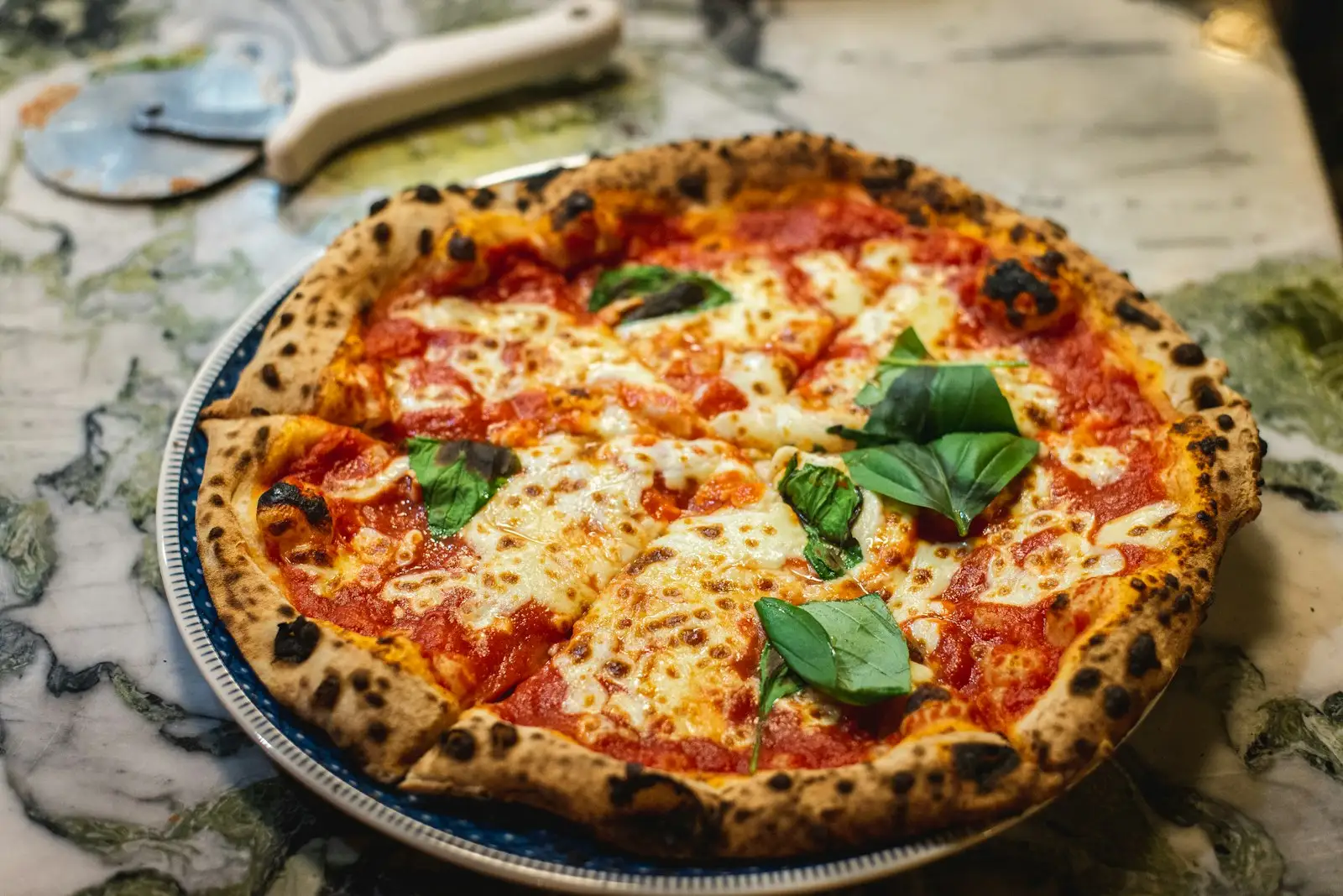
The best pizza oven temperature depends on the style: Neapolitan bakes at 850 to 950F for 60 to 90 seconds, New York style at 525 to 550F with the broiler engaged for 6 to 10 minutes, and Detroit at 500F in a steel pan for 12 to 15 minutes. Home ovens cap at 500 to 550F, so true Neapolitan needs an outdoor pizza oven; every other style is within reach of your kitchen. The temperature that ruins one pizza is the temperature that makes another one perfect. Here is the complete map, with Fahrenheit and Celsius side by side, plus the two rules that solve 90 percent of home-pizza-temperature confusion.
TL;DR
- By style: Neapolitan 850-950F (450-510C), New York 525-550F (275-290C) + broiler, Detroit 500F (260C), Sicilian 500F (260C), thin-and-crispy 500-550F (260-290C), reheating 425-450F (220-230C).
- By oven: home oven caps at 500-550F (use a pizza steel to compensate), outdoor gas/multi-fuel ovens (Ooni, Gozney) hit 950F, masonry/brick ovens reach 700-900F. If you are shopping for one, our best home pizza oven guide picks the right model by use-case.
- The two rules that fix most temperature mistakes: (1) stone or steel surface temperature is what cooks the pizza, not the air temperature your dial reports; (2) shorter bake = higher temperature, longer bake = lower temperature, picked by the style you are making.
- The single best home-oven upgrade: a $30 TempPro TP30 infrared thermometer (formerly ThermoPro) to read the actual stone temperature. Without it, you are guessing.
- The broiler trick: in a home oven, turn on the broiler 5 minutes before launching the pizza. The radiant heat from the top element gets the top of the pizza closer to the 700F+ temperatures real pizza ovens hit. Pairs with a pizza steel on the top rack.
- What kills it: baking below 450F (crust never sets), launching before the stone is at temperature (gummy bottom), reading the air temperature instead of the surface temperature, opening the oven door during a 60-second Neapolitan bake (loses 100F+ in 5 seconds).
The two rules that solve 90 percent of pizza-temperature confusion
If you remember nothing else from this article, remember these.
Rule 1: stone temperature, not air temperature
Your oven dial reads air temperature. Pizza cooks on the cooking surface (steel, stone, pan). The two are not the same.
For the first 30 to 45 minutes of preheat, the air in a home oven can be at 525F while the pizza steel is still at 425F. The stone is what transfers heat into the bottom of the pizza. If you launch the pie at this point, the top cooks (because the air is hot) but the bottom stays pale and soft (because the stone is still catching up). That is the gummy-bottom failure mode that ruins most first-attempt home pizzas.
The fix is an infrared thermometer. The TempPro TP30 is around $30 and points a laser at the stone. Wait until the surface reads at least 500F (or 750F for an outdoor pizza oven targeting Neapolitan), then launch. Without an infrared thermometer, you are guessing.
This rule applies in every oven type. Home oven, outdoor pizza oven, brick oven, electric oven. The cooking surface is what matters. The dial is a proxy at best, a lie at worst.
Rule 2: shorter bake means higher temperature
Pizza style is defined as much by bake time as by ingredients. The temperature has to match the bake time:
- 60 to 90 second bake (Neapolitan): 850-950F. Anything cooler and the bake stretches, the crust dries out, the cheese over-cooks before the dough sets.
- 6 to 10 minute bake (New York): 525-550F. Anything hotter and the bottom burns before the top sets; anything cooler and the crust never crisps.
- 12 to 22 minute bake (Detroit, Sicilian): 500F. The thicker pan-pizza dough needs longer at lower heat for the interior to cook through without the top burning.
- 4 to 6 minute bake (reheating leftover): 425-450F. The pizza is already cooked; you are warming it through without re-cooking the toppings.
Pick the temperature based on the style of pizza you are making. Inverted: pick the style based on the temperature your oven can actually hit. If your oven only reaches 500F, you cannot make true Neapolitan at home no matter how good your dough is. The math does not work.
Pizza oven temperature by style
The full table. Both Fahrenheit and Celsius:
| Style | Cooking surface temp | Air temp dial | Bake time | What kills it |
|---|---|---|---|---|
| Neapolitan | 750-850F (400-455C) floor | 850-950F (450-510C) | 60-90 sec | Home oven (too cold) |
| New York | 500-525F (260-275C) | 525-550F (275-290C) + broiler | 6-10 min | Tipo 00 flour (calibrated for 900F not 525F) |
| Detroit | 450-500F (230-260C) | 500F (260C) | 12-15 min | Cheese not edge to edge (no frico) |
| Sicilian | 450-500F (230-260C) | 500F (260C) | 18-22 min | Skipping the in-pan second rise |
| Thin and crispy | 475-525F (245-275C) | 500-550F (260-290C) | 5-8 min | Soft dough (use cracker-style instead) |
| Roman al taglio | 450-475F (230-245C) | 475-500F (245-260C) | 15-20 min | Standard hydration (Roman wants 75-85%) |
| Reheating leftover | 400-425F (205-220C) | 425-450F (220-230C) | 4-6 min | Microwave (kills the crust) |
The “what kills it” column comes from our existing style guides. Each style has its own complete article: Neapolitan dough, New York style pizza crust, Detroit style pizza recipe, Sicilian pizza dough recipe, and Ooni pizza dough recipe for the outdoor-oven Neapolitan adaptation.
Neapolitan: 850 to 950F (450 to 510C)
The original high-heat pizza. True Neapolitan bakes in 60 to 90 seconds in a wood-fired or gas-fired pizza oven with a floor temperature of 750 to 850F and a dome temperature pushing 950F. Peter Reinhart’s analysis at Forno Bravo breaks down the heat-transfer chemistry: the bottom of the pizza cooks via conduction from the stone, the rim leoparding comes from radiant heat off the dome, and the cheese melts through convection from the air.
You cannot make true Neapolitan in a 500F home oven. Below 750F, the crust dries out before the rim can leopard-spot, and the soft chewy interior the style demands becomes a brittle cracker. The right tools are an outdoor pizza oven like the Ooni Karu 2 Pro (multi-fuel, 950F, 60-second bake) or the gas-only Ooni Koda 16 (gas-only, 950F).
If you only have a home oven, switch to the New York adaptation at 525F. It is a different style, but it is the right style for a 525F oven.
New York style: 525 to 550F (275 to 290C) plus broiler
The home-oven Neapolitan adaptation that became its own thing. NY-style pizza bakes at the maximum a home oven can hit (525 to 550F is typical max), with the broiler engaged to push the top temperature higher. Total bake 6 to 10 minutes.
The broiler trick matters here. A 525F home oven without the broiler gets a pale top and a pale bottom; with the broiler engaged, the top heating element radiates roughly 900F directly down onto the pizza for the last 60 to 90 seconds of the bake, mimicking the dome heat of a real pizza oven. See the broiler trick section below for the full method.
NY uses higher-protein flour (bread flour at 12.7 percent or high-gluten flour at 14 percent) because the longer bake at lower temperature requires more structural support. Tipo 00 flour, calibrated for the 90-second Neapolitan bake at 900F, produces a brittle cracker crust at 525F. Wrong flour for the temperature.
Detroit: 500F (260C)
Detroit-style bakes in a Lloyd Pan or steel-pan at 500F for 12 to 15 minutes. The pan is what defines the style; the cheese (50/50 Wisconsin brick and low-moisture mozzarella) climbs the steel pan walls and produces the lacy “frico” caramelized edge that is the whole point.
Higher temperature kills Detroit. At 550F the cheese on the rim burns before the interior cooks through. Lower temperature means no frico (the cheese needs heat to caramelize against the pan wall). Stick to 500F.
Sicilian: 500F (260C)
Sicilian uses the same 500F as Detroit but with a longer bake (18 to 22 minutes) because the dough is thicker and baked in a larger, shallower pan (typically a 13x18 inch half-sheet rather than the 10x14 Detroit pan). The recipe details are in our Sicilian pizza dough recipe article.
Below 475F, the second-rise air bubbles do not lock in before the dough collapses; the result is dense and crackery. Above 525F, the top burns before the open crumb fully develops.
Reheating leftover pizza: 425 to 450F (220 to 230C)
Lower temperature than fresh pizza because you are not cooking the toppings, just warming through and crisping the bottom. 425 to 450F on a preheated pizza steel for 4 to 6 minutes restores the crust character without over-cooking the cheese. No patience for the steel preheat? The air fryer reheats pizza in 3 to 5 minutes with no preheat at all.
The microwave is the wrong tool for reheating pizza. The microwave heats the toppings before the crust, the moisture in the cheese and sauce migrates into the crust, and you end up with a soggy bottom. Use the oven.
Pizza oven temperature by oven type
The styles above tell you the target temperature. The oven you own determines whether you can actually hit it.
Home oven (500 to 550F max, the realistic ceiling)
US home ovens cap at 500 to 550F by regulatory and safety design. Some European ovens go to 480F (250C). Vintage ovens cap as low as 400F. Your oven’s manual lists the maximum.
What 500-550F can do: NY style, Detroit, Sicilian, Roman al taglio, thin and crispy, reheating.
What 500-550F cannot do: true Neapolitan. The bake time is wrong (4-6 min on steel + broiler vs the 90-second Neapolitan bake), the crust character is wrong (chewy NY-style vs Neapolitan’s leopard-spotted soft rim), and no amount of broiler or steel can compensate for the 350-450F gap. The only way to break past that ceiling indoors is a plug-in electric pizza oven like the Ooni Volt 2, which reaches 850F on a standard outlet. Outdoors, a covered grill preheated with the lid down reaches the 500-600F range, another high-heat route past the kitchen ceiling; our guide to how to grill pizza covers both the direct-on-grates method and the stone-on-grill setup.
The single best upgrade for a home oven is a pizza steel on the top rack. Steel conducts heat 4-5x faster than a stone, which closes the gap between home-oven results and outdoor-pizza-oven results substantially.
Home oven plus pizza steel (the cheat code)
A pizza steel on the top rack, preheated for at least 45 minutes at oven max, transfers heat into the pizza dough roughly as fast as a 700F pizzeria oven would. The crust browns and the bottom crisps in 4 to 6 minutes at 525F, which is the closest the home oven can get to authentic Neapolitan in physical terms.
Baking Steel’s “What Temperature to Bake Pizza” guide is the canonical reference for home-oven-plus-steel technique. Their published recommendation is 550F on a preheated Baking Steel for 4-6 minutes with the broiler engaged.
For the full stone-vs-steel decision and the chemistry behind why steel works, see our pizza stone vs steel article.
Outdoor gas pizza oven (Ooni Koda 16, Gozney Roccbox, 850 to 950F)
The gas-only outdoor pizza oven hits 950F in 15 to 20 minutes of preheat. The cooking surface reaches the 750-850F floor temperature that Neapolitan requires.
- Ooni Koda 16 gas-only, 16-inch surface, 950F max, $499 to $649. The cheapest path to true Neapolitan.
- Gozney Roccbox gas-only, 12-inch surface, 950F max, $499 to $599. Smaller cooking area, premium build.
For full reviews and comparisons, see our Koda 16 review and our best wood-fired pizza oven guide.
Outdoor wood-fired or multi-fuel oven (Ooni Karu 2 Pro, Gozney Dome Gen 2, 850 to 950F)
Same temperature range as the gas-only options, with the addition of wood and charcoal fuel options.
- Ooni Karu 2 Pro wood, charcoal, or gas (burner sold separately), 17-inch surface, 950F max, $679 sale / $849 regular.
- Gozney Dome Gen 2 dual-fuel (wood and gas), 16-inch chamber, 950F max, $2,299.99. Premium tier.
Wood-fired flavor at 60-second bake times is real but subtle. We cover the gas-vs-wood honest comparison in our Koda 16 review and our best wood-fired pizza oven guide.
Masonry / brick pizza oven (700 to 900F)
Built-in patio masonry ovens or pizzeria-grade refractory brick ovens hit 700 to 900F floor temperature when properly fired with hardwood. Gozney’s “How Hot Is a Pizza Oven?” guide covers the 600-900F (315-482C) range professional pizzaiolos target for Neapolitan in masonry ovens.
The advantage of masonry is heat retention: the thermal mass keeps the floor hot for hours after the active fire dies down, which means you can bake 50+ pizzas before recovery becomes an issue. The disadvantage is installation cost ($3,500+ for entry-level Chicago Brick Oven, $5,000+ for serious masonry) and the 1-2 hour preheat time per session.
Countertop electric pizza oven (Ooni Volt 2, Breville Pizzaiolo, 750 to 850F)
The newest category. Countertop electric pizza ovens that hit 750 to 850F via heating elements directly on the cooking surface. The Ooni Volt 2 maxes at 850F. The Breville Pizzaiolo hits 750F. Both are indoor-friendly.
These are real Neapolitan-capable ovens at a premium price ($699 to $999) for buyers who cannot use outdoor gas or wood-fired ovens. Their advantage over a home oven is real (the floor temperature is the right range), their disadvantage vs an Ooni Koda 16 is the price for similar cooking results.
Preheat time (per oven and per surface)
How long you preheat matters as much as the temperature you preheat to. The cooking surface needs to reach equilibrium with the oven air, which takes longer than you think.
| Setup | Air temp ready | Stone/steel surface ready (the real number) |
|---|---|---|
| Home oven, no stone | 10-15 min | n/a (using sheet pan directly) |
| Home oven + pizza stone | 15-20 min | 45-60 min minimum |
| Home oven + pizza steel | 15-20 min | 45 min minimum |
| Ooni Koda 16 | 15 min | 15-20 min (no separate stone preheat needed) |
| Ooni Karu 2 Pro | 15 min | 15-20 min |
| Gozney Roccbox | 15-20 min | 20 min |
| Gozney Dome Gen 2 | 30-45 min | 45-60 min |
| Masonry / brick oven | 1-2 hours | 1-2 hours |
The home-oven plus stone or steel case is where most cooks fail. The oven beeps at 15 minutes saying it has hit 525F (air temperature ready), the cook launches the pizza, the bottom comes out pale. The stone or steel needed another 30 minutes to catch up. Wait the full 45 to 60 minutes for the surface, not the 15 the dial implies.
Verify with the TempPro TP30 infrared thermometer if you have one. Otherwise, set a timer for 60 minutes total preheat and resist the urge to launch early.
The broiler trick for home ovens
The trick that closes the home-oven-to-pizzeria gap as much as anything reasonable can.
How it works: in a 525F home oven, the air is at 525F but the top heating element (the broiler) radiates at roughly 900F when fully engaged. Turning on the broiler 5 minutes before launching the pizza pre-heats the top element to peak output, which then hammers the top of the pizza with near-pizzeria heat while the pizza steel cooks the bottom.
The method, applied to NY-style pizza:
- Place pizza steel on the top rack (about 6 inches below the broiler element)
- Preheat oven to maximum (typically 525F) for 45 to 60 minutes
- Turn on the broiler 5 minutes before launching
- Launch the pizza onto the steel; bake with broiler on for 3-4 minutes
- Switch back to bake mode for 2-4 more minutes until bottom is golden and cheese is bubbly
Total bake: 6 to 8 minutes. The result approximates a 700F commercial deck oven, which is the closest a home cook can get without an outdoor pizza oven. See our New York style pizza crust article for the full NY-style application.
The trick does not work for Neapolitan (the bake time is too long; the dough dries out before the broiler can leopard-spot the rim). It is specifically a NY-style adaptation.
What we would skip
The recurring mistakes that produce a “why did this come out wrong” home pizza:
Baking pizza at 350 to 425F
Common in older recipes and on the back of frozen pizza boxes. The result is a pale, soft, soggy-bottomed pie no matter how good the dough or toppings are. The minimum for any real pizza style is 450F. The sweet spot for home ovens is 500-550F. If you cannot push the oven hotter than 425F, the pizza will disappoint.
Reading the oven dial instead of the surface temperature
The dial is calibrated to air temperature. The pizza cooks on the surface. The gap can be 100F or more during the first 30-45 minutes. Get an infrared thermometer (the TempPro TP30 at around $30 is the standard) and read the actual stone or steel surface.
Launching at the wrong target
Each style has a target stone temperature. Neapolitan wants 750F+ stone (verify with infrared thermometer), NY wants 500F+ stone, Detroit wants the pan to be hot (a different metric, but the oven should be at 500F for 30+ minutes before the pan goes in). Launching cold or under-preheated is the most common failure mode for home pizza.
Opening the oven door mid-bake
In a 60-second Neapolitan bake at 950F, opening the oven door for 5 seconds drops the chamber temperature by 100F+. The pizza never recovers within the bake window. In an outdoor oven, especially the open-front Koda 16, you also lose heat every time you peek. Use a turning peel to rotate the pizza without removing it; use the glass door on the Karu 2 Pro or Roccbox to monitor without opening.
Using tipo 00 flour at home-oven temperatures
00 flour is calibrated for the 90-second Neapolitan bake at 900F. At 525F home oven, the longer bake time over-stresses the 11-12 percent protein structure and the crust comes out brittle and cracker-textured. Use bread flour (12.7 percent protein) or high-gluten flour (14 percent protein) for home-oven NY-style instead. See our Neapolitan pizza flour article for the full protein-temperature decision matrix.
Skipping the broiler engage
Home cooks regularly preheat the oven without engaging the broiler, then bake the pizza on the middle rack at 525F. The pizza comes out fine but lacks the top-side caramelization that broiler heat provides. For NY-style at home, engage the broiler 5 minutes before launching. The difference is the difference between a “fine” home pizza and a noticeably better one.
Trying to make Neapolitan in a home oven
This is the single biggest mismatch. The home oven physically cannot hit Neapolitan temperatures. You can fake the visual appearance with broiler tricks, but the texture and crust character will be NY-style, not Neapolitan. Pick the style that matches your oven; do not try to force the style that does not fit.
Frequently asked questions
What is the best temperature to bake pizza?
The best temperature depends on the style. Neapolitan pizza wants 850 to 950F (450 to 510C) in an outdoor pizza oven, baked for 60 to 90 seconds. New York style wants 525 to 550F (275 to 290C) in a home oven with the broiler engaged, baked for 6 to 10 minutes. Detroit and Sicilian styles want 500F (260C) in a pan, baked for 12 to 22 minutes depending on thickness. For reheating leftover pizza, 425 to 450F (220 to 230C) on a preheated steel for 4 to 6 minutes is the answer. Below 450F, the crust does not brown before the toppings overcook; below 750F in an outdoor oven, you cannot make true Neapolitan.
Should pizza be baked at 375 or 400 degrees?
Neither, if you want real pizza. 375F and 400F are both too low for any style of pizza. The crust will be pale, the bottom will be soft, the cheese will be over-cooked by the time the dough sets, and the structural rise (oven spring) will not happen. The minimum acceptable temperature for home-oven pizza is 450F. The sweet spot is 500 to 550F. If your oven only goes to 400F (some vintage ovens cap there), pizza is going to be a disappointment regardless of recipe; consider an outdoor pizza oven or a countertop pizza oven like the Ooni Volt 2 that can hit 850F.
How long should you bake a pizza at 425 degrees?
10 to 14 minutes for a 12-inch pizza on a preheated pizza stone or steel. At 425F you are below the optimal home-oven pizza range (525 to 550F), so the crust will not get the same browning or crispness. If your oven only goes to 425F, bake the pizza on the lowest rack for the first 5 to 7 minutes to get the bottom crisp, then move it up under the broiler for 3 to 5 minutes to brown the top. Total bake time around 12 minutes. This is a workaround, not the ideal.
How long to cook homemade pizza at 425 degrees?
10 to 14 minutes for a 12-inch pizza on a preheated pizza stone or steel, as above. Without a stone or steel, on a baking sheet at 425F, expect 15 to 18 minutes with a softer crust. If you can push your oven to 500F instead, drop the bake time to 6 to 10 minutes and the crust will be substantially better. The temperature you can actually hit matters more than the timer.
What temperature does a pizza oven reach?
Home ovens cap at 500 to 550F (260 to 290C). Outdoor portable pizza ovens like the Ooni Koda 16 and Ooni Karu 2 Pro reach 950F (510C). Brick or masonry pizza ovens reach 700 to 900F (370 to 480C). Wood-fired Neapolitan pizzerias run their ovens at 800 to 900F. Modernist Cuisine documents that the bottom of the pizza in a wood-fired Neapolitan oven cooks at roughly 750 to 800F (the floor temperature, which matters more than the dome temperature).
Why is stone temperature more important than air temperature?
The pizza cooks on the cooking surface, not in the air. Your oven dial reports the air temperature, which can be 50 to 100F hotter than the stone or steel surface for the first 30 to 45 minutes of preheat. If you launch a pizza when the air is 525F but the stone is only 425F, you get a pale, undercooked bottom even though the dial says you are at temperature. The fix is an infrared thermometer (around $30 for a TempPro TP30): point it at the cooking surface, wait until the surface reads at least 500F, then launch.
Related reading
This article is the cross-link hub for our entire site. Each style has its own complete article: Neapolitan pizza dough covers the 900F outdoor-oven recipe and the 525F home-oven adaptation, New York style pizza crust covers the 525F + broiler method in depth, Detroit style pizza recipe covers the 500F + Lloyd Pan setup, Sicilian pizza dough recipe covers the 500F half-sheet pan version, and sourdough pizza dough recipe covers how temperature interacts with cold fermentation. For oven gear: pizza stone vs steel is the decision behind the home-oven case, Ooni Koda 16 review and Ooni Karu 2 Pro review cover the gas and multi-fuel outdoor ovens, and best wood-fired pizza oven covers the wood-burning options. For technique: how to stretch pizza dough is the prelude to launching, and Ooni pizza dough recipe is the 4-schedule outdoor-oven dough that pairs with the high-temperature end of this temperature guide.
What this earns you
You now have the complete pizza oven temperature map, by style and by oven, in both Fahrenheit and Celsius, with the two rules that solve 90 percent of home-pizza temperature confusion. Read the stone temperature instead of the air temperature. Match the bake time to the temperature, and the temperature to the style. Get a $30 infrared thermometer and you will make better pizza next weekend than you did last weekend. Pick the right pizza style for the oven you actually have, not the style you wish you could make, and the pizza that comes out will be the one the recipe described, not the one the recipe promised in a 900F oven you do not own.