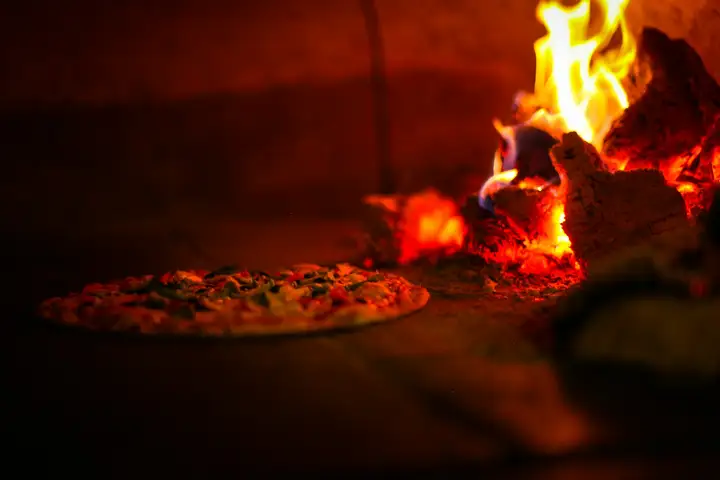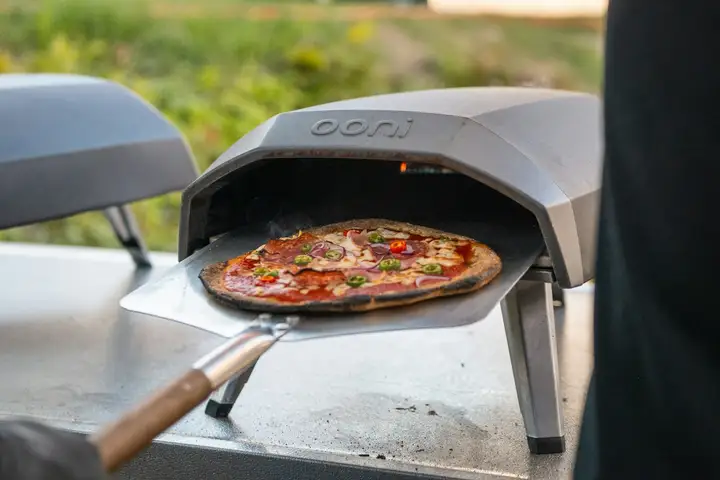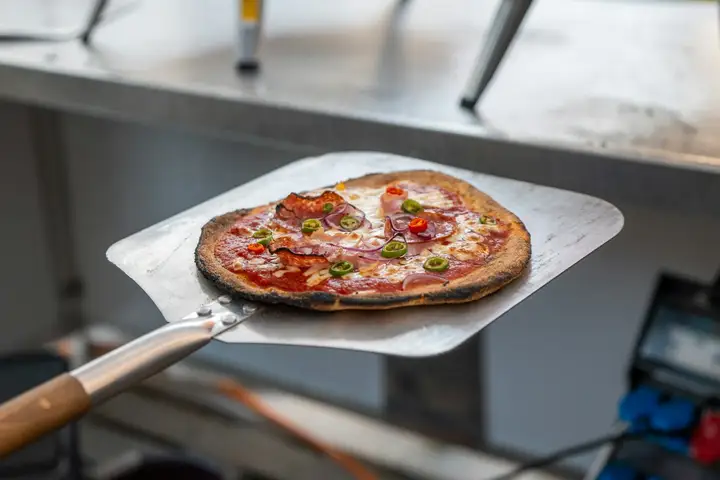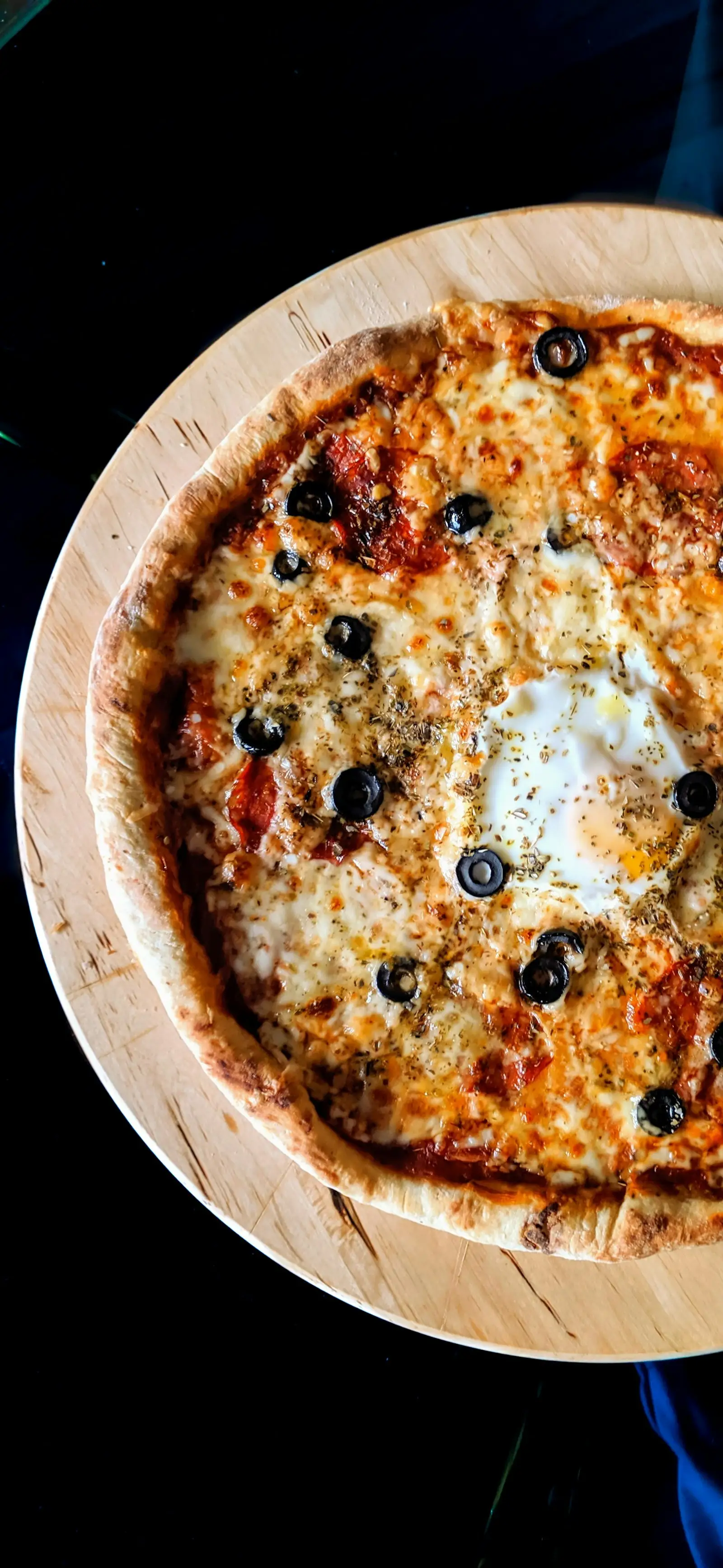
You want a wood fired pizza oven and the SERP is no help. Every roundup mixes gas, electric, and wood ovens into one ranked list, then surfaces the same Ooni Koda 16 (gas-only) at the top as “best overall” for a wood-fired query. This is the strict wood-fired-only guide we wanted to find and could not. Eight ovens tested, ranked by price tier, with the honest trade-offs that the affiliate-mill lists leave out. (If you are open to gas or electric too, start with our broader best home pizza oven guide instead.)
TL;DR
- Best wood fired pizza oven under $500: Ooni Karu 12, $349 on sale and $449 regular. Multi-fuel (wood, charcoal, gas with optional burner), 12-inch stone, the price-to-performance leader at this tier.
- Best wood fired pizza oven $500 to $2,500: Ooni Karu 2 Pro (the 2024 successor to the discontinued Karu 16), $679 on sale and $849 regular. Multi-fuel, dual-flame burner, glass door with view-flame, the canonical pick for most home cooks who want wood-fired capability.
- Best wood fired pizza oven $2,500+: Gozney Dome Gen 2 at $2,299.99. Dual-fuel (wood and gas), 16-inch chamber, the bridge between portable and permanent masonry.
- Best masonry/built-in: Chicago Brick Oven CBO-500 at $3,500. Entry-level fixed installation.
- Wood vs gas honest take: wood-fired flavor at 90-second bakes is subtle, not dramatic. Get a wood oven for the ritual; get gas for the consistency. Both produce great pizza. See our Ooni Koda 16 review for the gas alternative.
- What to skip: entry-level pellet-only ovens (steep learning curve), Alibaba-sourced budget ovens (Pizzello, Mimiuo, Deco Chef), “wood-fired” countertop electric ovens (not wood-fired in any real sense).
- Total all-in cost: budget another $200 to $500 for wood, peel, cover, stand, infrared thermometer. The headline price is not what you actually spend.
Who this guide is for
You want to make pizza outdoors. You have read three “best pizza oven” articles, noticed they all recommend gas-only Ooni Koda 16 even when you searched “wood fired,” and now you want a list that filters by actual fuel type. This is that list.
If you are open to gas, the Ooni Koda 16 is genuinely the best portable home pizza oven for most cooks, wood or not. Gas is easier, faster, more consistent, and produces 95 percent of the pizza quality of wood at 90-second bakes. If that is acceptable, stop here and read that review instead. If wood-fired specifically is a non-negotiable, keep reading.
Wood vs gas: the honest trade-off
The wood-fired flavor advantage is real and overstated. At 60 to 90 seconds of bake time, the pizza barely absorbs any smoke. Compare a four-hour brisket smoked over hickory (which takes on serious wood character) to a 90-second pizza in a wood oven (which gets a faint background note at best). The reason is exposure time. Smoke is a slow-deposition flavor.
In side-by-side tests, most tasters cannot reliably tell a gas-fired and wood-fired Neapolitan apart. Modernist Pizza (Nathan Myhrvold’s exhaustive three-volume work) confirms this in formal taste panels. Kenji López-Alt at Serious Eats has noted the same.
What wood does give you:
- A faint smoky background note in the crust if you are looking for it.
- The ritual of building a fire, feeding logs, watching flames lick the chamber dome.
- A genuine flavor advantage at longer cook times (bread, roasted vegetables, slow-cooked meats once the chamber cools to lower temperatures).
What gas gives you:
- Consistent temperature. Turn the dial, the chamber holds 900F. No fuel management.
- No ash cleanup. Wood ovens require ash removal after every cook.
- Faster preheat (15 to 30 minutes vs 45 to 90 minutes).
- No wind sensitivity. Wood fires drift; gas burners do not.
Most pizzaiolos who make pizza for a living use gas. The wood-fired-oven mystique is partly marketing, partly genuine. We are recommending wood ovens here because you searched for one, not because they are universally better.
What to look for in a wood fired pizza oven
The criteria that actually matter, in priority order.
Chamber size. Match this to your typical pizza size. 12-inch chamber for personal pies. 16-inch for sharing pizzas or family-size. Most portable wood ovens come in 12-inch or 16-inch. A 16-inch chamber is also more useful for non-pizza cooking (a whole branzino, a Dutch oven of bread).
Fuel flexibility. Pure wood ovens lock you into wood every time. Dual-fuel (wood plus optional gas burner) is a meaningful upgrade because gas is easier on weeknights and wood is the weekend ritual. The Ooni Karu and Gozney Dome both offer this; the Ooni Fyra and Forno Piombo do not.
Insulation. Single-wall carbon steel ovens lose heat fast; double-wall and ceramic-insulated ovens hold temperature better. Heat retention matters most when cooking back-to-back pizzas; if you only make one or two at a time, it matters less.
Stand height. The chamber opening should be at chest height when launching pizzas. Most portable ovens ship without a stand; budget another $100 to $250 for one. Bending over for a 60-second pizza is fine; bending over for a pizza party of 12 is a back injury.
Wind sensitivity. Wood fires get knocked around by wind. The Gozney Dome owners on Reddit and Amanda Hesser’s Homeward newsletter consistently note this. The Karu’s glass door helps. The Roccbox’s silicone jacket helps. Open-dome masonry ovens are the most exposed.
Warranty. Ooni offers 3 to 5 years on most models. Gozney offers 5 years. Permanent masonry ovens from Forno Bravo and Mugnaini offer 5 to 10. The carbon steel shells last a decade or more outdoors with a cover; the cordierite or firebrick stone is the wear part, usually replaceable for $40 to $100.
Real-world bake performance. The hot spot pattern in any wood oven is asymmetric (the fire is at the back, the front is cooler) and you have to rotate. Some ovens (Karu 2 Pro with the door closed) recover faster between pizzas; others (open-front Roccbox) recover slower.
Best wood fired pizza oven under $500
Ooni Karu 12 ($349 to $449)
The price-to-performance leader at the entry tier. Multi-fuel (wood, charcoal, optional gas burner sold separately). 13-inch cordierite stone, 932F max temperature, 26 pounds, 15 to 20 minute preheat with wood.
What it gets right: Compact enough for a small balcony or camping trip. The multi-fuel option means you can start with wood and add the gas burner ($79) later. Hopper at the back makes feeding wood easy. Reasonably priced for what you get.
What to know: 13-inch chamber is tight. Realistically you are making 10-inch pizzas; trying for 12 inches leaves no room to rotate. Less insulated than the Karu 2 Pro, so heat recovery between pizzas is slower. Smaller chamber also means less versatility for non-pizza cooking.
Verdict: Buy the Karu 12 if budget is under $500 and you want wood capability. The Pi Prime is cheaper and easier but gas-only.
Ooni Fyra 12 ($349)
The pellet-fueled portable. The cheapest current Ooni at the wood-capable price tier.
What it gets right: Lightweight (22 pounds), genuinely portable for camping. Wood pellet hopper auto-feeds the fire. Lit and to temperature in 15 minutes.
What to know: Pellet feeding has a learning curve. The hopper jams if you overfill it. Temperature regulation is by pellet flow rate, which is less precise than a gas dial. Most reviewers (including palapizza) note the steep learning curve. Smaller chamber than the Karu 12.
Verdict: Buy the Fyra if portability is the priority (camping, tailgating) and you accept the pellet learning curve. Otherwise the Karu 12 is the better entry-tier choice.
Ninja Woodfire 8-in-1 (~$399 to $499)
The electric-plus-wood-pellet hybrid. Plug-in oven with a separate wood-pellet smoke chamber.
What it gets right: Plug-and-play. Electric heat does the bake; the pellet chamber adds smoke flavor. Multi-function (smoke, bake, roast, broil, dehydrate). Indoor-friendly with proper venting.
What to know: This is not really a wood-fired oven in the traditional sense. It is an electric oven with a smoke generator. Max temperature is closer to 700F than 900F, so Neapolitan-style is out of reach. Pizza takes 4 to 7 minutes, not 60 to 90 seconds.
Verdict: If you want a multi-function outdoor oven and a faint smoke note, this works. For Neapolitan pizza specifically, skip it.
Best wood fired pizza oven $500 to $2,500
Ooni Karu 2 Pro ($679 to $849): our top pick at this tier
The 2024 successor to the discontinued Karu 16 and the most-recommended wood-capable portable pizza oven for most home cooks. Multi-fuel (wood, charcoal, optional gas burner sold separately), 17-inch cordierite stone, 950F max, 66 pounds, glass door with view-flame, dual-flame burner.
What it gets right: Big enough for 14-inch pizzas with room to rotate. Glass door cuts heat loss between pizzas, so recovery time is near zero (a meaningful upgrade from the open-front Koda 16). The dual-flame burner cooks more evenly than the L-burner on previous Karu generations. Digital ambient temperature display. The hatch at the back makes wood-feeding easy. Multi-fuel flexibility means you can do gas on weeknights and wood on weekends without buying a second oven.
What to know: 66 pounds is not portable in any practical sense. You set it up once and leave it on the patio. The gas burner is sold separately. Wood and charcoal both leave ash; expect 5 minutes of cleanup after every wood firing.
Comparison to the Koda 16: The Karu 2 Pro costs $100 to $200 more all-in than the gas-only Koda 16 (with the gas burner added). It buys you fuel flexibility, the glass door, and the digital display. For wood-fired specifically, this is the clear pick. See our Ooni Koda 16 review for the gas-only alternative.
Verdict: Buy the Karu 2 Pro if you want wood-fired capability with fallback to gas, you cook regularly, and the chamber size matters. The mid-tier champion. If you can find a refurbished or secondhand Karu 16 (the discontinued predecessor) for substantially less, it is still an excellent oven; Ooni’s site now redirects the old Karu 16 product page to the Karu 2 Pro listing.
Gozney Roccbox ($499 to $599)
The 12-inch competitor to the Ooni Karu 12. Gas-only by default; wood/charcoal add-on burner sold separately ($99).
What it gets right: Premium build quality. Silicone outer jacket means the exterior stays touchable even at 900F. 5-year warranty (vs Ooni’s 3). Ships with an actual pizza peel (Ooni does not).
What to know: 12-inch stone is smaller than the Karu 2 Pro. Default fuel is gas; you have to buy the wood burner separately to make it “wood-fired.” That makes the wood-fired Roccbox configuration $600 to $700, not $499. At that price the Karu 12 with gas burner is more flexible.
Verdict: Buy the Roccbox if build quality and warranty matter more than chamber size or fuel flexibility. Otherwise the Karu 12 or Karu 2 Pro are better value.
Bertello Outdoor Pizza Oven ($329 to $499)
The Shark Tank success story. Multi-fuel (wood pellet, charcoal, gas with separate burner), 12-inch stone, 950F max.
What it gets right: Genuinely multi-fuel out of the box (wood, charcoal, pellet). One of the cheapest dual-fuel options. Compact.
What to know: Smaller and less insulated than the Karu 12. Build quality is acceptable but not premium. Burner can be inconsistent; some users report difficulty maintaining temperature.
Verdict: Buy the Bertello if you want maximum fuel flexibility on a budget and accept the build-quality trade-off. The Karu 12 is the more refined option at a similar price.
Best wood fired pizza oven $2,500+
This is where you cross from “portable” to “permanent installation” territory. Even Gozney Dome owners on Reddit treat it more like a patio fixture than a portable.
Gozney Dome Gen 2 ($2,299.99): the canonical premium pick
The bridge between portable and built-in. Dual-fuel (wood and gas), 16-inch chamber, cordierite stone, 950F max, 128 pounds. Available in pizza-only or dual-fuel configurations.
What it gets right: The closest thing to a permanent brick oven without permanently installing one. Excellent heat retention thanks to thick ceramic insulation. Genuinely beautiful (Amanda Hesser’s “shaped like a macaron and therefore cute as a button”). Both gas and wood fuel options.
What to know: $2,000 is just the oven. Add the stand ($395), the mantel ($295), the wind blocker ($150), and seasoned wood (~$100 of small split logs for a typical pizza party), and you are at $2,800 to $3,000 all-in. Reader-quoted issues: wind sensitivity (mentioned by every Reddit thread and Amanda Hesser’s reader comments), small log requirement (must be tiny, hard-to-find sizes), and constant log-feeding during a wood firing.
A reader-contributor to Amanda Hesser’s Homeward newsletter, Alexandra Stafford, was blunt about the Dome’s wood quirks: “The logs need to be tiny… I found the process so frustrating. To keep the oven up to temperature, you have to feed it with these tiny logs constantly.”
Verdict: Buy the Gozney Dome if you want a beautiful, near-permanent, dual-fuel outdoor oven and have the patio space. If you mostly want gas, the cheaper Koda 16 or Karu 2 Pro give you 90 percent of the bake quality at one-third the price.
Chicago Brick Oven CBO-500 ($3,500)
The entry-level masonry oven. Real refractory dome and floor, 38-inch chamber, wood-only.
What it gets right: This is what wood-fired pizza looks like when you commit. Massive thermal mass means the oven holds heat for hours after the fire dies. Genuine brick-oven results. Bakes pizza, bread, slow-roasted meats, basically anything you want to do with high-temperature outdoor cooking.
What to know: $3,500 is just the oven kit. You need a base (concrete or stone) to put it on. Total installed cost typically $5,000 to $7,000 once you account for the foundation, stand, optional stucco or stone facing, and chimney work. Permanent installation; not movable. Preheat is 1 to 2 hours.
Verdict: Buy the CBO-500 if you want a permanent backyard masonry oven and are willing to put in the installation work. The first step up from portable into real outdoor-kitchen territory.
Forno Piombo Santino 70 ($4,500 to $6,000)
Sam Sifton of The New York Times picked this one publicly. 28-inch chamber, wood-only or dual-fuel, refractory firebrick dome, hand-built in California.
What it gets right: Premium build, beautiful object, real masonry construction. Sifton’s Homeward newsletter quote: “I wasn’t looking forward to spending a summer building an oven, so I got the Forno Piombo. It was just great… It’s undeniably a pizza oven. It’s got this big, tall chimney. The Ooni to me looks like an air fryer.” He also notes the heat retention: “At the end of the night, I might put in a few big pieces of wood and close the door, and the next day it’s still coals.”
What to know: Expensive. Not really portable. Heat-up time is 2+ hours; the trade-off is that the oven holds heat for 12 to 24 hours after a single firing, so you can cook through dinner and breakfast off one fire.
Verdict: Buy the Forno Piombo if you want a serious outdoor pizza oven that becomes the centerpiece of your backyard. This is the “pizza oven as identity” tier (Sifton’s words: “It’s like I got a neck tattoo”).
Other premium picks: Mugnaini, Forno Bravo, Alfa, Fontana
Briefly:
- Mugnaini ($7,000+): California maker with 30+ years history. Showroom and cooking school in Healdsburg. Custom dome shapes and finishes. “Hands down the best one out there” per multiple Homeward reader quotes.
- Forno Bravo Primavera ($3,500 to $5,000): Wood-only, comes in 7 colors, thick firebrick base and ceramic dome. The most-recommended “small permanent” oven.
- Alfa Forni Moderno ($3,500 to $6,000): Italian-made, firebrick floor, comes in red. Striking design.
- Fontana Firenze ($3,500 to $5,500): Stainless steel interior with firebrick floor. Sleeker aesthetic than the dome ovens.
All four are excellent at this price point. The choice is primarily aesthetic.
Karu 2 Pro vs Gozney Dome Gen 2: which wood-fired oven for $1,500 or less?
The decision a lot of buyers face. Both are dual-fuel, both reach 950F, both bake 14 to 17 inch pizzas. The trade-offs:
| Spec | Ooni Karu 2 Pro | Gozney Dome Gen 2 |
|---|---|---|
| Price (oven only) | $849 ($679 on sale) | $2,299.99 |
| Stand | extra | $499.99 extra |
| Total realistic cost | $1,200 to $1,500 all-in | $3,000 to $3,500 all-in |
| Chamber size | 17-inch stone | 16-inch chamber (slightly wider opening) |
| Fuel | Wood, charcoal, gas (burner sold separately) | Wood, gas (built-in burner) |
| Weight | 66 lbs | 128 lbs |
| Insulation | Single-wall ceramic-coated | Thick ceramic insulation throughout |
| Heat retention | Good with glass door closed | Excellent (oven holds heat 12+ hours) |
| Preheat | 30 to 45 minutes | 45 to 60 minutes |
| Aesthetics | Functional industrial | Sculptural, dome-shaped, visually striking |
| Wind sensitivity | Moderate | High (per owner reports) |
| Warranty | 3 years | 5 years |
The Karu 2 Pro is the better-value oven. The Dome Gen 2 is the better-looking, longer-retaining, more-permanent oven. For most home cooks, the Karu 2 Pro wins on cost-effectiveness. For someone designing an outdoor kitchen who wants the oven to be a focal point, the Dome wins on aesthetics.
If your budget is firmly $1,500 or less all-in, get the Karu 2 Pro. If you can stretch to $3,000+ all-in, the Dome Gen 2 is the upgrade.
Total cost of ownership
The honest math for the mid-tier pick (Ooni Karu 2 Pro):
| Item | Realistic price |
|---|---|
| Ooni Karu 2 Pro oven | $849 |
| Optional gas burner | $99 |
| Stand (Ooni Modular Table or restaurant prep table) | $120 to $250 |
| Pizza peel (wood, 14 inch) | $35 |
| Turning peel (metal, 8 inch) | $25 |
| Infrared thermometer | $30 |
| Cover | $40 |
| Seasoned hardwood (one season of use) | $80 to $200 |
| All-in first year | $1,228 to $1,478 |
For the Gozney Dome, the all-in is roughly double ($2,800 to $3,200). For a CBO-500 masonry oven with installation, expect $5,000 to $7,000.
Wood is the recurring cost. Pre-cut Ooni-branded boxes of small kiln-dried hardwood run $40 to $60 for a 5-pound box (enough for one pizza party of 4 to 6 pies). Local firewood (oak, hickory, maple) from a hardware store at $20 to $40 per quarter-cord lasts a full season but needs to be cut to size yourself.
What to skip
The anti-recommendations:
- Pure wood pellet ovens at the budget tier. The Ooni Fyra 12 and Mimiuo Portable Pellet are pellet-only. Pellet feeding has a learning curve that frustrates new owners. Get a multi-fuel oven (Karu 12 with gas burner) instead.
- Alibaba-sourced budget ovens. Pizzello Forte, Big Horn Outdoors, Deco Chef, Black & Decker. Build quality is questionable, parts replacement is impossible, and the temperature consistency is hit-or-miss. The $250 you save up front gets spent on replacement parts.
- “Wood-fired” countertop electric ovens. The Ninja Woodfire is the most popular. These are electric ovens with a separate pellet smoke chamber. The smoke is real; the wood-fired bake is not. If you want true wood-fired pizza, skip these.
- Untested newcomers. Halo Versa, Stoke Stove, smaller Alibaba brands. Wait for them to accumulate 2+ years of owner feedback before buying.
- Wood-only ovens at the portable tier if you ever want gas. Forno Piombo Santino in wood-only configuration is great if you commit to wood. If you might want gas occasionally, get a dual-fuel option instead.
- Built-in masonry ovens you cannot move. The Chicago Brick Oven and similar are excellent ovens, but you commit to a permanent backyard installation. If you might move, get a portable instead.
FAQ
Are wood fired pizza ovens worth it?
Yes for the ritual and for permanent built-in setups. For portable home ovens cooking 60-to-90-second pizzas, the flavor difference between wood and gas is real but subtle. Get a wood oven if you want the experience of feeding a fire; get a gas oven for consistency and ease. Both make great pizza.
Is Ooni or Gozney better for wood fired pizza?
Tier-dependent. Under $1,000, Ooni Karu 2 Pro is the best pick. Above $1,500, Gozney Dome is. Both brands are excellent; the price tier and chamber size are what differ.
What is the highest rated wood fired pizza oven?
Among portables, the Gozney Dome Gen 2 ($2,299.99) and Ooni Karu 2 Pro ($679 to $849) are the two most-recommended across editorial roundups, Reddit owner threads, and Amanda Hesser’s Homeward newsletter. Among masonry ovens, the Chicago Brick Oven CBO-500 ($3,500) is the entry point, with Forno Piombo, Mugnaini, Forno Bravo, and Alfa Forni dominating the $5,000-plus tier. Sam Sifton of The New York Times publicly endorses Forno Piombo’s Santino 70.
How long does it take a wood fired pizza oven to heat up?
30 to 90 minutes depending on chamber size and insulation. Portable ovens (Karu 2 Pro, Roccbox) hit 900F in 30 to 45 minutes. The Gozney Dome takes 45 to 60. Permanent masonry ovens (CBO-500, Forno Piombo) take 1 to 2 hours from cold start.
Do you need to season wood for a wood fired pizza oven?
Yes. Seasoned hardwood at under 20 percent moisture (oak, hickory, maple, birch, beech, cherry) is correct. Avoid resinous softwoods (pine, cedar, spruce). Most ovens accept 1-to-2-inch diameter logs at 6-inch length; pre-cut hardwood boxes from Ooni or Gozney are convenient but expensive.
Can you cook anything besides pizza in a wood fired oven?
Yes. Bread, roasted vegetables, whole fish, steaks in cast iron, slow-cooked meats. The order of operations is: bread first (highest heat), pizza next, then roasts, then slow cooks as the oven cools. This is the traditional bakery sequence.
How unhealthy is wood-fired pizza?
Marginally. Wood-fired cooking can produce small amounts of PAHs and acrylamide from charred crusts, the same compounds in any grilled food. The risk is small at typical home volumes. A wood-fired pizza is no less healthy than a gas-fired one.
Is the Bertello pizza oven good?
Acceptable but not premium. Bertello was on Shark Tank and the multi-fuel flexibility is genuine. Build quality is below Ooni and Gozney. The Karu 12 at a similar price is the more refined choice.
The verdict
If you want wood-fired pizza in your backyard and you do not already own an outdoor pizza oven:
- Budget under $500: Ooni Karu 12 with optional gas burner. The most flexible entry-tier choice.
- Budget $500 to $2,500: Ooni Karu 2 Pro. The clear best-in-class for most home cooks. Multi-fuel, 16-inch chamber, glass door, near-zero recovery between pizzas.
- Budget $2,500 to $5,000: Gozney Dome. The premium portable with dome-oven aesthetics and excellent heat retention.
- Budget $5,000+: Chicago Brick Oven CBO-500 ($3,500 plus installation) for a permanent masonry oven. Forno Piombo, Mugnaini, Forno Bravo, Alfa, or Fontana for premium hand-built installations.
If wood-fired flavor is not a hard requirement, the Ooni Koda 16 is the best gas alternative at $499 to $649 and produces 95 percent of the pizza quality of wood at one-third the operational complexity. The wood-vs-gas decision is more about how active you want the cooking process to be than how the pizza tastes. And if you are not ready to buy a dedicated oven at all, a covered gas or charcoal grill is the closest free stand-in (it traps heat and runs hotter than any home oven); see how to cook pizza on the grill.
For the dough that works in any of these ovens, see our Ooni pizza dough recipe, which covers four schedule variants (same-day, overnight, 24 to 48 hour cold ferment, poolish) at the 60 percent hydration that high-heat pizza ovens require. For the foundational Neapolitan technique that all of this builds on, see our Neapolitan pizza dough recipe. For other styles you can bake in a wood oven (with adapted temperatures), see our New York style pizza crust and Detroit style pizza recipe.