The best cheese for pizza is low-moisture whole-milk mozzarella. That answer covers about 90% of the pizzas you will ever make, and almost no recipe blog will just say it plainly. What they also will not tell you is when that answer changes: the fresh mozzarella a Neapolitan pie needs, the provolone a good New York slice hides under the mozzarella, the brick cheese that makes a Detroit edge crackle. Cheese is the topping most people get wrong, usually by grabbing a bag of pre-shredded “pizza blend” and wondering why the melt looks grainy. This is the guide that fixes that.
TL;DR
- Default to low-moisture whole-milk mozzarella. Less water than fresh mozzarella means it browns and stretches instead of flooding the pie. Whole-milk over part-skim for flavor.
- Fresh mozzarella (fior di latte, bufala) is for Neapolitan only, where the 90-second bake is too fast to dry it out. On any longer, cooler bake it weeps water and makes the center soupy unless you drain it hard and use it sparingly.
- The best cheese for pizza other than mozzarella is provolone. It browns well and adds sharpness. A 70/30 mozzarella-to-provolone blend is the classic New York move.
- Buy a block and shred it yourself. Pre-shredded cheese is coated in anti-caking cellulose that blocks a smooth melt.
- Style changes the cheese: Neapolitan uses torn fresh fior di latte, New York uses low-moisture mozzarella (often with provolone), Detroit uses Wisconsin brick pushed to the edges, white pizza uses mozzarella plus drained ricotta.
- Skip: pre-shredded blends with cheddar, fat-free mozzarella, pre-grated parmesan from a green can, and over-cheesing (more cheese is the fastest route to a soggy, undercooked center).
Why low-moisture mozzarella is the best cheese for pizza
Mozzarella wins on pizza for one reason: it melts into a smooth, stretchy, mild sheet that browns without breaking. But “mozzarella” is two very different cheeses, and the difference is water.
Fresh mozzarella is the soft white ball sold floating in liquid. It is made and eaten within days, and it holds a lot of water, which is why it tears wet and tastes milky. Low-moisture mozzarella is aged a little longer and dried out, sold as a firm block or pre-shredded. Less water is the whole point: by the FDA definition, low-moisture mozzarella runs 45 to 52 percent moisture, while fresh can be 60 percent or more. When cheese heats up, the water in it has to go somewhere, and on a pizza it goes into your crust and pools on the surface. A wetter cheese gives you a paler, soupier top. A drier cheese browns, blisters, and stays put.
J. Kenji López-Alt ran this test directly at Serious Eats, melting a lineup of supermarket low-moisture mozzarellas to compare how they browned and stretched. The takeaway from his low-moisture mozzarella testing is that for the standard home-oven or New York-style bake, low-moisture is not a compromise, it is the correct cheese. Fresh mozzarella is the specialist, not the default.
Whole-milk vs part-skim
Given the choice, take whole-milk low-moisture mozzarella. The extra fat carries flavor and browns more attractively. Part-skim is not wrong; it releases a little less oil during the bake, which some people prefer on a heavily-cheesed pie, but it can turn slightly rubbery and tastes flatter. Fat-free mozzarella is a non-starter: with the fat gone, it melts into a tough, plasticky layer that never browns. If a recipe tells you to use fat-free cheese to “lighten up” a pizza, ignore it.
Why moisture and fat are the only two variables that matter
Strip away the marketing and a pizza cheese is judged on two things: how much water it dumps onto your pie, and whether it has enough fat to taste good and brown. Low-moisture whole-milk mozzarella sits in the sweet spot on both. Every other cheese on this page is a deviation from that center, useful for a specific flavor or a specific style, and you can predict how each one behaves just by asking those two questions. A wet cheese (fresh mozzarella, ricotta) needs draining or a fast bake. A high-fat aged cheese (cheddar, aged gouda) will pool grease. A hard grating cheese (parmesan, pecorino) brings flavor but will not give you stretch. That framework is more useful than any list.
The best cheese for pizza by style
This is where every other “best cheese for pizza” article stops short. The right cheese depends entirely on the pizza underneath it, because each style bakes at a different temperature for a different length of time, and that changes what the cheese needs to survive.
Neapolitan: fresh fior di latte or bufala
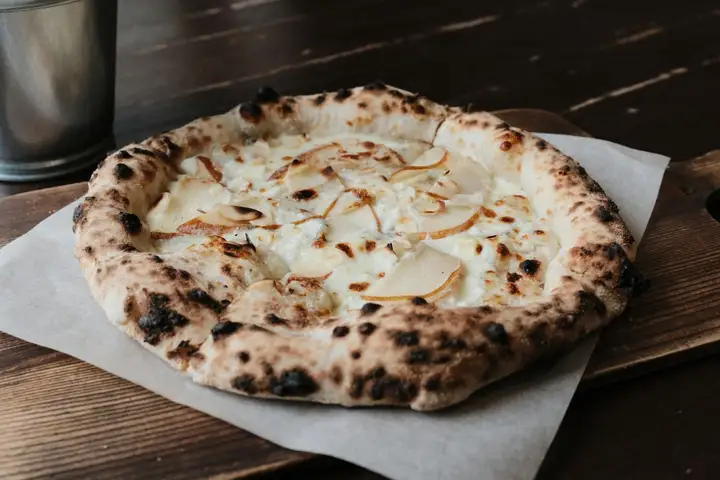
Neapolitan is the one style that demands fresh mozzarella, not low-moisture. The Neapolitan dough bakes in 60 to 90 seconds at 850 to 900°F, which is too fast for a fresh cheese to release much water. The AVPN, the governing body for true Neapolitan pizza, specifies fresh fior di latte (cow’s milk mozzarella) or Mozzarella di Bufala Campana DOP, torn into strips or pieces and scattered, not blanketed.
Two rules make fresh mozzarella work here. First, drain it. Tear it 20 minutes ahead, lay it on paper towels or a wire rack, and let the surface water run off. Bufala is wetter than fior di latte and needs this more. Second, use less than you think. A Neapolitan pie wants open patches of sauce showing through, not full coverage. Five or six torn pieces on a 12-inch pie is right. A grating of Parmigiano-Reggiano or pecorino before the cheese adds the savory backbone. Put low-moisture mozzarella on a Neapolitan and it will not melt fully in 90 seconds; it stays in stubborn shredded ridges.
New York: low-moisture mozzarella, often with provolone
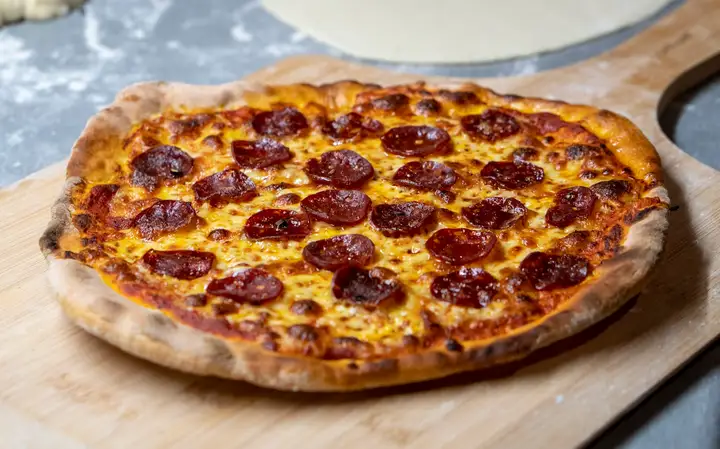
New York is the home of low-moisture whole-milk mozzarella, shredded and spread in an even layer to the edge of the New York-style crust. The 6 to 8 minute bake at 550°F (or as hot as a home oven goes) is long enough that fresh mozzarella would weep and a wet pie would go limp. Low-moisture browns into those classic orange-tipped bubbles.
The trade secret of a lot of good slice shops is a little provolone in the blend, usually around 70/30 or 80/20 mozzarella to provolone. The provolone sharpens the flavor and browns a shade darker. This is the single best upgrade to a home New York pie, and most people have never tried it. Grande, a food-service brand, has a near-mythic reputation among New York pizzaioli for exactly this style of cheese, though it is hard to buy at retail. You do not need it. A block of any decent whole-milk low-moisture mozzarella, shredded yourself, with a handful of provolone, gets you most of the way there.
Detroit: Wisconsin brick, pushed to the edge
Detroit-style is its own animal. The traditional cheese is Wisconsin brick cheese, a mild, high-fat cheese that melts into the dough and, crucially, gets pushed all the way to the edges of the steel pan. There it caramelizes against the hot metal into a lacy, crunchy crust called frico. That cheese edge is what makes a Detroit-style pizza a Detroit-style pizza, and it is the reason you cannot fake one with regular shredded mozzarella alone.
If you cannot find brick cheese, the standard substitute is a 50/50 blend of low-moisture mozzarella and Monterey Jack, with the Jack contributing the meltability and the mozzarella the stretch. Muenster is a closer single-cheese substitute than Jack. Whatever you use, push it to the edges. The frico is non-negotiable.
Sicilian and Grandma: low-moisture mozzarella, a sharper accent
The thick, oily-bottomed Sicilian and the thin-in-a-pan Grandma both run on low-moisture mozzarella, sliced or shredded. Because these bake longer in a pan, you have room for a sharper accent: a little provolone or a dusting of pecorino lifts them out of one-note territory. Grandma-style in particular often goes cheese-first (mozzarella directly on the oiled dough), then a few stripes of uncooked crushed-tomato sauce on top, which keeps the cheese from steaming under a full sauce layer.
White pizza: mozzarella plus drained ricotta
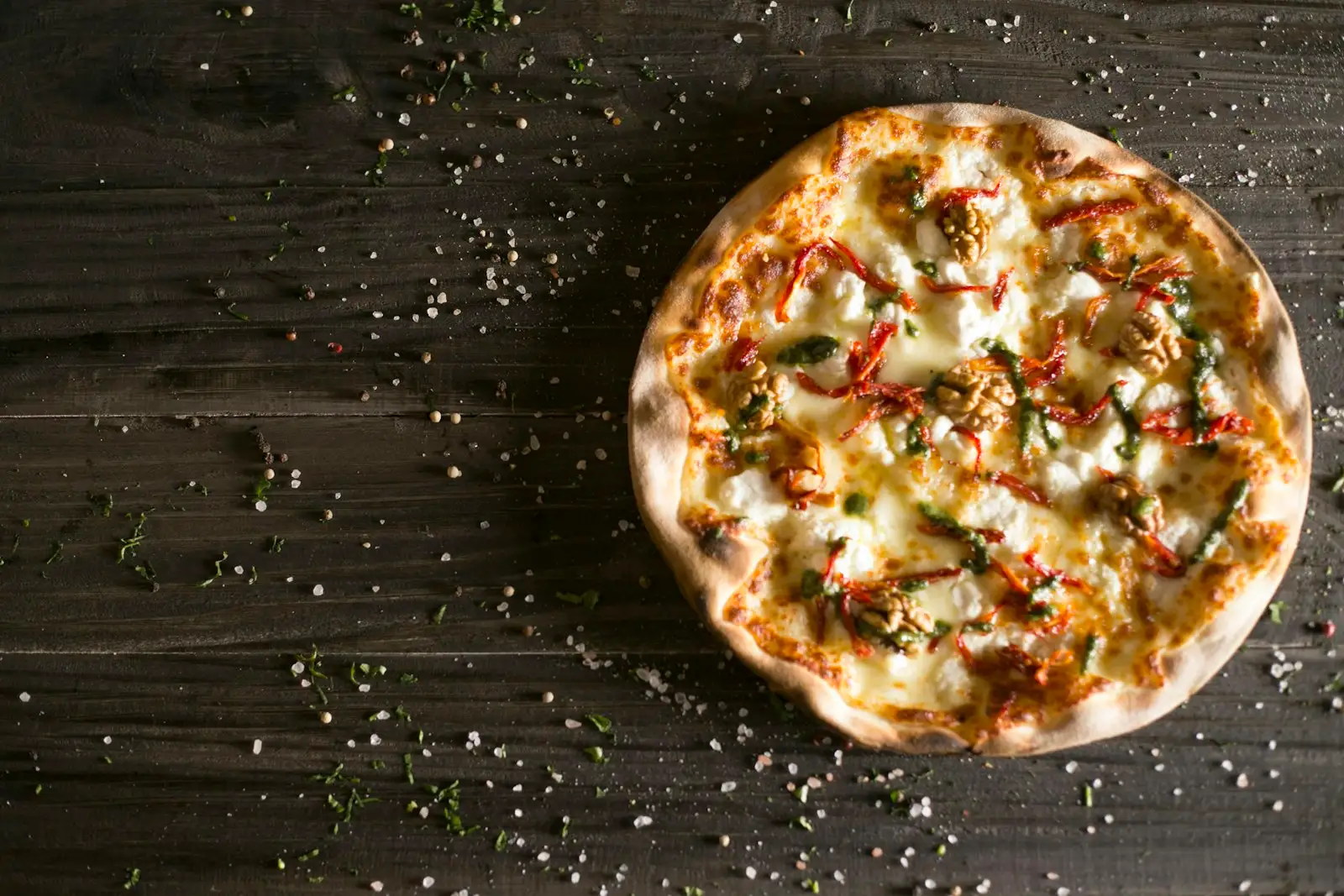
A white pizza skips red sauce, so the cheese carries the whole pie. The standard architecture is low-moisture mozzarella for melt plus dollops of well-drained whole-milk ricotta for richness, finished with garlic and olive oil. The ricotta has to be drained or it weeps. For the full breakdown of white-sauce versus white-pizza (they are not the same thing) see our white pizza sauce guide.
Cheeses beyond mozzarella, and what each one does
Most pizzas are improved by a second cheese, not replaced by one. Here is what each common option actually contributes, judged on the same two variables: water and fat.
- Provolone. The best partner cheese. Browns well, melts cleanly, adds a tangy sharpness. Mild provolone is subtle; aged (provolone piccante) is assertive. This is the first cheese to reach for after mozzarella.
- Fontina. A superb, clean melter with a nutty, buttery flavor. Italian fontina (Fontina Val d’Aosta) is funkier; Danish and domestic fontina are milder and melt very smoothly. Great on white pizzas and in blends.
- Provolone and fontina together make the backbone of a good four-cheese (quattro formaggi) pie, with mozzarella for stretch and a blue for punch.
- Cheddar. Melts, but releases a lot of orange grease and brings a sharp tang that competes with tomato sauce. Useful as a small accent in a blend (it is why some barbecue-chicken and American-style pizzas taste the way they do), never as the main cheese. The orange “pizza blend” bags lean on cheddar, which is exactly why they go greasy.
- Smoked gouda. A strong, smoky accent that melts well. A little goes a long way; pair it with barbecue chicken or caramelized onion, not a classic margherita.
- Parmigiano-Reggiano and pecorino romano. Hard grating cheeses. They do not give you stretch; they give you salt and umami. Grate them under the mozzarella for a savory base layer, or over the top as a finish. Daniel Gritzer’s domestic-versus-imported parmesan taste test at Serious Eats is worth reading before you spend up: a good domestic parmesan is fine for melting into a pie, and you can save the real Parmigiano-Reggiano for grating raw.
- Ricotta. Not a melting cheese; it sets into soft, rich dollops. Drain it, dollop it, do not spread it. Whole-milk ricotta only.
- Gorgonzola or other blue. A potent accent for quattro formaggi or a pear-and-walnut pie. Use sparingly.
- Goat cheese (chèvre). Tangy, soft, does not melt into a sheet; it softens into creamy pockets. Good with roasted vegetables or honey.
- Burrata. Add it after the bake, torn open over the hot pizza. Bake it and the cream filling turns to greasy mush; the whole point of burrata is the cool, oozing center against the hot pie.
Buying it: brands, blocks, and the pre-shredded problem
The cheese aisle is where good intentions go wrong. Two rules cover most of it.
Buy a block and shred it yourself
Pre-shredded bagged cheese is coated with anti-caking agents, usually powdered cellulose or potato starch, sometimes with natamycin to fight mold. Those coatings do their job in the bag, keeping the shreds loose, but they also sit between the cheese and a clean melt. The result is a grainier, slightly drier, less glossy top. We made the same point in the pepperoni pizza guide, and it holds for cheese on any pizza: a block of low-moisture whole-milk mozzarella, shredded on the large holes of a box grater, melts visibly better than the bag. It takes two minutes.
The brands worth knowing
You do not need a unicorn brand, but a few are worth naming:
- For low-moisture mozzarella (block): Polly-O, Galbani, and BelGioioso are reliable national brands. Most well-run grocery store brands are fine too. Whole-milk, low-moisture, in a block.
- The food-service legend: Grande is the brand many New York slice shops swear by. It is a food-service product, so it is hard to buy in a normal grocery store, and you genuinely do not need it to make a great pie at home.
- For fresh mozzarella (Neapolitan): BelGioioso and Galbani make widely-available fresh fior di latte. For bufala, look for Mozzarella di Bufala Campana DOP and drain it well.
- For ricotta: whole-milk only, well-drained. Galbani and BelGioioso again, or a good local brand.
We are not linking these through affiliate programs (we do not run any yet, and we would not push a cheese on commission). These are just the names you will actually find and trust.
What to skip
The cheese mistakes that quietly ruin pizzas:
- Pre-shredded “pizza blend” bags. Anti-caking coating plus cheddar filler equals a grainy, greasy melt. The convenience is not worth it.
- Fat-free or low-fat mozzarella. Without fat, cheese turns to rubber and never browns. There is no version of this that improves a pizza.
- Fresh mozzarella on a New York or Detroit pie, undrained. The longer, cooler bake gives all that water time to flood the crust. If you must use fresh on a non-Neapolitan pie, drain it hard and use less.
- Pre-grated parmesan from a green can. It is cellulose-heavy and tastes of almost nothing; it will not melt. Microplane a real wedge.
- Cheddar as the main cheese. It bleeds orange grease and fights the sauce. Accent only.
- Over-cheesing. The most common home mistake. A thick cheese blanket steams, traps moisture, and leaves the center undercooked and soggy while the edge burns. Most home pies need less cheese than they get; for a 12-inch pie, 4 to 6 ounces is plenty.
- String cheese or sandwich slices as a shortcut. Both are formulated to resist melting and stretching, the opposite of what you want.
- Baking burrata. Always a post-bake topping.
- Adding cheese over a flooded sauce. Cheese cannot save a watery sauce; it just floats on top. Fix the sauce first (see our pizza sauce recipe), and remember that the cheese melt also depends on getting the oven temperature right.
FAQ
What is the best cheese for pizza?
Low-moisture whole-milk mozzarella is the best all-around cheese for pizza. It has less water than fresh mozzarella, so it browns instead of weeping, and enough fat to taste like something. The exception is Neapolitan pizza, which uses fresh fior di latte or mozzarella di bufala because the 90-second bake is too fast to dry out a wetter cheese.
What cheese do Italians use for pizza?
For a true Neapolitan pizza, the AVPN regulations specify fresh fior di latte (cow’s milk mozzarella) or Mozzarella di Bufala Campana DOP, torn into pieces, plus a grating of hard cheese like Parmigiano-Reggiano or pecorino. Italians do not use the dry, shredded low-moisture mozzarella that is standard on American pizza. That is a New York and American invention, and a good one for the longer, cooler bakes those styles use.
What is the best cheese for pizza other than mozzarella?
Provolone is the first answer: it browns well, adds a sharper flavor than mozzarella, and is the classic blend partner on New York pizza. After that, fontina (a clean melter), smoked gouda (a strong accent), and a finishing grate of parmesan or pecorino. Cheddar melts but bleeds orange grease, so use it only in small amounts in a blend, never as the main cheese.
Is pre-shredded cheese bad for pizza?
Pre-shredded bagged cheese is coated with anti-caking agents (cellulose or potato starch) that keep the shreds from clumping in the bag but also keep them from melting into a smooth, glossy sheet. You get a grainier, slightly drier melt. Buy a block of low-moisture whole-milk mozzarella and shred it yourself; it takes two minutes and melts noticeably better.
Should I use mozzarella or cheddar for pizza?
Mozzarella. Cheddar releases a lot of orange grease as it melts and has a sharp tang that fights the sauce, so it is not a pizza cheese on its own. A small amount of sharp cheddar mixed into a mostly-mozzarella blend can add flavor (some American and barbecue-chicken pizzas do this), but cheddar as the primary cheese makes a greasy, one-note pie.
What this earns you
A pizza that browns the way it is supposed to, with cheese that stretches instead of puddling. The short version is easy to remember: low-moisture whole-milk mozzarella for almost everything, shredded from a block; fresh fior di latte for Neapolitan; a little provolone when you want a New York pie to taste like the slice shop; brick cheese for the Detroit edge. Once the cheese is right, the rest of the pie is just dough, sauce, and heat, and we have the toppings guide for what goes on top of all that cheese.