Anchovies are the most misunderstood topping on the menu. Half the country treats them as a punchline and the other half quietly puts them on everything, and both groups are usually arguing about a different ingredient. A cheap, over-salted anchovy from a dusty tin and a good oil-packed fillet from Sicily are barely the same food.
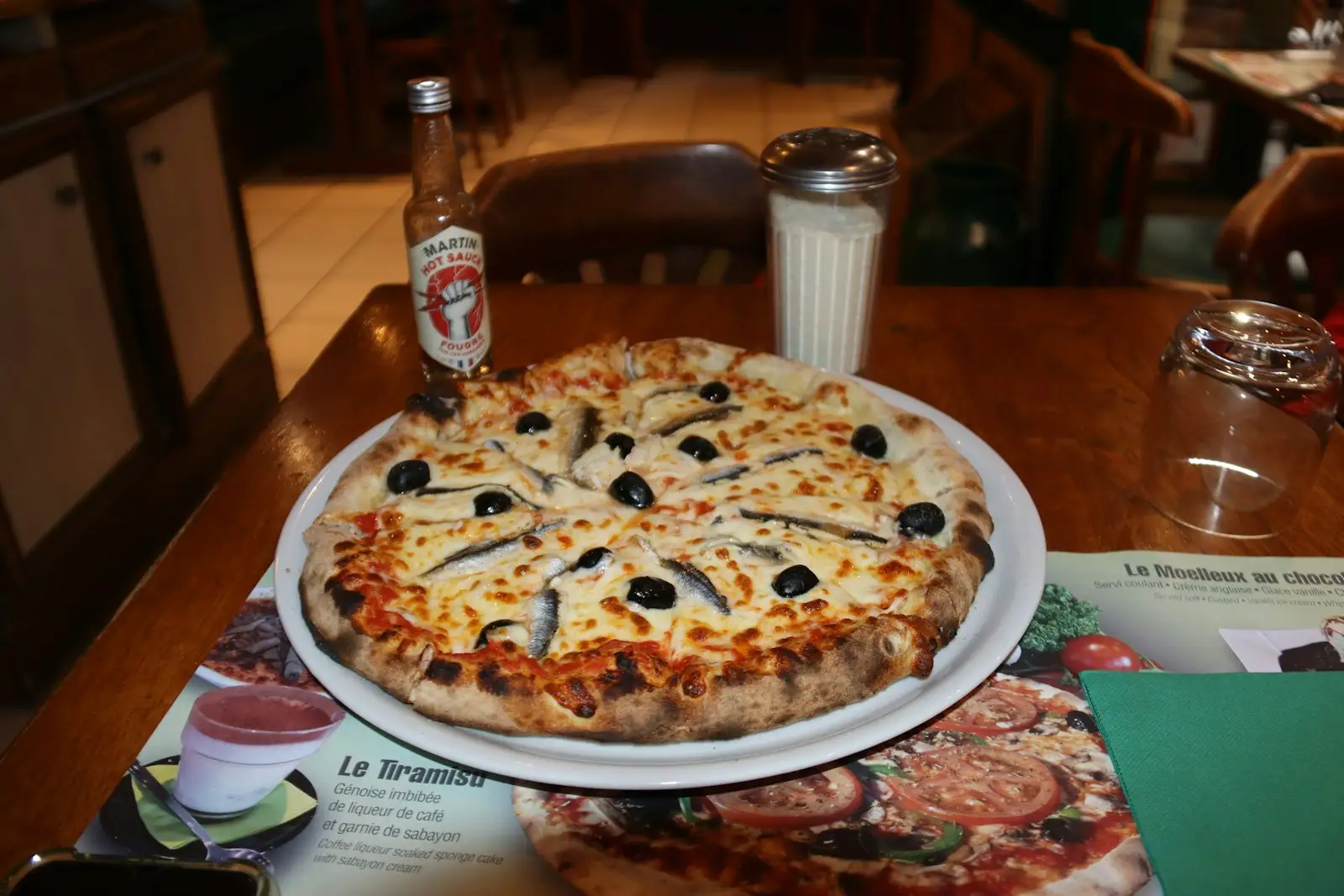
Anchovies belong on pizza when they are good ones used right: a handful of fillets either baked on, where they soften and melt into savory umami, or laid on after baking to stay briny and intact. The classic is pizza Napoli, tomato, mozzarella, anchovies, and oregano. The bad reputation comes from cheap canned anchovies, not the topping itself.
This guide covers which anchovies to buy, whether to bake them on or add them after, the Italian tradition (and the marinara myth most articles get wrong), and how to use them so even skeptics come around.
Who this is for: anyone curious whether anchovies are worth it, anyone who tried them once off a bad pizza and wrote them off, and anyone who already loves them and wants to use them better.
TL;DR
- Quality is everything. Good oil-packed or salt-packed fillets taste savory and clean; cheap tinned ones taste harsh and fishy. Buy better anchovies and most objections vanish.
- Two techniques, two results. Baked on, anchovies melt into umami depth. Added after baking, they stay briny and present. Both are correct.
- The classic is pizza Napoli (tomato, mozzarella, anchovies, oregano, often capers), not “marinara.” Marinara has no anchovies despite the name.
- Use about 6 to 10 fillets per pizza and go easy on other salt; anchovies bring their own.
- White anchovies (boquerones) are a different, milder, vinegar-marinated product. Always add them after the bake.
- They are fish, which is why anchovy pizza is a traditional meatless-Friday choice.
Are anchovies actually good on pizza?
The honest answer: yes, but it is a quality-and-technique question, not a taste-test you either pass or fail. The anchovy’s bad name is almost entirely a story about bad anchovies.
A great anchovy does on a pizza exactly what it does invisibly in a Caesar dressing or a tomato sauce: it dissolves into deep, savory, almost meaty flavor that you register as “this is delicious” rather than “this is fishy.” Anchovies are one of the most concentrated sources of glutamates (natural umami) in any kitchen. Used well, they do not announce themselves; they make the whole pizza taste like more of itself.
A bad anchovy, the over-salted, oxidized, brownish fillet from a cheap tin, does the opposite. It sits on top as a sharp, tinny, aggressively fishy hit, and one bad experience is all it takes to swear off the topping for life. That single experience is what most “I hate anchovies” opinions are actually built on.
So the real question is not “do you like anchovies.” It is “have you had good ones, used in the right amount, prepared the right way.” Get those three right and the topping converts skeptics regularly.
The Italian tradition: pizza Napoli, and the marinara myth
Anchovies are not a novelty topping. They are deeply traditional, and getting the names right is where most articles stumble.
In the strictest Neapolitan tradition, codified by the AVPN and recognized by UNESCO, as Wikipedia’s Neapolitan pizza entry documents, there are really only two pizzas: Margherita and marinara. Here is the part almost everyone gets wrong: pizza marinara has no anchovies. Despite the sailor name, marinara is tomato, garlic, oregano, and olive oil, with no cheese and no fish. The name refers to a simple dish a sailor’s wife could make from pantry staples, not to seafood.
The anchovy pizza is something else: pizza Napoli, also called pizza alla Napoletana, which tops tomato and mozzarella with anchovies and oregano, frequently with capers. (Regional names for the anchovy pie genuinely vary around Italy, so do not be surprised to see it labeled differently from one place to the next.) Anchovies also star in Palermo’s sfincione, the thick Sicilian street pizza dressed with onions, anchovies, breadcrumbs, and caciocavallo, which we cover in our Sicilian pizza guide.
The throughline: in Italy, an anchovy pizza is a respected, named classic, not a dare. The joke-topping framing is an American invention, and a recent one.
The anchovy types, and which to buy
“Anchovies” covers several quite different products. Buying the right one is half the battle.
- Oil-packed fillets. The standard supermarket form: already cleaned, filleted, and cured, packed in oil, ready to lay straight on a pizza. This is what most people should buy. Spanish and Italian brands are generally a step up from the cheapest tins. Serious Eats has run a blind taste test of salt-packed versus oil-packed versus paste if you want to chase a specific favorite.
- Salt-packed whole anchovies. Sold whole in salt, these need rinsing, filleting, and de-boning before use. More work, but many cooks find them firmer and cleaner-tasting than oil-packed. A project ingredient, not a weeknight one.
- White anchovies (boquerones). A different product entirely: fresh anchovies marinated in vinegar and oil rather than fully salt-cured. They are pale pink-white, mild, tangy, and tender. Treat them like a delicate garnish, not a cured fillet. They go on after baking, never into the oven.
- Anchovy paste. Tubed, convenient, and best for dissolving into a sauce or a dressing rather than as a visible topping. A fine way to add anchovy umami to your tomato base without anyone seeing a fillet.
- Colatura di alici. The advanced move: an aged amber Italian fish sauce from Cetara, essentially the liquid pressed from salted anchovies. A few drops over a finished white pie add pure savory depth with no fillet at all. A finishing condiment, used by the teaspoon.
For a first anchovy pizza, buy a good jar or tin of oil-packed fillets. Everything else is a refinement.
Bake them on, or add them after?
This is the decision that most changes the result, and both answers are right.
Baked on (the traditional Napoli approach). Lay oil-packed fillets on the pizza before it goes in the oven. As it bakes, the anchovies soften and largely dissolve, their flavor spreading into the sauce and cheese. The finished pizza tastes deeply savory and round, and there is often no obvious “fish” sitting on top at all. This is the method that wins over people who think they hate anchovies, because the anchovy becomes seasoning rather than a topping. Bake on a preheated stone or steel at your oven’s max, as in any Neapolitan-style bake.
Added after baking. Drape good fillets over the pizza the moment it comes out of the oven. The residual heat warms them just enough to release their aroma while they keep their shape, salt, and brine. This is the bolder, more present anchovy, and it is the right call when you want them to be unmistakably there. It is also the only correct way to use white anchovies, whose delicate vinegar-marinated texture would be ruined by oven heat.
Neither is more authentic than the other; they are two different dishes. Baked-on for savory depth, added-after for briny punch.
How to use anchovies on pizza
Once you have good fillets and a plan, the execution is simple.
- Use about 6 to 10 fillets per 12-inch pizza. Enough to season the whole pie, not so many that it turns into a salt bomb. Break longer fillets into two or three pieces and distribute so every slice gets some.
- Go easy on other salt. Anchovies are cured in salt and bring plenty. Pull back on salting the sauce and skip any other salty finishing.
- Pair them with their traditional friends. Anchovies love the briny-and-bitter company of olives and capers, the bite of garlic and chili, and the lift of fresh oregano. The Napoli and sfincione traditions are built on exactly these pairings.
- Decide on cheese. Anchovies work both ways: with milky mozzarella (the salt plays against the dairy) or on a cheeseless red pie (cleaner, more austere, closer to marinara-with-anchovies). For the cheese question generally, see our best cheese for pizza guide.
- For a white version, skip the tomato, build on a white base, and finish with white anchovies or a few drops of colatura after baking. The result is more elegant than its reputation suggests.
For where anchovies fit among every other topping and the right order to build a pie, our pizza toppings guide maps the whole board.
Anchovies by pizza style
Where and how you add anchovies shifts with the style of pizza underneath them.
- Neapolitan. The spiritual home of the anchovy pie. Bake the fillets on, over a tomato base, with or without mozzarella, in a blistering Neapolitan dough bake. The 60-to-90-second cook softens them into the sauce. This is pizza Napoli in its native habitat.
- New York. A thin, foldable New York slice takes anchovies well either way. Baked on, they season the whole slice; added after, they sit boldly over the cheese. New York’s longer, slightly cooler bake means baked-on fillets stay a touch more intact than on a Neapolitan pie.
- Sicilian and sfincione. Palermo’s sfincione is arguably the most anchovy-forward traditional pizza there is, with the fillets worked into the onion-and-breadcrumb topping. On a thick pan crust the anchovy reads as deep background savor rather than a spotlight.
- White pizza. No tomato to hide behind, so quality matters most. Finish a white pie with white anchovies or a few drops of colatura after baking. The austere base lets the clean, briny anchovy character come through.
The rule of thumb: the hotter and faster the bake (Neapolitan, outdoor ovens), the more a baked-on anchovy melts away; the cooler and slower the bake (New York, pan styles), the more it holds its shape.
A worked example: a simple pizza Napoli
If you want one concrete pizza to start with, make a traditional pizza Napoli and judge anchovies at their best.
- Stretch a 12-inch dough round and spread a thin layer of plain crushed-tomato pizza sauce to within an inch of the edge.
- Add a light scatter of torn low-moisture mozzarella (or leave it off for a more austere, marinara-adjacent pie).
- Lay 8 oil-packed anchovy fillets across the pizza like spokes, breaking longer ones in two so every slice gets a piece.
- Optional but traditional: a few capers and a scatter of pitted black olives.
- Finish with a pinch of dried oregano and a thin drizzle of olive oil. Do not add salt; the anchovies are the salt.
- Bake on a stone or steel preheated at your oven’s maximum (usually 500 to 550F) until the crust is browned and the cheese, if used, is bubbling.
Eat it and notice what the anchovies actually did: not a fishy slap, but a savory backbone the whole pizza is built on. That is the topping working as intended, and the fastest way to understand why Italy never gave it up.
Why anchovies got a bad reputation
It is worth understanding the bad name, because it explains why the topping is better than people think.
In the mid-20th-century United States, pizzerias often stocked the cheapest available canned anchovies: heavily salted, frequently old, sometimes oxidized to a dull brown and a sharp, off taste. Offered as a standard topping on that quality, anchovies made a bad first impression on a whole generation, and pop culture did the rest, turning “anchovies” into shorthand for the gross thing nobody wants on the pizza.
Meanwhile the ingredient kept doing its real job unnoticed. The same anchovy that “everybody hates” is the secret savory engine in Caesar dressing, in puttanesca, in countless braises and tomato sauces, dissolved and invisible, where no one objects because no one sees a fillet. That is the whole truth about anchovies in one observation: people do not dislike the flavor, they dislike a bad version sitting in plain sight.
Better imported anchovies are now easy to find, and a wave of serious pizzerias has put the anchovy pie back on menus as a point of pride. The topping is in the middle of a quiet comeback, and it deserves it.
What to skip
- Cheap, brownish, over-salted tins. This is the entire source of the topping’s bad name. Spend a little more on oil-packed fillets from a reputable Spanish or Italian brand.
- Piling them on. More anchovies is not more better. Past about ten fillets a pizza turns punishingly salty. Restraint is the whole skill.
- Heavily salting the rest of the pie. The anchovies are your salt. Season everything else with that in mind.
- Baking white anchovies. Boquerones are a delicate after-bake garnish. Putting them in the oven wastes a good (and pricier) product.
- Judging the topping by one bad slice. If your only anchovy experience was a cheap pizzeria tin, you have not actually tried the ingredient. Buy a good jar and bake one on properly before you decide.
The verdict
Anchovies are not a joke topping; they are one of the most useful flavor tools in the kitchen, sitting in plain sight on a pizza. Buy good ones, use six to ten, decide whether you want them to melt into savory depth (bake on) or stay briny and bold (add after), and respect the pizza Napoli tradition that got there first. Do that once and the anchovy stops being the topping you scrape off and becomes the one you reach for.
FAQ
Are anchovies good on pizza?
Yes, when they are good anchovies used in the right amount. The bad reputation comes from cheap, over-salted, oxidized canned anchovies that taste harsh and tinny. Quality oil-packed or salt-packed fillets, used at roughly six to ten per pizza, either melt into clean savory depth when baked on or stay briny and aromatic when added after. The ingredient is not the problem; quality and technique are.
Do Italians approve of anchovies on pizza?
Yes. Anchovies are a traditional Italian pizza topping, most famously on pizza Napoli (also called pizza alla Napoletana), which tops tomato and mozzarella with anchovies and oregano, often with capers. They also appear on Palermo's sfincione. The anchovy-as-joke-topping idea is an American cultural quirk, not an Italian one. In Italy a good anchovy pie is a respected classic, not a dare.
Are anchovies meat or fish?
Anchovies are fish, small saltwater fish in the family Engraulidae, cured in salt and usually packed in oil. That makes an anchovy pizza pescatarian-friendly and a traditional choice for meatless Fridays and Lent, which is part of why fish toppings became established on Italian pizza in the first place. They are not meat, though their deep savory flavor can read as meaty.
Why are anchovies not on pizza anymore?
They fell out of fashion in the United States, not in Italy. Mid-century American pizzerias often used cheap, aggressively salty canned anchovies, and a generation came to associate the topping with an unpleasant fishy hit, which turned anchovies into a punchline. The ingredient never left Italian tradition, and better imported anchovies plus a wave of serious pizzerias have been quietly bringing them back.
Should you put anchovies on before or after baking the pizza?
Both work and they give different results. Baked on, oil-packed fillets soften and largely melt into the sauce, spreading savory umami so the pizza tastes rich rather than overtly fishy. Added after baking, fillets stay intact, briny, and aromatic, a bolder, more present anchovy. White anchovies (boquerones), which are marinated in vinegar rather than fully cured, should always go on after baking so the heat does not ruin their delicate texture.