Most pizza toppings guides give you a list of ingredients. That isn’t the problem. The problem is putting six raw toppings on a 12-inch crust, watching the bottom turn into a wet plate, and not knowing why. This guide gives you toppings ideas segmented by pizza style (the only segmentation that matters), with the moisture-management chemistry that keeps the crust crisp underneath.
TL;DR
- Match toppings to your style. Neapolitan handles 2 to 3 light toppings (the AVPN tradition); NY tolerates 4 to 5; Detroit and Sicilian carry 12 to 16 oz of total weight. Overloading a thin crust is the most common home-pizza failure.
- Manage moisture. Raw mushrooms, fresh tomatoes, pineapple, and spinach all release water during the bake. Pre-cook, salt-drain, or dry-roast every wet topping before it touches the dough.
- The 5-topping canonical foundation: tomato sauce, mozzarella, good olive oil, salt, fresh basil. Everything else is optional. Margherita is this canon and is widely considered the best pizza in the world.
- The big-3 classic combinations: Margherita (Neapolitan), Pepperoni (NY), Quattro Formaggi (anywhere). Master these before chasing wildcards.
- Add finishing toppings after the bake. Arugula, prosciutto crudo, fresh basil, and hot honey go on the hot pizza when it comes out, not before. Heat ruins their texture and flavor.
- What to skip: raw pineapple (canned-and-drained is fine), undrained ricotta, pre-shredded mozzarella with anti-caking starch, BBQ chicken on Neapolitan (a style-purist line we’ll defend).
The two rules every topping list ignores
Before we get to ingredient lists, two rules that determine whether your pizza works or fails. Both are skipped by every top-10 result on Google.
Rule 1: Match toppings to style
The number and weight of toppings you put on a pizza is governed by the style of dough underneath. This is not a matter of taste, it’s a matter of physics and tradition.
- Neapolitan: 2 to 3 toppings max, total weight around 4 to 6 oz including cheese and sauce. The dough is thin (60 to 65% hydration), cooked at 850 to 900°F for 90 seconds. It cannot carry more weight without going soggy in the middle. The AVPN, the True Neapolitan Pizza Association, specifies acceptable toppings in their disciplinare: San Marzano tomato, fior di latte or buffalo mozzarella, fresh basil, extra virgin olive oil. Margherita and Marinara are the two protected styles. Chicken, BBQ sauce, and ranch are not Neapolitan toppings, full stop.
- New York: 4 to 5 toppings max, total weight around 6 to 10 oz. The medium-thick crust (62 to 65% hydration, baked at 550 to 600°F for 6 to 8 minutes) can support more weight but still has a ceiling. The classic NY pepperoni, mushroom, sausage, onion, green pepper combo lands here. See our New York-style pizza crust guide for the dough that supports this load.
- Detroit: heavy load, 12 to 16 oz total. The thick high-hydration crust (70 to 75% hydration) and the steel pan handle weight that would destroy thinner styles. The cheese-to-edge frico format means cheese goes down first, then toppings, then sauce on top. See our Detroit-style pizza recipe for the canonical structure.
- Sicilian / Grandma: similar weight capacity to Detroit, 10 to 14 oz, but baked in a half-sheet pan with a more open crumb. See our Sicilian pizza dough recipe for the high-hydration dough this style needs.
The most common home-pizza failure is putting Detroit-weight toppings on a Neapolitan crust. The dough is innocent. The toppings list is the problem.
Rule 2: Manage moisture or your crust pays
Raw vegetables, fresh cheeses, and unprepared fruits release water as they heat. That water has nowhere to go except down, into the crust, where it produces the soggy bottom most home cooks blame on the dough.
The wet-topping protocol, by category:
| Topping | What it does raw | The prep |
|---|---|---|
| Mushrooms | Releases 30% of weight as water | Dry-sauté in a hot pan, 5 min, until water has cooked off |
| Fresh tomato slices | Releases significant water | Salt the slices, drain on paper towels 10 min |
| Fresh mozzarella (low-moisture) | Slightly wet | Tear into chunks, blot with paper towel |
| Fresh mozzarella (fior di latte / buffalo) | Very wet | Tear, blot hard, use only on Neapolitan in a hot oven where the 90-second bake limits moisture migration |
| Spinach (raw) | Wilts to mush, watery | Wilt in a dry pan first, drain, squeeze |
| Pineapple | Wet but acidic | Use canned crushed pineapple, drain in a sieve 15 min |
| Bell peppers (raw) | Bitter, releases water | Roast or sauté briefly, or slice paper-thin |
| Red onion (raw) | Sharp + watery | Slice thin, soak in cold water 10 min, drain |
| Italian sausage (raw) | Fat releases, bottom oils | Brown in a skillet first, crumble |
| Bacon | Cooks too slowly on a pizza | Pre-cook to soft-crispy, finish on the pizza |
| Ricotta | Almost pure water | Drain in a fine-mesh sieve over a bowl, 30 min |
For the cheese-moisture problem specifically, Kenji’s deep test at Serious Eats (The Best Low-Moisture Mozzarella For Pizzas) tested 17 brands and found Polly-O, Sorrento (Galbani), and BelGioioso as the consistent home winners. The 16 oz blocks have measurably less moisture than the pre-shredded bags, which is why pros buy block cheese and grate it themselves.
The classic combinations (and what makes them work)
Six classic pizza topping combinations that have earned their reputation. Master these before you try anything wildcard.
Margherita
The foundation pizza, named for Queen Margherita of Savoy in 1889 and the protected style under AVPN tradition. Five elements only:
- San Marzano tomato sauce (uncooked, just crushed by hand with a pinch of salt)
- Fresh mozzarella (fior di latte) torn into chunks
- Fresh basil leaves (added 30 seconds before pulling from the oven, or after)
- Extra virgin olive oil drizzled before bake
- Salt
That’s it. No oregano, no garlic, no parmesan. The Margherita is widely considered the best pizza in the world by anyone who takes pizza seriously, including the staff at Serious Eats where Kenji’s “pizza snob’s rule” specifically calls out that simplicity beats complexity. Use this as your benchmark: if a topping combination would make a worse pizza than a Margherita, skip it.
For the home dough side, see our Neapolitan pizza dough recipe.
Marinara
The second AVPN-protected style. Even simpler than Margherita, no cheese:
- Tomato sauce
- Garlic (whole sliced cloves, or finely minced)
- Oregano
- Olive oil
Marinara is what you cook when you don’t have cheese on hand and want to prove pizza dough doesn’t need it. The Italian “marinara” style here has nothing to do with American marinara sauce; it’s just the no-cheese tomato pizza.
Pepperoni (the American canon)
The default American pizza, on the list of every top pizzeria for a reason, and the subject of our full pepperoni pizza recipe. The technical version:
- Tomato sauce
- Low-moisture mozzarella (block, hand-grated)
- Cup-and-char pepperoni (the kind that curls into cups during the bake)
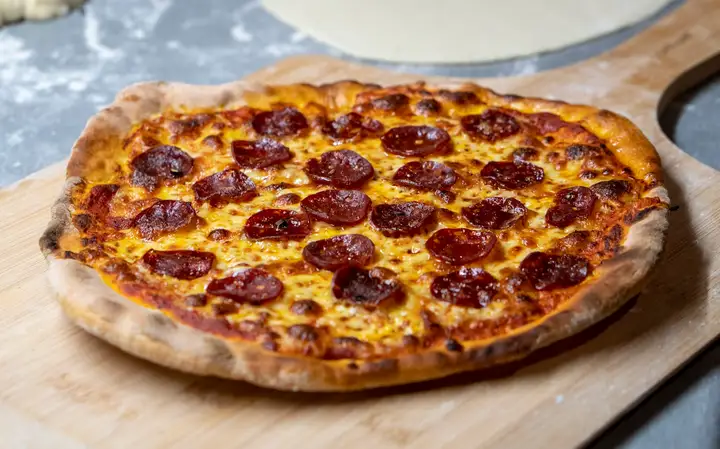
Cup-and-char pepperoni is the upgrade most home cooks miss. Standard pepperoni from a grocery deli sits flat and bleeds grease evenly. Cup-and-char pepperoni (Margherita brand, Vermont Smoke and Cure, Hormel “Rosa Grande”, or any “natural casing” pepperoni) cups into bowls during the bake, traps the rendered fat, and chars at the edges. Texture and flavor both improve.
Quattro Formaggi (Four Cheese)
Italian-tradition four-cheese pizza. The classic four:
- Mozzarella (the base)
- Gorgonzola (the funk)
- Fontina or Provolone (the melt)
- Parmesan or Pecorino (the salt and bite)
No sauce, or a very light sauce. The four cheeses each carry a different role: mozzarella for stretch, gorgonzola for pungent depth, fontina for the silky melt that mozzarella alone can’t deliver, parmesan for finishing salt. The result is rich, not subtle. Best on Neapolitan or NY-style; too rich for a heavy Detroit slab.
Capricciosa
The Italian-tradition four-quadrant pizza, divided into four equal sections:
- Cooked ham (prosciutto cotto)
- Artichoke hearts (drained, marinated)
- Mushrooms (cooked first)
- Black olives (Gaeta or Kalamata)
Over a tomato-mozzarella base. The presentation matters: four quadrants, not mixed. Capricciosa is the Italian answer to “supreme” but with more restraint. The American supreme adds pepperoni and bell peppers and onions and the result loses the architecture.
Bianca (White Pizza)
No tomato sauce, no traditional pizza-red look. The base is:
- Olive oil (brushed onto the dough)
- Mozzarella (low-moisture)
- Ricotta dollops (drained well)
- Garlic (finely minced or roasted)
- Fresh herbs (rosemary, thyme, or basil)
- Black pepper
White pizza is the cleanest demonstration of why the moisture protocol matters: ricotta straight from the container will produce a pizza so wet it weeps. Drain it 30 minutes in a fine-mesh sieve first, and bianca becomes one of the best pizzas you can make at home.
Toppings for Neapolitan pizza
The most constrained style, on purpose. The 90-second bake at 850 to 900°F doesn’t have time to cook raw vegetables or render fat, which means everything on the pizza must be ready to eat before it touches the dough.
The Neapolitan canon (per AVPN tradition):
- San Marzano DOP tomatoes (Bianco DiNapoli is the closest US substitute, see our pizza sauce recipe for the no-cook version)
- Fior di latte mozzarella (cow’s milk) or buffalo mozzarella (mozzarella di bufala)
- Fresh basil (added in the last 30 seconds, or after)
- Extra virgin olive oil
- Sea salt
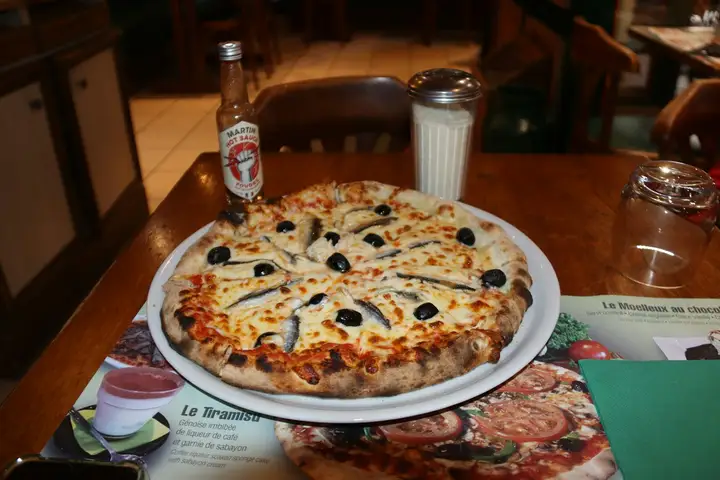
- Anchovies (for Marinara, optional)
- Garlic (for Marinara, sliced)
Acceptable additions (style-purist allowed, but not AVPN-traditional):
- Cherry tomatoes (halved, the juices burst sweetly in the high heat)
- Prosciutto crudo (raw cured ham, added after the bake)
- Arugula (added after the bake)
- Burrata (added after the bake, melts beautifully on residual heat)
Skip on Neapolitan:
- Chicken (won’t cook through in 90 seconds)
- BBQ sauce (would burn at 850°F)
- Pineapple (acidic + wet, fights the dough character)
- Bell peppers raw
- Anything in heavy quantity (the dough cannot carry it)
If you want a Neapolitan-style pizza with American load, you’re not making Neapolitan, you’re making American Neapolitan, which is fine, just call it what it is.
Toppings for New York pizza
The medium-load style. 16 to 18 inch pies, foldable slice, 6 to 8 minute bake at 550 to 600°F. This is the style most home ovens can produce well.
The NY canon:
- Low-moisture mozzarella (the technical default, see Kenji’s Polly-O test)
- Tomato sauce (slightly cooked, with garlic, oregano, sugar)
- Cup-and-char pepperoni
- Italian sausage (pre-cooked, crumbled)
- Mushrooms (dry-sautéed)
- Onions (sliced thin)
- Green bell peppers (sliced thin)
- Black olives (pitted, halved)
The 5-topping ceiling. Beyond 5 toppings, the slice droops when folded and the crust loses its crackle. The classic “supreme” (pepperoni, sausage, mushroom, onion, peppers, olives) sits right at the edge of the load capacity.
Wildcards that work on NY-style:
- Hot honey drizzle (post-bake)
- Fresh basil torn over the top after the bake
- Pickled jalapeños (drained well)
- Caramelized onions (a slow-cooked sweet alternative to raw)
- Fennel sausage (the upgrade most pizzerias don’t offer)
- Hot soppressata (cup-and-char like a spicy pepperoni)
The hot honey + pepperoni combination is the rare American innovation that improves on the classic. The honey contrasts the spice of the pepperoni and the salt of the cheese; it should be added after the bake, never before.
Toppings for Detroit-style pizza
The heavy-load style. Steel-pan rectangular, 10x14 inch dimensions, 70 to 75% hydration, baked at 500 to 525°F for 18 to 22 minutes. Detroit is built to carry weight.
The Detroit canon:
- Wisconsin brick cheese (the authentic standard, see our Wisconsin brick cheese guide)
- Pepperoni (placed UNDER the cheese, “Detroit-style cheese-up”)
- Tomato sauce (placed on TOP of the cheese, in three “racing stripes” or a single oval)
- Italian sausage (pre-cooked)
- Mushrooms (dry-sautéed)
The Detroit topping order. Cheese first (against the dough), then toppings on top of the cheese, then sauce in stripes on top of the toppings. This is the reverse of normal pizza assembly and it’s what produces the frico edge (the lacy crisp cheese running up the pan walls). Reversed assembly is the architecture, not a quirk.
Acceptable additions to Detroit:
- Caramelized onions
- Fresh basil after the bake
- Hot honey drizzle
- Bacon (pre-cooked)
- Mushrooms (cooked, drained)
Skip on Detroit:
- Fresh basil before the bake (will burn during the long high-heat bake)
- Anything raw and wet (the long bake will dry the crumb but cannot save the bottom from soggy toppings)
- Buffalo mozzarella (too wet)
Toppings for Sicilian / Grandma-style pizza
The half-sheet-pan rectangular style. 65 to 70% hydration, slow-rise dough, baked at 475 to 525°F for 18 to 25 minutes in an oiled half-sheet pan. Similar load capacity to Detroit but with a more open crumb.
The Sicilian canon (Sfincione tradition):
- Tomato sauce (with onions, anchovies, breadcrumbs, oregano, the Palermo-traditional version)
- Caciocavallo cheese (the traditional Sicilian semi-hard cheese)
- Pecorino Romano (grated on top)
- Anchovies
- Fresh oregano
The Grandma-style American canon:
- San Marzano sauce
- Low-moisture mozzarella
- Fresh basil torn over the bake
- Olive oil drizzle
- Optional: pepperoni, sausage
Skip on Sicilian:
- Wet vegetables without pre-cook (the long bake amplifies moisture issues)
- Fresh tomato slices (use sauce, not slices, the moisture migration is significant in 25 minutes of bake time)
See our Sicilian pizza dough recipe for the half-sheet-pan dough this style needs.
The cheese list (beyond mozzarella)
Mozzarella is the default for a reason: low moisture, neutral flavor, melts to the right stretch. But several other cheeses earn a place on pizza.
- Fontina: Italian-Alpine cheese, silky melt, mild nutty flavor. Best blended 50/50 with mozzarella for white pizza or quattro formaggi.
- Provolone: sharper than mozzarella, holds shape better, often blended with mozzarella in NY-style pizza for added flavor.
- Gorgonzola: blue-veined Italian cheese, pungent, best in small amounts on a four-cheese.
- Ricotta: drained well (30 minutes in a sieve), dolloped not spread, beautiful on white pizza or under the cheese on lasagna-style pizzas.
- Pecorino Romano or Parmigiano-Reggiano: hard aged cheeses, grated on top before or after the bake for salty depth.
- Goat cheese (chèvre): soft, tangy, dolloped not spread, best with a contrasting sweet element (fig, balsamic, hot honey).
- Feta: brined and crumbled, salty, holds shape in the oven without melting fully. A Mediterranean-style pizza staple.
- Burrata: torn open AFTER the bake. Burrata before the bake just turns into mediocre fresh mozzarella; burrata after the bake is the elite move.
The vegetable list (with moisture-management prep)
Every vegetable in this list requires prep before it touches the dough. The standard error is putting raw vegetables on pizza and watching the bottom get soggy.
- Mushrooms: dry-sauté in a hot pan, 5 minutes, until the water cooks off. Cremini, white button, shiitake, or porcini.
- Bell peppers: roast or sauté briefly; raw is bitter and wet.
- Red onions: slice thin, soak in cold water 10 minutes, drain. Or caramelize.
- Garlic: minced raw is fine for short bakes; roasted whole cloves for longer bakes.
- Spinach: wilt in a dry pan first, drain, squeeze. Raw spinach turns to a watery mass in the oven.
- Arugula: add AFTER the bake, never before. Raw arugula on a hot pizza tossed with olive oil and lemon is the post-bake move.
- Cherry tomatoes: halved, sprinkled with salt, used whole. The skins keep most moisture contained.
- Sun-dried tomatoes: oil-packed, drained, halved. Concentrated flavor, no moisture problem.
- Artichoke hearts: marinated, drained well. Quarter the hearts.
- Olives: pitted, halved. Kalamata, Castelvetrano, or Gaeta for Italian-traditional pizzas.
- Capers: drained, used sparingly. Adds salt and brine character.
- Fresh basil: add AFTER or in the last 30 seconds of the bake. Burnt basil tastes acrid.
- Roasted red peppers: jarred, drained, sliced. The American shortcut that works.
- Caramelized onions: cook 45 minutes in olive oil with salt; the sweet contrasts savory cheese.
The meat list (with fat/moisture prep)
- Pepperoni: cup-and-char varieties (Margherita, Hormel Rosa Grande, Vermont Smoke and Cure) outperform standard deli pepperoni.
- Italian sausage: brown in a skillet first, crumble. Raw sausage on pizza releases fat that pools on the crust.
- Hot soppressata: a spicy cup-and-char salami, increasingly common at upscale pizzerias.
- Prosciutto crudo: raw cured ham. Add AFTER the bake. Heat ruins the texture.
- Prosciutto cotto: cooked ham, can be added before the bake.
- Bacon: pre-cook to soft-crispy in a skillet or oven, crumble or chop. Raw bacon needs longer to render than pizza needs to bake.
- Pancetta: similar to bacon, salt-cured Italian style. Pre-cook briefly.
- ‘Nduja: Calabrian spreadable spicy salami. Dollop, don’t spread. Melts into a spicy paste during the bake.
- Chicken: only on NY or Detroit, not Neapolitan. Pre-cook fully, dice. Raw chicken won’t cook through in 6 minutes.
- Anchovies: skip the cheap brown ones, get the oil-packed Spanish or Italian whites. Use sparingly. Our full guide to anchovies on pizza covers which type to buy and whether to bake them on or add them after.
- Meatballs: small, pre-cooked, halved. Better as a topping than as a featured ingredient.
The “finishing” toppings (added after the bake)
These get added when the pizza comes out of the oven, not before. They wilt, they melt slightly from residual heat, but they don’t cook.
- Arugula (tossed with olive oil + lemon + salt + pepper)
- Prosciutto crudo (laid in folds across the top)
- Burrata (torn open in the center)
- Fresh basil (whole leaves)
- Hot honey (drizzled across the surface)
- Truffle oil (a few drops, never a flood)
- Lemon zest (fresh, microplaned)
- Flaky sea salt (Maldon, finishing salt)
- Black pepper (freshly cracked)
- Olive oil (a fresh drizzle)
- Parmigiano-Reggiano (microplaned, light dusting)
These are the difference between a competent pizza and a great one. Adding finishing toppings to an already-baked pie is the move that most home cooks never make and most pizzerias do reflexively.
Wildcard pizza toppings ideas worth trying
Combinations that don’t fit the canon but earn their place once you’ve mastered the basics:
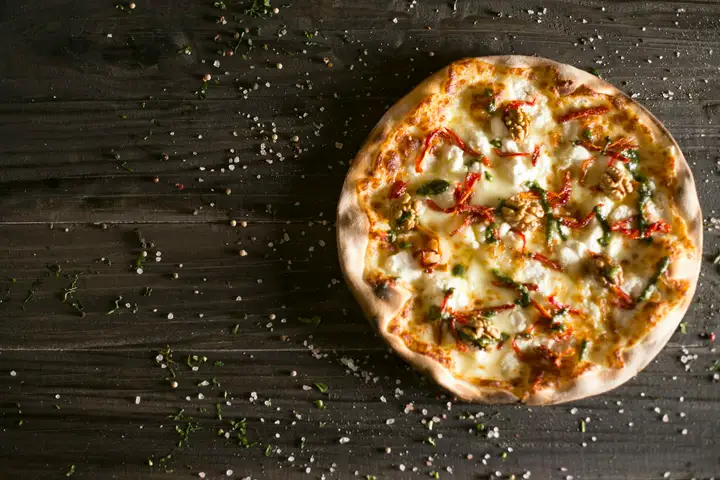
- Pear + gorgonzola + walnut + honey on a thin Neapolitan-style crust (post-bake honey)
- Fig + prosciutto + arugula + balsamic on NY-style (prosciutto and arugula after the bake)
- Potato + rosemary + sea salt Italian-tradition white pizza (paper-thin sliced potato, par-cooked)
- Clam + garlic + parsley + lemon zest New Haven-style (Frank Pepe’s invention)
- Mortadella + pistachio + ricotta + lemon zest Italian-modern (a current favorite at urban pizzerias)
- Fennel sausage + pickled chili + honey the Roberta’s-Brooklyn signature
- Spinach + ricotta + garlic + nutmeg the spinach-ricotta white pizza
- Apple + brie + caramelized onion + thyme dessert-adjacent but earns it on a thin NY crust
Each of these has been served at a real pizzeria run by people who care about pizza. None of them work on Neapolitan (by AVPN tradition); most work well on NY or thin Detroit.
What to skip / what we’d never recommend
Brand-voice section. The combinations and ingredients that don’t belong on pizza, in our opinion, with reasons.
- Raw pineapple. Acidic, wet, raw fruit on a hot pizza is a moisture bomb. Hawaiian pizza fans, drain canned crushed pineapple in a sieve 15 minutes before using.
- Pre-shredded mozzarella with anti-caking starch. The cellulose powder dusted on pre-shredded bags absorbs the cheese’s stretch and produces a grainy melt. Buy block mozzarella and grate it.
- Ranch sauce as a base sauce. Even the BBQ-chicken-ranch defenders should admit the ranch should go in a drizzle bottle on the side, not under the cheese.
- Plain raw tomato slices on a long-bake style. The slices release water, the crust gets soggy. Salt-drain them first or use sauce instead.
- Boursin / Brie / soft-rind cheeses on long bakes. They melt to a puddle and the rind tastes bitter when over-baked.
- Frozen vegetables straight to the pizza. Frozen broccoli, frozen spinach, frozen anything: thaw, drain, dry first.
- BBQ chicken on Neapolitan. This is a style-purist line we’ll defend. BBQ chicken is fine on American thin-crust or NY-style. It’s not Neapolitan. AVPN would refuse to certify a pizzeria that served it.
- Caesar salad on top of a hot pizza. This is an arena-food invention. The hot cheese wilts the salad into mush within 60 seconds. The “Caesar salad pizza” works only if served cold, after the pizza has cooled to room temperature.
- More than 5 toppings on any thin-crust style. Six toppings is overload territory. Pizzerias call this “the everything pizza” and most of them refuse to make it.
FAQ
What are the top 10 pizza toppings?
By order frequency in the US: pepperoni, mushrooms, sausage, onions, extra cheese, black olives, green peppers, fresh garlic, ham, and ground beef. Pepperoni alone shows up on roughly 35% of all pizzas ordered nationwide. The “best” depends on your style: Neapolitan rules out chicken and BBQ entirely; NY and Detroit handle most of this list.
What goes on homemade pizza?
The canonical foundation for any style: tomato sauce, mozzarella (low-moisture for melt, fresh fior di latte for Neapolitan), good olive oil, salt, and fresh basil added after the bake. Everything beyond that is optional. A Margherita is just those five plus dough, and it is widely considered the best pizza in the world.
What are the best toppings for homemade pizza?
For the typical home oven baking NY-style at 500 to 550°F: pepperoni (cup-and-char if you can find it), pre-cooked Italian sausage crumbles, thinly sliced mushrooms, fresh basil added after bake, and a finishing arugula or hot honey. For a 12-inch Neapolitan in an Ooni: fresh mozzarella torn into chunks, San Marzano sauce, basil, drizzle of olive oil. Less is more.
How many toppings should you put on a pizza?
Style-dependent. Neapolitan: 2 to 3 toppings max, by AVPN tradition (the Vera Pizza Napoletana standard). New York: 4 to 5 toppings is the realistic ceiling before the crust gets weighted down. Detroit and Sicilian: thick-crust styles can support 12 to 16 oz of total toppings, but flavor balance still matters. The “overloaded supreme pizza” is the classic American failure mode.
What this earns you
A pizza that respects the dough underneath. The two rules above (match style, manage moisture) cover most of what separates a great home pizza from a soggy disappointment. The toppings list itself is secondary; the architecture is primary.
If you only remember one thing: Margherita is undefeated. Five ingredients, ninety seconds, the best pizza in the world. Everything else is variation on a theme.