You opened the fridge, saw the boxed pizza from last night, and you have a decision to make. The microwave is fast and ruins it. The oven works but every guide gives you the same vague 350°F number with no caveats. We pulled cold pizza from the fridge in four styles (Neapolitan, NY, Detroit, Sicilian) and tested oven temperatures from 325°F to 500°F. This is what worked, what failed, and why.
TL;DR
- The best way to reheat pizza in the oven: 425°F on a preheated sheet pan or pizza stone, 5 to 7 minutes, no foil. Works for any style.
- For NY and Neapolitan, a covered skillet with a few drops of water beats the oven by about a minute and crisps the bottom faster.
- Detroit and Sicilian need the oven, not the skillet (too thick to heat evenly on the stovetop).
- Never use the microwave if you care about crust texture. It excites water molecules from the inside out, so the bottom turns wet, not crisp.
- Skip the foil. It traps steam and guarantees a soggy bottom. Bare slice on a preheated surface is the rule.
- Take cold slices out of the fridge 5 minutes before reheating. Cold inside, hot cheese, scorched bottom is the failure mode otherwise.
| Style | Oven temp | Time | Surface | Note |
|---|---|---|---|---|
| Neapolitan | 450°F | 4 to 6 min | Preheated stone | Skillet method also great |
| New York | 425°F | 5 to 7 min | Preheated sheet pan | Skillet method great for single slice |
| Detroit | 425°F | 7 to 9 min | Original pan or sheet | Re-crisp frico edge with extra minute |
| Sicilian / Grandma | 400°F | 8 to 10 min | Preheated sheet pan | Foil-tent for first 5 min if thick |
Why the microwave fails (the physics)
A microwave heats food by exciting water molecules. That works for soup and rice. It fails for pizza because the crust is the part you want crisp, which means dry and rigid. The microwave heats the moisture inside the crust, that moisture migrates outward, and you end up with a slice whose bottom is wetter than when it went in. The cheese also overheats and goes rubbery, because cheese fat re-crystallizes when it cools, and microwaving it back past 140°F faster than the crust can warm produces a greasy, tough texture.
Andrew Janjigian, the pro baker behind the Serious Eats reheat guide, explains the underlying issue as starch retrogradation: when cooled, the gelatinized starches in baked bread re-crystallize into a tougher structure (this is the same process that stales bread overnight). Heat reverses retrogradation, but only if you can get the crust dry-heat warm to the point that the starches melt back. The microwave never gets it there because the surrounding moisture vapor cools the crust faster than the wattage warms it.
The oven, the skillet, the toaster oven, the air fryer, the pizza stone all work because they apply dry, conductive or radiant heat to the bottom of the slice and let the cheese warm second. The microwave is the only method that reverses that order.
The default oven method (works for any style)
This is the right answer for most people most of the time:
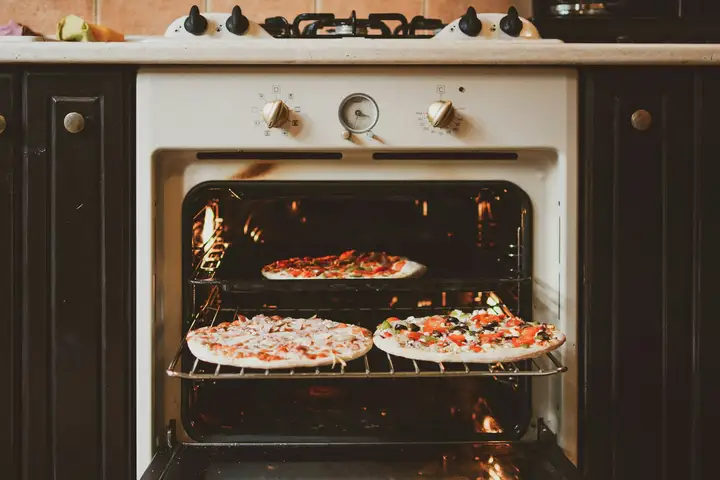
- Preheat the oven to 425°F with a sheet pan or pizza stone already inside on the middle or lower rack. Let it heat for 10 to 12 minutes after the oven beeps so the metal or stone is genuinely up to temperature, not just the air. (If you only own a pizza stone, see pizza stone vs steel for what each surface does.)
- Take the slice out of the fridge 5 minutes before the oven is ready. Cold pizza dropped on a 425°F surface heats from the bottom up, and a fridge-cold center won’t catch up before the cheese starts to burn.
- Slide the slice directly onto the preheated surface, no foil, no parchment, no cold pan. The contact between the cold pizza bottom and the hot pan is what re-crisps the crust.
- Bake 5 to 7 minutes until the cheese sizzles at the edges and the bottom is crisp when you lift the slice with a peel or spatula. If the bottom is still pale, give it 60 to 90 more seconds.
- Let it rest 30 seconds before eating. The cheese is molten and the underside is brittle right out of the oven. The 30-second rest lets both stabilize.
The temperature matters more than the time. 350°F is the default in most guides because it’s safe, but it dries the crust before the cheese melts. 425°F to 450°F is the sweet spot: high enough to re-crisp the bottom and re-melt the cheese without scorching either.
How to reheat New York-style pizza
NY-style is built for reheating. The crust is thin enough to crisp in 5 minutes, sturdy enough not to tear, and the cheese-to-sauce ratio is forgiving. The classic NY-pizzeria reheat is just a slice tossed into a 500°F deck oven for 90 seconds, but home ovens don’t get there in 90 seconds.
For the home oven: 425°F on a preheated sheet pan, 5 to 7 minutes. If your slice has thinned out and the crust is barely structural, drop to 6 minutes; if it was a thick NY-style (foldable but not floppy), 7 is fine.
For a single slice, the skillet method is faster and arguably better: heat a 10-inch nonstick or cast-iron skillet over medium heat (no oil) for 2 minutes. Drop the slice in. After 90 seconds, add 2 to 3 drops of water (not a tablespoon, drops) at the edge of the pan, then immediately cover with a lid. The water flashes into steam, melts the cheese in 30 to 60 seconds, and the dry pan re-crisps the bottom the whole time. Total: about 3 minutes. This is what professional pizzaiolos do at home when there’s only one slice left.
The same method appears in the America’s Test Kitchen reheat guide and in Food & Wine’s six-method test, which named the covered skillet the winner. The reason it works: pan = re-crisp, water = melt, lid = trap the steam. None of the three steps alone produces the right texture.
If you made the dough yourself, the New York-style pizza crust recipe guide covers what makes a good NY base in the first place, including how the high-gluten flour holds up to a second heating.
How to reheat Neapolitan pizza
Neapolitan is the hardest style to reheat well because the original bake (90 seconds at 850 to 900°F) produces a crust with a soft, slightly wet center and a leopard-spotted leoparding char on the bottom. A second bake in a home oven cannot replicate that. The best you can do is restore the crisp bottom and re-melt the cheese without drying the crumb.
Use 450°F on a preheated stone, 4 to 6 minutes. Higher heat is better here because the crust is thin enough to scorch if you wait too long. The stone (or a cast iron skillet flipped upside down on the rack) gives you the conductive bottom heat that mimics what the original bake did. Don’t use a sheet pan, the airgap underneath the slice slows the bottom heat too much.
The skillet method also works beautifully for Neapolitan. The 3-minute skillet-plus-water approach above re-crisps the bottom and the cheese reheats faster than the soft crumb dries out, which is the right ratio for this style. Use the skillet for one slice; use the oven for two or more.
What you cannot do: revive an authentic 12-inch Neapolitan that was cooked to the proper soft-center state the next day. The center will be wet no matter what you do, because retrogradation isn’t fully reversible once the moisture has migrated. This is the one style where eating it fresh is part of the deal. Our Neapolitan pizza dough recipe discusses why the 90-second bake produces a structure that doesn’t keep.
How to reheat Detroit-style pizza
Detroit is a different problem entirely. The frico edge (the lacy, crisp cheese that runs up the pan and over the top) is fragile and recooks differently than the dough crust. The crumb is thick and high-hydration, the cheese has fat that re-crystallized in the fridge, and the sauce is on top of the cheese, which means the second bake has to be hotter than you think to fix everything.
Use 425°F on a sheet pan or, ideally, the original Detroit pan, 7 to 9 minutes. If you have the original 10x14 anodized steel pan, reheat the whole slab in that, no oil added. The pan was seasoned during the original bake; reheating in it re-crisps the frico edge and gives you back something close to fresh-out-of-the-oven.
For a single slice on a sheet pan: 425°F, 7 minutes, then check. The bottom should be crisp and the frico edge audible-crunchy when you tap it with a fork. If the edge isn’t crisping back up, give it 90 more seconds. Don’t tent with foil, the frico needs dry heat to dehydrate back to its original state.
The cheese on top will look browned because it browned twice. That’s correct for Detroit. The Detroit-style pizza recipe and Wisconsin brick cheese for Detroit-style pizza walk through what the cheese is supposed to do on the original bake, which is the same chemistry happening again on the reheat.
How to reheat Sicilian / Grandma / thick-crust styles
Sicilian and Grandma are the most forgiving styles to reheat and the easiest to over-do. They’re thick (3/4 inch and up), so the inside takes time to warm, and the bottom can over-crisp if you don’t watch.
Use 400°F on a preheated sheet pan, 8 to 10 minutes. Lower than the default 425°F because of the thickness, longer because the inside has to catch up. If the slice is more than an inch thick (a real Sicilian sfincione, not the American-pizzeria version), tent the top with a piece of foil for the first 5 minutes, then remove the foil for the last 3 minutes. This prevents the top from over-browning while the middle warms.
For the Sicilian pizza dough recipe and the science of what makes this style work, including the high-hydration crumb structure that retains moisture better than NY-style, see the dedicated guide. The fact that Sicilian-style stays moist longer is also why it’s the easiest style to reheat well 48 hours later.
When the skillet beats the oven
For one slice of thin-crust pizza (NY, Neapolitan, or generic American thin), the covered skillet method is faster and produces an arguably better bottom crust than the oven. Both Serious Eats and Food & Wine independently arrived at this as their winner.
The method, step by step:
- Heat a dry 10-inch nonstick or cast iron skillet over medium heat for 2 minutes. No oil.
- Drop the slice in. Listen for the sizzle; if it doesn’t sizzle, the pan isn’t hot enough.
- After 90 seconds, add 2 to 3 drops of water (literally drops, from your finger or a spoon) at the edge of the pan, far from the slice.
- Immediately cover with a lid that fits the pan. The water flashes to steam, melts the cheese, and gets trapped under the lid.
- After 30 to 60 more seconds, lift the lid. The cheese should be glossy and the bottom should be crisp. Total time: about 3 minutes.
This method wins for single slices because the conductive heat from the pan re-crisps the bottom faster than a slice can dry out, and the trapped steam re-melts the cheese without overheating it.
It loses for: more than one slice (the pan isn’t big enough), Detroit (the slab is too thick), Sicilian (same), and any reheat where you actually want the top to brown (the lid prevents it).
What kills a reheat
The five mistakes that ruin a reheated slice, in order of how often we see them:
- The microwave. Even 30 seconds destroys the crust. We don’t care if your timeline is tight, the pan is faster.
- Foil-wrapping the slice. Traps steam and produces a soggy bottom every time. The only foil that belongs in a reheat is a tent above thick Sicilian for the first 5 minutes, not wrapped around anything.
- Cold pan, cold oven. If the surface isn’t preheated, the slice steams instead of crisping. Preheat the sheet pan or stone inside the oven for the full preheat plus 5 minutes. The metal needs to actually be 425°F, not just the air around it.
- Reheating straight from the fridge. A 35°F center reaching 140°F before the cheese burns is a tight window. Give it a 5-minute counter rest first, the inside loses the chill and the outside has time to crisp evenly.
- Lower than 400°F. 350°F is the default in most internet guides and it’s wrong. It dries the crust before the cheese melts because the cheese needs ~180°F to re-melt cleanly and at 350°F the bottom is dehydrating long before the top is there.
Also skip the toaster oven for anything thicker than NY. The element is too close to the top of the slice and you’ll scorch the cheese before the bottom is warm. Toaster ovens work for thin Neapolitan singles, not Detroit or Sicilian.
Reheating frozen leftover slices
A slice you wrapped in plastic and froze for later is a different problem than a refrigerated slice. The frozen slice has ice crystals throughout the crumb, and those crystals will steam during reheat. If you reheat from frozen at the standard 425°F, the bottom will burn before the inside thaws.
The method: defrost on the counter for 20 to 30 minutes (or in the fridge overnight), then follow the regular reheat for the style. A 30-minute counter-thaw drops the slice from 0°F to 45°F (still cold), the oven does the rest. Don’t try to defrost in the microwave, you’ll get the worst of both methods: a steamed crust and a partially thawed center.
If you’re freezing pizza intentionally, the right way is to freeze the slice flat on a parchment-lined sheet pan for an hour, then wrap. This keeps the crust from sticking to itself and from absorbing freezer odors. A properly frozen and wrapped slice keeps 2 to 3 weeks before the crust quality drops.
Reviving a 3-day-old slice (the staling problem)
A pizza that’s been in the fridge for 3 days isn’t just colder, it’s staler. The starches have continued to retrograde, the cheese has fully re-crystallized, and the crust has lost moisture to the open air of the fridge. A standard reheat can’t fix all three.
The 3-day method: brush the bottom of the slice very lightly with water (use your finger, not a brush, you want a film, not droplets), then reheat at 425°F on a preheated sheet pan for 7 to 8 minutes. The water rehydrates the crust as it heats, which partially reverses retrogradation. The cheese will still be slightly more rubbery than day-one, that’s the limit of what’s recoverable.
If the slice has visibly dried at the edges (the crust has receded from the sauce), it’s done. No reheat method recovers a 3+ day-old slice that’s lost structural moisture; eat it as-is or compost it.
What to skip
- The microwave. Already said it twice, third time for the back row.
- 350°F as a default temperature. Too low; the crust dries before the cheese melts. 425°F is right.
- Foil-wrapped reheats. Soggy bottom guaranteed. The only foil that belongs near a reheat is a tent over Sicilian, not a wrap.
- Adding oil to the skillet for the skillet method. The pan is dry on purpose; the slice has enough fat from the cheese. Oil just smokes.
- Reheating multiple slices stacked on one another in the oven. Each slice needs surface contact with hot metal. Stacking gives you one re-crisped bottom and one steamed top.
- Cold preheated pan. “Preheated” means the pan or stone was inside the oven the whole preheat plus 5 minutes, not “I put the slice on a cold pan and slid it in.”
- The toaster oven for anything thicker than NY. The top heating element scorches the cheese before the bottom warms.
FAQ
How long do you reheat pizza in the oven at 350 degrees?
About 8 to 10 minutes at 350°F, but 425°F for 5 to 7 minutes is better. Lower temperatures dry the crust before the cheese melts; higher heat re-crisps the bottom and gets the cheese sizzling in roughly half the time.
How do professional chefs reheat pizza?
A covered skillet over medium heat with a few drops of water, lid on for the last 30 to 60 seconds. The dry pan re-crisps the bottom crust, the steam from the water melts the cheese without drying it. Both Serious Eats and Food & Wine independently arrived at the skillet method as the winner.
What are common mistakes when reheating pizza?
The microwave (water-molecule excitation makes the crust wet, never crisp). Wrapping in foil (traps steam, soggy crust guaranteed). Cold pan, cold oven (the bottom stays pale and limp). Reheating slices straight from the fridge without a 5-minute counter rest (the inside stays cold while the cheese burns).
Is it better to reheat pizza in the oven or pan?
Pan for thin styles (Neapolitan, NY), oven for thick styles (Detroit, Sicilian, Grandma). A pan re-crisps the bottom faster than a slice can dry out. An oven evenly warms a deep slab without scorching the bottom before the middle is hot.
What is the best way to warm up leftover pizza in the oven?
Preheat to 425°F with a sheet pan or pizza stone inside. Once the pan is hot (10 to 12 minutes), slide the slice directly onto it, no foil, no parchment. Bake 5 to 7 minutes until the cheese sizzles and the bottom is crisp.
What this earns you
A reheated slice that, depending on style and method, lands at 80 to 95% of the original. Neapolitan tops out at about 80% because the soft-center crumb is a fresh-bake-only feature. Detroit and Sicilian get to 95%+ because their thick high-hydration crumb is more forgiving. New York sits at 90%. The microwave gets you 30%, every time.
The right method depends on the style and how many slices you have. If there’s a slice left over and you remember just one thing: 425°F, preheated sheet pan, 5 to 7 minutes, no foil. That’s the right answer 90% of the time.