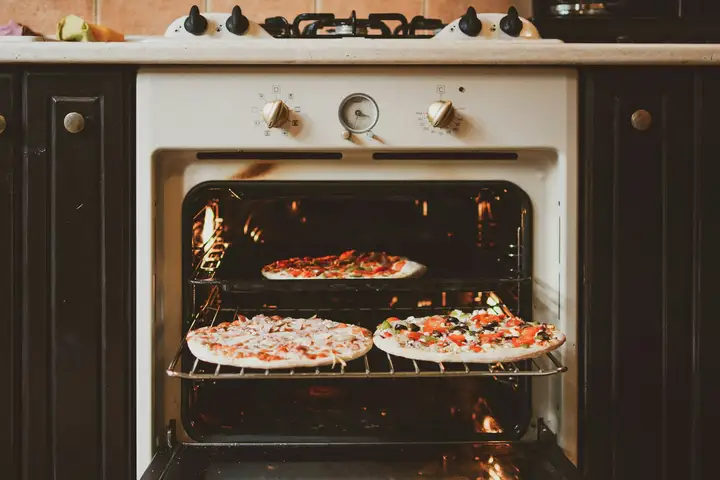
Here is how to clean a pizza stone: let it cool completely, scrape off stuck food with a metal spatula, brush away loose debris with a dry brush, then wipe with a barely-damp cloth. No soap, ever. The stone’s porous surface absorbs detergent permanently, and every pizza you bake afterward tastes like it. That default method covers the cordierite and ceramic stones most home cooks own; the burn-off method (below) handles anything a scraper can’t, and baking steels play by different rules entirely. The right method depends on what your stone is actually made of.
TL;DR
- Never use soap on a pizza stone. The porosity absorbs it and the next pizza tastes like detergent. This is permanent.
- Never use the dishwasher. Thermal shock cracks the stone.
- The default method: cool completely, scrape with a metal spatula, wipe with a damp (not wet) cloth, air dry 24 hours.
- The burn-off method (for stuck-on food): empty oven, 500°F for 30 to 60 minutes, cool, then scrape off the carbonized ash.
- Do NOT season a pizza stone with oil. This is the most common bad advice on the internet. Cordierite and ceramic stones aren’t cast iron. Oil produces smoke when heated, ruins the stone’s porosity, and creates rancid flavor over time. Only baking steels need oil.
- Darkening is patina, not damage. A used stone WILL turn black in patches. This is the desired state.
- Hairline cracks are fine, structural cracks mean replacement. If the stone breaks into two pieces or has cracks more than 2 mm wide, the bake heat distribution is compromised and it’s time for a new one.
Why you can’t clean a pizza stone like other cookware
A pizza stone is not a coated pan, a piece of cast iron, or a baking sheet. It is a slab of porous fired clay (ceramic) or a magnesium-rich mineral (cordierite) designed to absorb moisture from the dough during the bake and conduct heat upward into the crust. The porosity that makes the stone work for baking is exactly what makes soap and oil unwelcome guests.
When you soap a pizza stone, the surfactants soak into the millions of microscopic pores. Heat will not evaporate them. The next time you bake, the stone releases soapy fumes into your pizza. The flavor is permanent and the only fix is replacement.
When you oil a pizza stone (as cast iron seasoning), the oil polymerizes on the surface BUT also wicks into the pores. It smokes at pizza-baking temperatures (above 500°F), turns rancid over time, and reduces the stone’s ability to absorb moisture from the dough. The result: greasier, less crisp pizza, and a stone that smells off when you preheat it.
The right cleaning is mechanical (scraping) and thermal (heat), not chemical. The right post-clean is air, not heat or oil. Everything else flows from those two rules.
The 4 pizza stone materials and how they handle cleaning
Not all “pizza stones” are the same material, and the cleaning method changes between them.
Cordierite (most outdoor pizza ovens, FibraMent, Heritage)
Cordierite is a magnesium-iron-aluminum silicate, the same material used in kiln shelves and industrial heat-resistant tiles. It’s what Ooni, Gozney, and most professional outdoor pizza ovens ship with. It’s the most heat-tolerant pizza stone material (rated for 1,000°F+ without thermal shock concerns) and the most porous, which is both its strength (best moisture absorption from dough) and its cleaning constraint (most likely to absorb soap or oil permanently).
FibraMent, the NSF-certified pizza stone manufacturer in Made in USA cordierite, publishes specific care instructions on their site: scrape mechanically, never soap, never oil, air dry 24 hours. This is the industry standard for cordierite.
Cleaning protocol:
- Cool completely (cordierite is the most thermal-shock-resistant material but still respects the same physics)
- Scrape with a metal spatula or stiff plastic dough scraper
- Wipe with a barely-damp cloth (not wet)
- Air dry 24 hours before next use OR the burn-off method (below) for stuck-on food
Ceramic / clay (Old Stone, generic pizza stones)
Standard ceramic pizza stones are fired clay, typically rectangular or round, sold at hardware and kitchen stores for $20-50. They are more brittle than cordierite (more prone to cracking from thermal shock) and slightly less porous. The cleaning protocol is identical to cordierite but with more thermal-shock caution: never put a cold ceramic stone into a hot oven, and never put hot water on a hot stone.
The Serious Eats 2026 pizza stones review tested 7 stones for bake performance and durability; their top pick is a cordierite stone, with ceramic Old Stone-format stones as runners-up.
Cleaning protocol: same as cordierite, with extra caution around temperature changes.
Baking steel (Baking Steel, Original Steel)
A baking steel is a slab of solid steel (typically 1/4 to 1/2 inch thick) that conducts heat 18x faster than ceramic. It’s the alternative to a stone for home ovens. Care is completely different from ceramic stones because steel is not porous.
Baking steels need to be oiled and seasoned like cast iron, NOT cleaned with water. Read our deeper comparison at pizza stone vs steel, or Serious Eats’ baking steel vs baking stone explainer.
Cleaning protocol for baking steel:
- Cool to warm (not cold)
- Scrape off food residue with a metal spatula
- Wipe with a slightly damp cloth (water is okay on steel, brief contact)
- Oil lightly with neutral oil (canola, grapeseed, or flaxseed), a thin film, no more than 1 tsp on a 14x16 steel
- Wipe excess with a paper towel; the steel should look matte, not glossy
- Heat at 400°F for 20 minutes to polymerize the oil
The key distinction: baking steels need oil; pizza stones do not. Confusing the two is the source of most bad seasoning advice on the internet.
Soapstone (uncommon, but used in some pizza ovens)
Soapstone is a metamorphic rock used in some artisanal pizza ovens (notably some Tuscan-style wood-fired ovens). It’s nonporous, easier to clean than cordierite, and tolerates water and even mild soap better than ceramic. Most home cooks won’t encounter it. If you have a soapstone surface in a pizza oven, the manufacturer’s care instructions are authoritative; the general rule is “treat it more like a kitchen counter than a stone”.
How to clean a pizza stone: the default method (cordierite + ceramic)
This is the right method for 90% of home pizza stones. Step by step:
Step 1: Let the stone cool completely
This is non-negotiable. A 500°F stone hit with room-temperature water or a cool damp cloth can crack from thermal shock. Cordierite is more tolerant than ceramic but the rule applies to both. Cooling time: at least 2 hours, ideally overnight. Leave the stone in the oven as it cools.
If you need the stone clean for tomorrow morning, let it cool 2 hours, then start cleaning. Don’t rush it.
Step 2: Scrape off food residue
Use a metal spatula, a stiff plastic dough scraper, or a dedicated pizza stone brush. Hold the tool at a low angle (15 to 30 degrees) to the stone surface and push the residue off. Don’t gouge or dig; scrape parallel to the surface.
Burnt cheese is the hardest residue. If it doesn’t come off with a metal spatula and firm pressure, move to the burn-off method (below). Do not soak the stone or use steel wool, both will damage it.
Step 3: Wipe with a barely-damp cloth
Use a clean kitchen towel or paper towel, dampened with cold water and wrung out so it’s not actively dripping. Wipe the surface in long passes to lift any remaining fine residue.
Never run the stone under the tap. Never submerge it. Water that gets deep into the pores takes 24 hours to fully evaporate, and using the stone while still damp can cause it to fracture on the next heat-up.
Step 4: Air dry 24 hours before next use
Leave the stone on a wire rack at room temperature for 24 hours. The pores need to fully dry before the next thermal cycle. If you must use the stone sooner, preheat the oven slowly (start at 200°F, hold 30 min, raise to 400°F, hold 30 min, then up to pizza temperature) to give absorbed moisture time to escape without fracturing the stone.
The 24-hour air-dry rule is also why pros own two stones: one rests while the other works.
The burn-off method (for stuck-on food)
When the scrape-and-wipe method fails, the burn-off method is the answer. This is the cleaning method Ooni recommends as Step 1 in their official cordierite care guide.
Method:
- Place the empty stone on the middle or lower rack of a cold oven
- Heat the oven to 500°F (or the highest setting if your oven goes lower)
- Hold at temperature for 30 to 60 minutes (longer for thicker residue)
- Turn off the oven, leave the stone inside, cool completely (4+ hours)
- Once cool, scrape off the now-carbonized residue with a metal spatula
The high heat carbonizes burnt cheese, sauce, dough, and oil into a flaky black ash that scrapes off without effort. Stone porosity is preserved, no soap or water involved.
This is also the right method when you’ve inherited a used pizza stone or pulled one out of long storage. A 60-minute burn-off resets the surface chemistry to something close to neutral.
Two important notes:
- The burn-off will smoke. Open windows, turn on the range fan, and don’t do this with a fire alarm directly above the oven without warning anyone in the house.
- The stone will turn darker, not lighter. The visible carbonization is what loosens the bonded residue; the resulting dark patina is patina and is fine.
Troubleshooting by problem
Five common pizza stone problems, with the right fix for each.
Greasy stone (oil residue, won’t clean off)
Cause: someone (or you) oiled the stone trying to “season” it. The oil has polymerized into the pores.
Fix: burn-off method, 1 to 2 cycles. First cycle at 500°F for 60 minutes carbonizes the oil. Scrape. Second cycle at 500°F for 30 minutes if any tackiness remains. Accept that the stone now has a darker baseline color permanently.
Prevention: never oil a pizza stone. The myth that “cast iron pizza stones need seasoning” is propagated by sites that don’t know what their own stone is made of. Read the manufacturer’s instructions. If the instructions say “do not oil”, they mean it.
Burnt-on food
Cause: cheese, sauce, or sugar in dough that drips and bakes onto the stone.
Fix: burn-off method as above. For very thick or stubborn deposits, two 60-minute cycles back to back will handle almost anything. Pizza shops use industrial burn-off cycles that run multiple hours; your home oven can do the same job slower.
Smelly stone
Cause: usually trapped moisture combined with old food residue starting to harbor bacteria, or rancid oil if someone oiled the stone.
Fix: burn-off method (high heat sterilizes the surface), followed by 48 hours of dry storage in open air. If the smell persists after one burn-off cycle, the stone may have absorbed enough soap or other contaminant in the past that it’s effectively ruined. Replace.
Stained / darkened stone (just the color)
Cause: normal use. The stone darkens over time as it absorbs flour, char, fat, and the carbonized residue of hundreds of bakes.
Fix: don’t fix it. The dark patina is what experienced pizza cooks want. It improves the stone’s nonstick behavior over time. You can do a burn-off cycle to remove surface char if you really want a uniform color, but the stone will still be darker than new.
Cracked stone
Cause: thermal shock (cold water on hot stone, or cold stone in hot oven), or dropping it, or just age + thousands of heat cycles.
Diagnostic:
- Hairline cracks (less than 1mm wide, surface-only): fine to keep using. Doesn’t affect bake.
- Visible cracks (1 to 3mm wide, possibly going partially through): use carefully, may crack further. Replacement is recommended within the next few months.
- Cracks 3mm+ or stone in two or more pieces: replace. The heat distribution is compromised and the stone may shatter further during the next bake.
Replacement: a quality cordierite stone is $40 to $80; a FibraMent (the high-end choice) runs $80 to $150 depending on size; a baking steel runs $80 to $150 for a 14x16. See our pizza stone vs steel guide for the comparison.
Why you should NOT season a pizza stone
This is the most consistent piece of bad advice on pizza-stone-cleaning articles online. Cordierite and ceramic stones do not need seasoning. Oiling them ruins them.
The confusion comes from cast iron. Cast iron is a non-porous metal that develops a polymerized oil coating (seasoning) that prevents rust and creates nonstick behavior. Pizza stones are porous ceramics that do not rust and do not benefit from oil; the oil just clogs the pores, smokes when heated, and turns rancid.
Pizza stones develop a different kind of “seasoning” naturally: a carbonized residue layer from normal baking. This patina IS the seasoning. It’s free, it builds itself, and trying to accelerate it with oil sabotages the process.
The only pizza-baking surface that needs oiling is a baking steel, because steel is non-porous metal (like cast iron). If your “pizza stone” is metal, oil it. If it’s ceramic or cordierite, do not oil it.
If you’ve already oiled your pizza stone, do the burn-off method (twice if needed) and accept the darker color. The stone is recoverable; it will never look new again but it will still bake fine.
What to skip / what to never do
- Soap or detergent. Permanent. The stone absorbs it; your next pizza tastes like dish soap.
- The dishwasher. Cracks the stone from thermal shock + soap exposure.
- Submerging in water or running under the tap. Soaks the pores, takes days to fully dry, can cause the stone to fracture on next heat.
- Steel wool, abrasive scrub pads, or wire brushes. Damages the surface.
- Oven cleaner, commercial degreasers, bleach. Absorbed permanently like soap.
- Cold water on a hot stone OR hot water on a cold stone. Thermal shock.
- Storing the stone wet. Mold, mildew, and fracturing on the next heat.
- Oiling a ceramic or cordierite pizza stone “to season” it. Wrong material for that treatment, ruins the stone.
- Believing the “salt-scrub” method some sites recommend. Salt is mildly abrasive but it absorbs into the porous stone and can taint subsequent bakes. The burn-off method is cleaner.
- Trying to make the stone look new again. It won’t. The patina is the value.
FAQ
Does a pizza stone need to be washed?
Almost never. Brush off crumbs and wipe with a barely-damp cloth. Avoid water-rinsing on cordierite stones if you can; if you must, dry the stone for 24 hours before next use. Soap is permanent, the stone’s porosity absorbs it and the next pizza will taste like dish detergent.
How do you make a pizza stone look new again?
You don’t, and you shouldn’t try. Darkening is patina, not damage. A used pizza stone will never look new and the carbonized residue actually improves nonstick behavior. The closest you can get is the burn-off method (empty oven, 500°F for 30 to 60 minutes), which removes loose char but won’t restore factory color.
Why did my pizza stone turn black?
Normal. The black is carbonized food residue (fats, sugars, flour) baked onto the stone over time. This is patina and it’s the same process that builds up on cast iron, just without the oil. The stone will continue to darken with use and that’s the desired state, not a problem to fix.
How to get burn marks out of pizza stone?
The burn-off method: place the empty stone in a cold oven, heat to 500°F, hold for 30 to 60 minutes, let cool completely, then scrape with a metal spatula or stiff plastic dough scraper. The high heat carbonizes burnt food into ash that scrapes off easily. Never use steel wool, soap, or oven cleaner.
What is the best way to clean my pizza stone?
Material-dependent. Cordierite and ceramic: cool completely, scrape off solids, wipe with a damp cloth, air dry 24 hours. Baking steel: scrape, oil lightly (a thin film, like cast iron), no water. Never use soap, the dishwasher, or thermal-shock the stone with cold water on a hot surface.
What this earns you
A pizza stone that lasts a decade instead of cracking in a year. A well-kept cordierite stone with hundreds of bakes on it turns uniformly black, builds patina on the bottom, and releases pizzas more cleanly than it did new. That’s the trajectory you want.
If you remember just three things: no soap, no oil, no dishwasher. Add the burn-off method for stuck-on food, the 24-hour air-dry after any water contact, and you’ll never need to buy another pizza stone. Use the same one for years and let it earn its patina honestly. Once you’ve got the stone sorted, the next thing to nail is pizza oven temperature and the pizza style you’re cooking on it, whether that’s in the oven or out on the grill.