Most regional pizza styles are variations on a theme: change the crust thickness, the char, the cheese, and you have a new city’s pie. St. Louis style breaks the theme entirely. It uses no yeast, a cheese almost nobody outside Missouri has tasted, and it comes cut into little squares. It is the most distinctive, and most divisive, regional pizza in America.
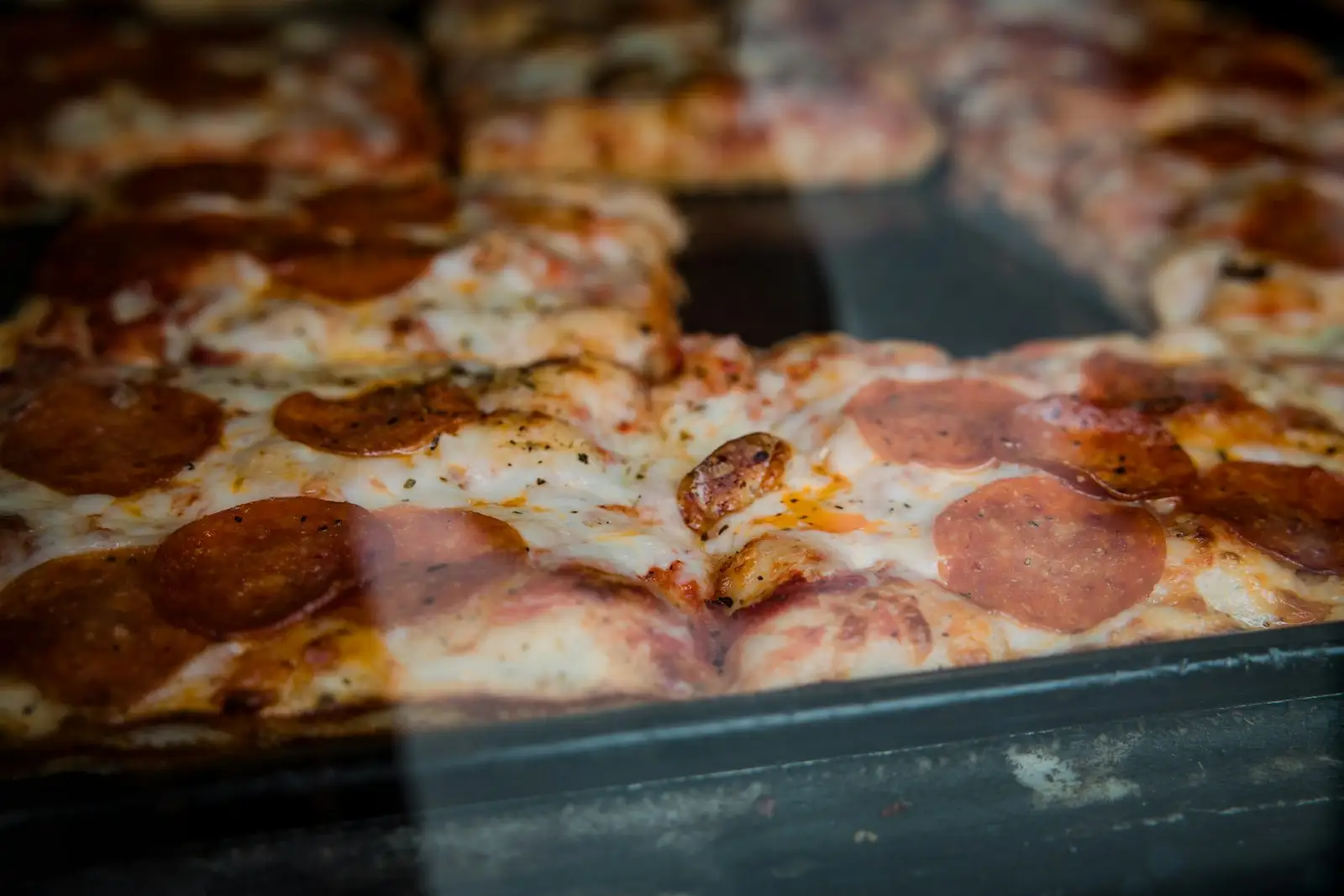
St. Louis style pizza is a thin, unleavened cracker-crust pizza topped with sweet tomato sauce and Provel, a gooey processed cheese blend of cheddar, Swiss, and provolone, then cut into small squares known as the tavern or party cut. It comes from St. Louis, Missouri, and Imo’s Pizza is its best-known maker.
This guide covers what actually defines the style, the strange and wonderful cheese at its center, the cracker-crust chemistry, the history, why people argue about it, and how to get close to it in your own kitchen.
Who this is for: anyone who has heard St. Louis pizza is “weird” and wants to understand it, any transplanted St. Louisan trying to recreate it, and any pizza obsessive filling in the regional map.
TL;DR
- Four pillars: unleavened cracker crust, sweet oregano-heavy sauce, Provel cheese, and a square (tavern) cut.
- Provel is the defining element: a white processed blend of cheddar, Swiss, and provolone plus liquid smoke, with a low melting point that goes fully molten and gooey.
- The crust has no yeast. It is rolled thin and bakes up crisp and cracker-like, not chewy.
- The cut is squares, not wedges, called the party or tavern cut.
- It is polarizing, mostly because of Provel. The honest move is to judge it on its own terms, not as a failed New York slice.
- You can approximate it at home with a cracker crust and a provolone-cheddar-Swiss blend, but real Provel barely leaves St. Louis.
What makes a pizza St. Louis style?
St. Louis style is defined by four features working together, and missing any one of them means you have made something else. Per Wikipedia’s entry on the style, the pizza has a thin cracker-like crust made without yeast, a sweet tomato sauce, Provel cheese, and a cut into squares rather than wedges.
None of those four is a minor tweak. A yeastless cracker crust is a fundamentally different bread from the fermented dough under almost every other pizza. Provel is not a substitution for mozzarella so much as a different category of cheese. The sweet sauce leans in a direction most pizza sauces avoid. And the square cut changes how you eat the thing. Take the four together and you get a pizza that has more in common with a loaded cracker than with a Neapolitan pie, which is exactly the point. Compare it to its nearest relatives, the tavern-style thin crust of the Midwest and the square Detroit style, and St. Louis still stands apart on the cheese alone.
Provel cheese: the heart of it
You cannot understand St. Louis pizza without understanding Provel, because Provel is the thing that makes it strange to outsiders and beloved to locals.
Provel is a white processed cheese, a blend of cheddar, Swiss, and provolone with liquid smoke added, as documented in Wikipedia’s Provel cheese entry. That combination gives it three signature traits: a low melting point, a gooey, almost fondue-like texture, and a buttery, faintly smoky flavor. Where mozzarella stretches and strings, Provel goes completely molten and then sets into a soft, sliceable layer. It was reportedly engineered for exactly that behavior: a cheese with a clean bite that melts smoothly but breaks off neatly when you cut or bite a stiff cracker crust.
The name itself tells the story. The most popular theory is that “Provel” is a portmanteau of provolone and mozzarella, the two cheeses it was meant to stand in for. Its history is genuinely local: it was developed for St. Louis pizza in the 1940s by Costa Grocery (now Roma Grocery on the Hill, St. Louis’s Italian neighborhood) working with Hoffman Dairy of Wisconsin, and the Provel trademark dates to 1947. Imo’s Pizza founder Ed Imo is often credited with popularizing it through his chain.
Here is the catch for everyone outside Missouri: Provel is rarely sold anywhere but St. Louis. You find it at St. Louis grocery chains like Schnucks and Dierbergs, and at some Hy-Vee stores across the Midwest, and that is about it. It is made in Wisconsin primarily for the St. Louis market. You can have it shipped, but you will not stumble on it in a normal supermarket. That scarcity is a big part of why the style stayed regional: the defining ingredient does not travel.
The cracker crust
The second pillar is a crust unlike almost any other pizza base. St. Louis crust is made without yeast, rolled thin, and baked until it is crisp and cracker-like. There is no rise, no chew, no airy cornicione. It is a flat, rigid, snappy base built to be a platform, not a bread.
The chemistry is the opposite of what makes a New York crust chewy. No yeast means no fermentation and no gas bubbles, so the dough stays dense and flat. Rolling it thin and often docking it (pricking it with a fork) keeps it from puffing. And the fat in the dough does the rest: fat coats flour proteins and shortens the gluten strands, which is what makes the baked crust break cleanly like a cracker instead of tearing like bread. In a detailed St. Louis pizza recipe, Serious Eats found that using shortening in place of oil limits gluten development further for an even crisper result. The through-line is simple: no yeast, low hydration, rolled thin, enough fat for shortness, baked crisp.
The sweet sauce
The third pillar is a tomato sauce that leans sweeter and more heavily oregano-seasoned than the sauce on most other styles. It is not dessert-sweet, but it has a noticeable sweetness that plays against the tangy, smoky Provel.
Wikipedia attributes that sweetness to the influence of Sicilian immigrants on Italian-American food in St. Louis, the same community whose grocery on the Hill helped invent Provel in the first place. If you want to approximate it, start from a simple pizza sauce, lean harder on the dried oregano, and add a small amount of sugar. The sweetness is a real part of the style’s identity, not an accident.
The tavern cut
The fourth pillar is how it is cut. Instead of large wedges, a St. Louis pizza is cut into small three to four inch squares, a pattern called the party cut or tavern cut. The rigid cracker crust makes this work: stiff little squares hold their toppings and are easy to grab off a shared pie without flopping.
There is a good origin story here, too. It has been suggested that the square cut was inspired by Imo’s founder Ed Imo’s former career as a tile-layer, cutting the pizza in a grid the way he once cut tile. Whether that is literally the reason or a good tale that stuck, the square cut is now inseparable from the style, and it is one of the fastest ways to spot a St. Louis pie.
A short history (and a debated origin)
St. Louis style came together in the mid-20th century in the city’s Italian-American community. Costa Grocery on the Hill developed Provel with a Wisconsin dairy in the 1940s, and pizzerias built the cracker-crust, sweet-sauce, square-cut format around it. Imo’s Pizza, founded by Ed and Margie Imo in 1964, became the style’s standard-bearer, to the point that “Imo’s” and “St. Louis style” are nearly synonymous for many people, and Imo’s still bills itself around that square-cut identity.
As with a lot of regional foods, the exact origin is not perfectly settled. A 2023 report from St. Louis station KSDK even raised the question of whether Chicago had a hand in inventing what became St. Louis style, and concluded the answer is complicated. We follow the same honesty rule we used for calzone versus stromboli: where the historical record is genuinely disputed, say so rather than pick the tidiest legend. What is not disputed is where the style lives today.
St. Louis vs tavern vs Detroit: the square-cut styles compared
Three American regional styles get filed together as “the square pizzas,” and people mix them up constantly. They are genuinely different, and the differences are worth knowing.
| Trait | St. Louis | Tavern (Chicago) | Detroit |
|---|---|---|---|
| Crust | Thin, unleavened cracker, rolled | Thin, low-hydration cracker, rolled | Thick, airy, focaccia-like, pan-baked |
| Leavening | None (no yeast) | Minimal yeast | Full yeast rise |
| Cheese | Provel (processed blend) | Low-moisture mozzarella | Brick/mozzarella to the pan edges (frico) |
| Sauce | Sweet, oregano-heavy | Standard, restrained | On top of the cheese, in stripes |
| Shape | Round pie, cut into squares | Round pie, cut into squares | Rectangular pan, cut into rectangles |
| Cut name | Party / tavern cut | Party / tavern cut | Rectangles |
St. Louis and tavern style are the close cousins: both are thin, rigid, cracker-crust round pies cut into small squares. What separates them is the cheese and the sauce, St. Louis goes all in on gooey Provel and a sweet sauce, while Chicago’s tavern pie sticks with mozzarella and a more restrained sauce. Detroit style is the outlier of the three: it only shares the “not a round wedge” idea, and is otherwise a thick, pan-baked, cheese-to-the-edge pizza with almost nothing in common with the two cracker styles. If someone hands you a square slice, the fastest tell is the crust: snappy and thin means St. Louis or tavern, thick and chewy means Detroit, and gooey pale cheese with a sweet sauce means you are holding St. Louis.
Is St. Louis style pizza good? The honest take
Here is where we have to be straight, because St. Louis pizza is the most polarizing regional style in the country, and pretending otherwise helps nobody.
Almost all of the controversy is about Provel. To someone expecting the melt and pull of mozzarella, a first bite of Provel is genuinely surprising: it is soft, buttery, tangy, faintly smoky, and it goes molten rather than stringy. People raised on it find that gooey, distinctive melt deeply comforting. People who meet it as adults often bounce off it hard, and the internet is full of both camps yelling past each other.
The style-purist position is the useful one: judge St. Louis pizza as St. Louis pizza, not as a failed version of something else. It is not trying to be Neapolitan or New York. It is a crisp, sweet, gooey, snackable cracker pizza built around a cheese engineered for exactly this job, and on those terms it is very good at what it does. You are allowed to dislike Provel. You are not really entitled to an opinion on the style until you have tried it made correctly, which for most people means a pie from Imo’s or a genuinely Provel-topped homemade one, not a mozzarella pizza cut into squares.
How to make St. Louis style pizza at home
You can get respectably close at home, with one honest caveat: without real Provel, you are making an excellent approximation, not the genuine article. Here is the approach, built from how the style is actually constructed.
- Make an unleavened cracker crust. Mix flour, water, salt, and a solid fat (shortening gives the crispest, most cracker-like result) into a stiff dough with no yeast. Roll it very thin, dock it all over with a fork, and bake it on a preheated stone or steel at a moderately hot oven so it crisps without burning. For the mechanics of a hot baking surface, see our pizza stone guide.
- Make a sweet sauce. Use a simple cooked or uncooked tomato sauce, push the oregano, and add a little sugar until it reads faintly sweet.
- Approximate Provel. Shred roughly equal parts provolone, mild white cheddar, and Swiss together, and add a few drops of liquid smoke to echo Provel’s signature note. It will melt gooier and taste tangier than mozzarella, closer to the real thing. If you can get shipped Provel, use it; nothing else is identical. Our cheese guide explains why a processed blend behaves so differently from fresh mozzarella.
- Top lightly and bake. Sauce thin, cheese to the edge, add toppings sparingly so the thin crust stays crisp. Bake until the cheese is fully molten and the crust snaps.
- Cut it into squares. Party cut, three to four inches. It is part of the experience, and the rigid crust is built for it.
What to skip
- Subbing mozzarella and calling it St. Louis. Mozzarella melts and stretches; Provel goes gooey and tangy. A square-cut mozzarella pizza is a tavern-cut pizza, not a St. Louis one. The cheese is the style.
- A yeasted, chewy crust. The whole point is the unleavened cracker snap. Ferment the dough and you have made a different pizza.
- Wedge cuts. Minor, but the square cut is part of the identity and it genuinely suits the rigid crust.
- Over-saucing or over-topping. A thin cracker base drowns fast. Restraint keeps it crisp.
- Dismissing it untasted. Plenty of people decide they hate St. Louis pizza without ever eating a real one. Try it made correctly before you rule.
The verdict
St. Louis style is proof that a regional pizza can rewrite the rules and still be worth defending: no yeast, a one-of-a-kind cheese, a sweet sauce, and a square cut, all engineered together into something crisp, gooey, and unmistakable. You may or may not fall for Provel, but the style earns its place on the map by being fearlessly itself. Understand the four pillars, respect the cheese that anchors them, and even if you never live in Missouri, you will know exactly what makes the square beyond compare.
FAQ
What is different about St. Louis style pizza?
Four things set it apart: a thin, unleavened, cracker-like crust made without yeast; a sweet, oregano-heavy tomato sauce; Provel cheese instead of mozzarella; and a party or tavern cut into small squares rather than wedges. Together they make a pizza that is crisp, gooey, and sweet in a way no other American regional style is. Provel is the single most defining element.
Is Provel cheese only in St. Louis?
Almost. Provel is rarely sold outside the St. Louis area, where you find it at grocery chains like Schnucks and Dierbergs, and at some Hy-Vee stores across the Midwest. It is made in Wisconsin, primarily for the St. Louis market, and most of the country has never seen it. You can order it shipped from St. Louis grocers and from Imo's, but you will not find it in a typical supermarket elsewhere.
What does Provel cheese taste like?
Provel is a white processed cheese blend of cheddar, Swiss, and provolone, with liquid smoke added. That gives it a buttery, mildly smoky, tangy flavor and a very low melting point, so it goes completely gooey and molten rather than stretchy like mozzarella. People tend to either love it or find it strange precisely because it does not behave like the cheese they expect on a pizza. It is closer to a fondue-like melt than a cheese pull.
Why is St. Louis pizza cut into squares?
The small three to four inch squares are called the party cut or tavern cut. The rigid cracker crust and the square cut work together: small, stiff pieces support their toppings and are easy to grab off a shared pie. One popular story credits Imo's founder Ed Imo, who worked as a tile-layer before opening his pizzeria, with cutting the pizza in a grid the way he cut tile. Whether or not that is literally true, the square cut is now part of the style's identity.
How do you make Provel cheese substitute at home?
Because Provel is a specific processed blend, the closest home substitute mirrors its ingredients: roughly equal parts shredded provolone, mild white cheddar, and Swiss, with an optional few drops of liquid smoke to echo Provel's signature flavor. It will not be identical, Provel is emulsified into a uniform processed cheese, but a provolone-cheddar-Swiss blend gets you the low-melt gooeyness and tangy-buttery character better than mozzarella ever will.