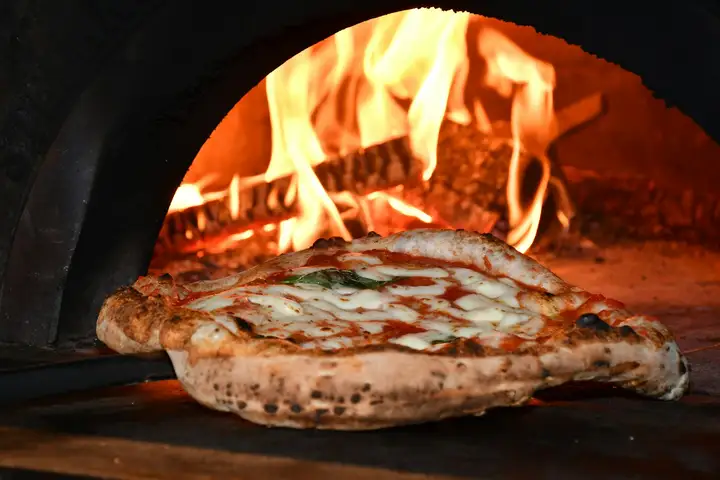
A home pizza oven does one thing your kitchen oven cannot: it gets hot enough. Where a home oven tops out around 550F and bakes a pale crust in ten minutes, a dedicated pizza oven reaches 750 to 950F and turns out a blistered, puffed, leopard-spotted pie in 60 to 120 seconds. That temperature gap is the entire reason these ovens exist, and it is why they are worth it if you make pizza with any regularity.
The category is dominated by a few brands (Ooni, Gozney, Breville) with a confusing number of models between them. This guide cuts through it with one clear pick per use-case, real specs and prices checked directly against each maker’s product page, and honest notes on when a cheaper oven, or no oven at all, is the smarter buy.
Quick answer: Best overall is the Ooni Koda 16 ($649), a 16-inch gas oven that is the easiest path to great pizza. Best for indoors and apartments is the Ooni Volt 2 ($699), a plug-in electric that hits 850F. Best budget is the Ooni Koda 12 ($399). Details, alternatives, and the full comparison table are below.
Who this is for: anyone deciding on their first home pizza oven, or upgrading, who wants a straight recommendation grounded in current specs rather than a wall of affiliate links.
The best home pizza ovens at a glance
Every price, size, and temperature below was checked live against the manufacturer’s own product page in July 2026. Prices move (and Gozney in particular runs frequent sales), so treat these as the current reference, not a permanent quote.
| Oven | Price | Size | Fuel | Max temp | Best for |
|---|---|---|---|---|---|
| Ooni Koda 16 | $649 | 16 in | Gas (propane) | ~950F | Best overall |
| Ooni Volt 2 | $699 | 12 in | Electric (indoor) | 850F | Best indoor |
| Ooni Koda 12 | $399 | 12 in | Gas (propane) | ~950F | Best budget |
| Ooni Karu 2 Pro | $849 | 16 in | Multi-fuel (gas/wood/charcoal) | ~950F | Best for wood-fired flavor |
| Gozney Roccbox | $499.99 | 12 in | Propane (+ wood) | 950F | Best portable |
| Gozney Arc | $799.99 | 14 in | Propane | 950F | Best build quality |
| Ooni Koda 2 Max | $1,299 | 24 in | Gas (propane) | 950F | Best for big batches |
| Breville Pizzaiolo | $999.95 | ~12 in | Electric (indoor) | 750F | Premium indoor |
A note on the roster: Ooni takes five of eight slots, and that reflects the market rather than a thumb on the scale. Ooni makes the widest range at the most accessible prices with the deepest accessory support, so it wins the most use-cases outright. Where Gozney and Breville are the better buy, they are named as such below.
What to look for in a home pizza oven
Five things separate the ovens above, and knowing which ones matter to you narrows the list fast.
- Fuel. Gas is the easiest and most consistent, and the right default for most people. Multi-fuel adds wood and charcoal for flavor at the cost of a learning curve. Electric is the only option indoors. Decide fuel first; it eliminates most of the field.
- Max temperature. The whole point of a dedicated oven is heat your kitchen cannot reach. Anything that tops out below about 700F is not worth it over a pizza steel in your regular oven. The ovens here hit 750 to 950F, which is the range that produces a real 60-to-120-second bake. Our guide to pizza oven temperature by style explains what each style actually needs.
- Cooking surface size. A 12-inch stone makes personal pizzas and demands careful turning because the pie sits near the flame. A 16-inch stone fits a full pie with room to turn it, which is the difference most people feel between frustration and ease. Go 16-inch if you cook for more than one or two.
- Heat retention and build. Heavier, better-insulated ovens (Gozney’s calling card) recover temperature faster between pizzas, which matters when you are cooking a stack for a group. Lighter ovens are cheaper and more portable but lose heat each time you launch.
- Footprint and storage. These ovens live outdoors (except the electrics) and need covered storage. Portables like the Roccbox fold and travel; a 24-inch Koda 2 Max needs a dedicated table and stays put. Measure your space before you fall for the biggest one.
Best overall: Ooni Koda 16
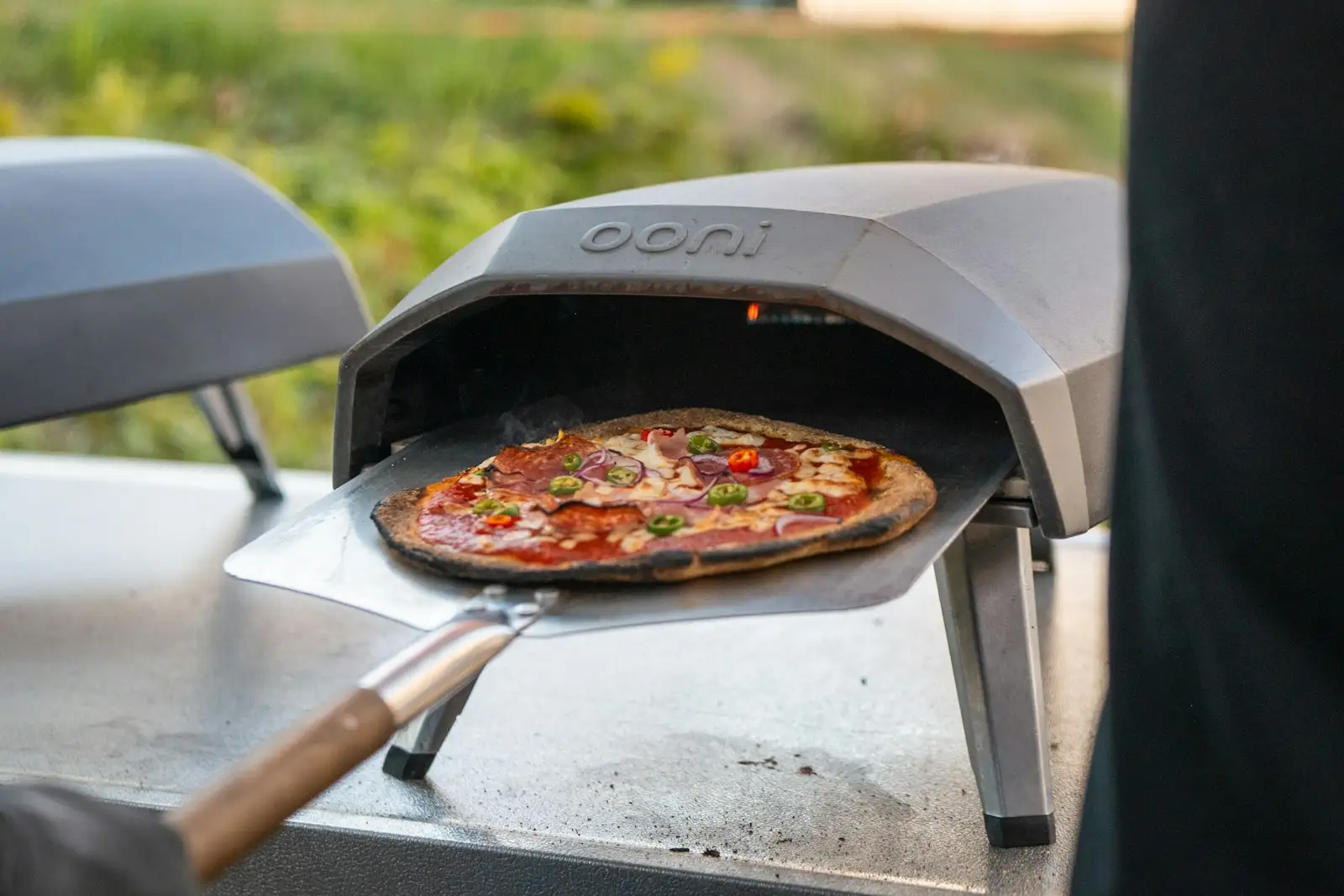
$649 · 16-inch · gas · outdoor. If you want one oven that just works, this is it. The Koda 16 lights with a dial, comes up to temperature in about 15 to 20 minutes, and holds a steady heat with no fire to manage, so your attention goes to stretching and launching. The 16-inch stone fits a full-size pie with room to turn it, which is exactly where smaller 12-inch ovens frustrate people. Gas means no wood-fired flavor, but for the vast majority of home cooks that is a fair trade for consistency, and it is the reason gas ovens are the standard first recommendation. We go deep on it in our full Ooni Koda 16 review. Buy it direct from Ooni.
Best indoor: Ooni Volt 2
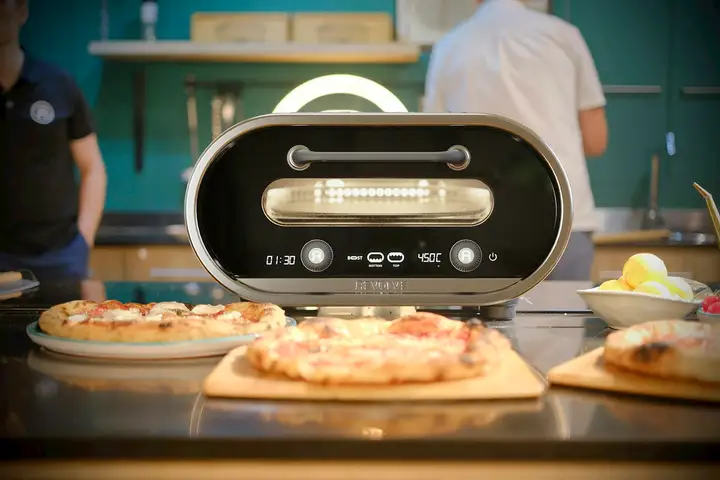
$699 · 12-inch · electric · indoor. This is the only category where a gas oven is not an option: run gas or wood indoors and you are venting combustion gases into your kitchen, which is unsafe. The Volt 2 solves that. It is a plug-in electric countertop oven that reaches 850F on a standard outlet and bakes a real 90-second pizza in an apartment, condo, or any kitchen without outdoor space. It costs more per inch of stone than the outdoor Koda, but there is nothing else at its price that makes true high-heat pizza indoors. We compare it head-to-head against the GreenPan Stanley Tucci and Breville Pizzaiolo in our best electric pizza oven guide. Buy it direct from Ooni.
Best budget: Ooni Koda 12
$399 · 12-inch · gas · outdoor. The Koda 12 is the same idea as the Koda 16, gas, dial-controlled, fast, in a smaller and cheaper package. The one real compromise is the 12-inch cooking surface: you make smaller pizzas and turning them takes more care, because the pie sits closer to the flame. For one or two people, or as a first oven to learn on before deciding whether you want to spend more, it is the best value in the category and a genuine gateway to 950F pizza for under $400. Buy it direct from Ooni.
Best for wood-fired flavor: Ooni Karu 2 Pro
$849 · 16-inch · multi-fuel · outdoor. If the smoky, wood-fired character is the whole point for you, the Karu 2 Pro burns wood and charcoal natively, and takes a gas burner as an add-on so you can switch to dial-controlled gas on a weeknight. That flexibility is its appeal: flavor when you want it, convenience when you do not. It costs more and asks you to learn fire management, so it is an enthusiast’s pick rather than a first oven. Our Ooni Karu 2 Pro review covers the trade-offs, and if wood is non-negotiable, compare it against the field in our best wood fired pizza oven guide. Buy it direct from Ooni.
Best portable: Gozney Roccbox
$499.99 · 12-inch · propane (+ wood) · outdoor. The Roccbox is the one to grab if you want to take the oven to a campsite, a friend’s backyard, or a tailgate. It runs on propane with an optional wood burner, folds its legs flat, and is built heavier and better-insulated than most ovens its size, so it holds heat steadily pizza after pizza. Gozney backs it with a long warranty. It is often discounted below its $499.99 list price, which makes it a strong value when it is on sale. Buy it direct from Gozney.
Best build quality: Gozney Arc
$799.99 · 14-inch · propane · outdoor. The Arc is where Gozney’s heavier-is-better philosophy pays off. A dense two-layer-insulated body and a thick stone floor hold and recover heat more steadily than lighter ovens, which shows up as more consistent bakes when you are cooking for a group. The 14-inch opening splits the difference between the 12-inch portables and the 16-inch Koda. It costs more than the comparable Ooni, and that premium buys build quality and heat retention rather than raw temperature. Buy it direct from Gozney.
Best for big batches: Ooni Koda 2 Max
$1,299 · 24-inch · gas · outdoor. When you are feeding a crowd, the bottleneck is one pizza at a time. The Koda 2 Max is a 24-inch gas oven wide enough to cook two 12-inch pizzas at once, with a temperature range from 210F all the way to 950F, so it doubles as a low-and-slow roaster between pizzas. It is expensive and large, and overkill for a couple, but for regular entertaining it removes the assembly-line wait that every smaller oven imposes. Buy it direct from Ooni.
Premium indoor: Breville Pizzaiolo
$999.95 · countertop · electric · indoor. The Pizzaiolo is the enthusiast’s indoor oven and the main alternative to the Volt 2. It is a domestic countertop unit that reaches 750F and is engineered to replicate a wood-fired bake indoors, cooking a pizza in about two minutes. It costs more than the Volt 2 and tops out at a slightly lower temperature (750F versus the Volt 2’s 850F), so the case for it rests on Breville’s build and controls rather than raw heat. If you want a premium indoor oven and the price is not a dealbreaker, it is worth comparing against the Volt 2. Buy it direct from Breville.
Indoor vs outdoor: decide this first
The single biggest fork in this decision is where the oven will live, because it eliminates most of the list instantly.
If you have no outdoor space, you need electric. Gas and wood ovens are outdoor-only for safety, so an apartment or a kitchen-only setup narrows you to the Volt 2 or the Pizzaiolo. That is a feature, not a limitation; both make excellent pizza.
If you have a patio, balcony, or yard, buy gas or multi-fuel. Outdoor gas ovens are cheaper, hotter, and easier than indoor electrics, and they open up the whole Ooni and Gozney range. Start with gas (Koda 16 or 12) unless wood-fired flavor is a priority, in which case the Karu 2 Pro or a dedicated wood-fired oven is the move.
Everything else, size, portability, batch capacity, is a secondary preference once you have answered indoor versus outdoor.
Do you even need a pizza oven?
Honestly, maybe not yet. A pizza steel in your existing oven, preheated at the maximum your oven hits (usually around 550F), makes a dramatically better crust than a sheet pan and is genuinely enough for New York and Detroit styles, for around $65 to $150 instead of $400 to $1,300 (our best pizza steel picks cover which one to buy). What a steel and a home oven cannot do is reach the 850 to 950F that true Neapolitan pizza needs, and understanding that ceiling is worth reading our guide to pizza oven temperature by style.
The honest path for most people: buy a steel first. If you find yourself making pizza every week and wishing for the 90-second Neapolitan bake, then a dedicated oven is the upgrade that delivers it. If you are already there, skip the steel and buy the oven.
The accessories you actually need
The oven is the big purchase, but two accessories are not optional, and budgeting for them upfront saves a frustrating first night.
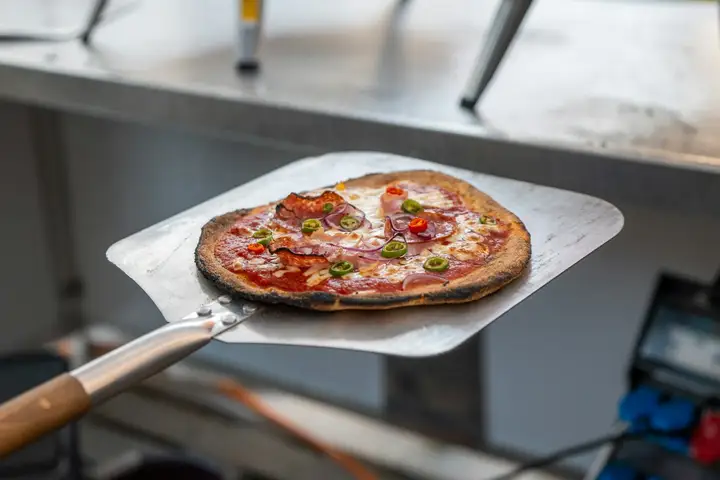
- A pizza peel. You cannot launch or retrieve a pizza at 900F without one. A thin metal peel is best for launching (it slides under the dough cleanly) and a wood or bamboo peel resists sticking while you build the pie; many cooks keep one of each. Most oven makers sell a matched peel, and it is worth having before the oven’s first fire.
- An infrared thermometer. The single most useful $30 you will spend. These ovens do not have an accurate built-in stone-temperature readout, and launching before the floor is hot enough is the most common cause of a pale, sticking first pizza. Point the laser at the stone, wait for it to read your target (around 750F for a Neapolitan bake), then launch. Our pizza oven temperature guide covers the target numbers by style.
- A cover. If the oven stores outdoors, a fitted cover protects the shell and the burner from weather and meaningfully extends its life. Cheap insurance on a several-hundred-dollar oven.
A rough rule: add about $80 to $130 to the oven price for a peel, an infrared thermometer, and a cover. Skipping them does not save money; it just makes the first few pizzas worse.
What to skip
- The cheapest no-name countertop “pizza ovens” on marketplaces. Many top out around 500 to 600F, which is barely hotter than the oven you already own, so you pay for a single-purpose appliance that does not clear the one bar that matters.
- A 12-inch oven if you will regularly cook for four or more. The size feels fine in the store and cramped in practice. If you entertain, the 16-inch Koda or the 24-inch Koda 2 Max saves real time.
- Wood-only as a first oven. Fire management is a skill. Unless the wood ritual is the appeal, gas gets you great pizza on night one; add wood later.
- Running any gas or wood oven indoors or in a garage. It is a carbon-monoxide risk. Indoors means electric, full stop.
- Buying the oven before the accessories that make it usable. A good peel and an infrared thermometer are not optional extras; budget for them.
The verdict
For most people the answer is the Ooni Koda 16 at $649: the easiest route to genuine 950F pizza, in a size that fits a real pie, from the brand with the best support and accessories. If you are indoors, the Ooni Volt 2 is the pick with almost no competition at its price. If you are watching the budget, the Ooni Koda 12 gets you to the same temperature for $399. And if you are not sure you are ready to commit, put a pizza steel in the oven you already own and see how often you reach for it, because the best home pizza oven is the one that matches how you actually cook.
FAQ
Is a home pizza oven worth it?
If you make pizza more than a handful of times a year, yes. A dedicated pizza oven reaches 750 to 950F, roughly double a home kitchen oven's max, which is what produces a leopard-spotted, puffed crust in 60 to 120 seconds instead of a pale one in 10 minutes. Below about 10 pizzas a year the math favors takeout; above roughly 20 a year, a $400 to $700 oven pays for itself against ordering out, and the results are genuinely better than most delivery.
What is the best pizza oven for a beginner?
A gas oven, because gas removes the hardest variable. The Ooni Koda 16 ($649) and Ooni Koda 12 ($399) light with a dial and hold a steady temperature, so you focus on stretching and launching rather than managing a fire. Multi-fuel and wood ovens give more flavor but add a learning curve. For a first oven that builds confidence fast, buy gas and add wood later if you want it.
Can you use a pizza oven indoors?
Only an electric one. Gas and wood ovens produce combustion gases and must be used outdoors with clearance. For indoor use you need a plug-in electric oven: the Ooni Volt 2 ($699) reaches 850F on a standard outlet, and the Breville Pizzaiolo ($999.95) hits 750F. Both are countertop units safe for a kitchen or apartment. Never run a gas or wood pizza oven indoors or in an enclosed space.
Ooni or Gozney: which is better?
Both are excellent; they weight different things. Ooni has the wider range, better availability, lower entry prices, and the largest accessory ecosystem, which is why it is the default recommendation for most buyers. Gozney builds heavier, better-insulated ovens that hold heat more steadily pizza-to-pizza, and many cooks prefer the Roccbox and Arc for build quality. For value and selection, Ooni. For a premium single oven you will keep for years, Gozney is worth the look.
Do you need a pizza oven, or is a pizza steel enough?
A pizza steel in your regular oven gets you most of the way for a fraction of the price. A steel preheated at your oven's max (typically 550F) makes a far better crust than a pan, and for New York and Detroit styles it is genuinely enough. What it cannot do is hit the 850 to 950F that true Neapolitan pizza needs, which is the one thing a dedicated pizza oven adds. Start with a steel; buy an oven when you want the 90-second Neapolitan bake.