A pizza steel is the single cheapest upgrade that makes a home oven cook like a pizzeria. Swap the rack for a preheated slab of solid steel and the same 550F oven that used to turn out a pale, floppy crust now browns and blisters the bottom in four to six minutes. For roughly $65 to $150, it is the highest-impact piece of pizza gear you can buy short of a dedicated oven.
The catch is that “pizza steel” covers everything from a $65 Amazon slab to a $150 half-inch plate, and the product pages are more interested in selling you one than telling you which to get. This guide fixes that with three clear picks, a straight answer on how thick to buy, and specs and prices checked directly against each seller’s page.
Quick answer: For most people the Baking Steel Original ($129, quarter-inch) is the pick, the category standard from the company that invented it. On a budget, the Primica Pizza Steel ($65) does the same job for less. If you want to choose your thickness, NerdChef Steel Stone sells the same plate in quarter-, three-eighths-, and half-inch versions ($109.95 to $149.95). Details and the full comparison are below.
Who this is for: anyone with a home oven that tops out around 500 to 550F who wants a genuinely better crust, and is deciding which steel, and how thick, to buy.
The best pizza steels at a glance
Every price, size, and thickness below was checked live against the seller’s own product page in July 2026. Amazon prices in particular move, so treat those as current-at-writing and let the link show today’s number.
| Steel | Price | Size | Thickness | Made in | Best for |
|---|---|---|---|---|---|
| Baking Steel Original | $129 | 16 x 14 in | 1/4 in | USA | Best overall |
| NerdChef Steel Stone | $109.95 to $149.95 | 14.5 x 16 in | 1/4 / 3/8 / 1/2 in | USA | Choosing your thickness |
| Primica Pizza Steel XL | $64.97 | 16 x 13.4 in | ~1/4 in | - | Best budget |
Three picks is deliberate. A pizza steel is a simple object; once you have chosen a thickness and a size that fits your oven, the differences between reputable slabs are small. These three cover the decision: the trusted standard, the flexible thickness ladder, and the value option.
Do pizza steels actually work?
Yes, and it is not a subtle upgrade. The reason a home oven makes disappointing pizza is not the air temperature, it is that a wire rack or a thin pan cannot deliver heat into the bottom of the dough fast enough. The crust sets pale and soft before it can brown.
A pizza steel fixes exactly that. Steel conducts heat far faster than a ceramic stone, so a preheated slab dumps energy into the raw dough the instant the pizza lands, browning and crisping the bottom in four to six minutes instead of seven to ten. That speed is what produces the puffed, leopard-spotted crust that a bare oven never manages. If you want the underlying heat-transfer detail, our pizza oven temperature guide explains why the surface you bake on matters more than the number on the dial.
How thick should a pizza steel be?
This is the real decision, and it comes down to a trade-off between thermal mass and weight (and price). More steel holds more heat and recovers faster between pizzas; it also costs more, weighs more, and takes longer to preheat. NerdChef makes the trade-off concrete because it sells the same plate in three thicknesses:
- 1/4 inch (the standard, NerdChef $109.95). The floor, and the right choice for most people. Around 15 pounds, preheats in roughly 45 minutes at 550F, cooks a 12-inch pizza in four to six minutes. Enough thermal mass to deliver the whole benefit. Below 1/4 inch you are buying a glorified baking sheet with too little mass to matter, which is why our pizza stone vs steel guide lists sub-quarter-inch steels as a thing to skip.
- 3/8 inch (NerdChef $129.95). The enthusiast’s sweet spot. Noticeably more heat retention for back-to-back pizzas at a modest price and weight bump. A good pick if you make several pizzas in a session.
- 1/2 inch (NerdChef $149.95). Maximum thermal mass, and close to 30 pounds. Recovers fastest of all, but it is heavy to lift in and out and slow to preheat, and most home cooks will not notice the difference over a 3/8-inch plate. Buy it only if you regularly cook a stack of pizzas and your rack can carry the weight.
The short version: get 1/4 inch unless you frequently cook for a crowd, in which case step up to 3/8 inch. Half-inch is for enthusiasts who want the last few percent and do not mind the heft.
What size pizza steel do you need?
Size matters as much as thickness, and it is the spec people most often get wrong. Two rules:
- It has to fit your oven with clearance. Measure your oven rack, then subtract about an inch on each side so hot air can circulate around the steel. A slab jammed edge to edge blocks airflow, heats unevenly, and is dangerous to slide out. Most home ovens take a 14-by-16-inch steel comfortably, which is why that is the standard size on all three picks here.
- Bigger is better if it fits. A 16-inch dimension lets you launch a full 12- to 14-inch pizza with room to spare, and the extra surface doubles as a landing zone for bread and roasting. Go as large as your oven allows, up to that one-inch clearance.
If you have a compact or apartment oven, measure before you buy; a steel that does not fit is an expensive mistake, and the smaller Primica (13.4 inches deep) can be the better fit for a tight oven.
Best overall: Baking Steel Original
$129 - 16 x 14 in - 1/4 in - made in USA. This is the product that created the category (Baking Steel introduced it in 2012), and it is still the default recommendation. It is a properly flat, food-safe quarter-inch plate at the standard size that fits most ovens with room to launch, backed by a company that only makes cooking steels. There are cheaper slabs and there are thicker ones, but if you want to buy once and not think about it, the Baking Steel Original is the safe, right answer, and buying brand-direct supports the people who invented the thing.
Best if you want to choose your thickness: NerdChef Steel Stone
$109.95 to $149.95 - 14.5 x 16 in - 1/4, 3/8, or 1/2 in - made in USA. NerdChef’s advantage is that it sells the identical USA-made plate in all three thicknesses, so you pick the thermal mass you actually want rather than taking whatever a brand offers. The quarter-inch NerdChef Steel Stone undercuts the Baking Steel Original at $109.95, and the three-eighths-inch version at $129.95 is the enthusiast sweet spot for back-to-back baking. If the thickness decision is the one you care about most, this is the line that lets you make it directly.
Best budget: Primica Pizza Steel
$64.97 - 16 x 13.4 in - ~1/4 in. If the Baking Steel’s price is the sticking point, the Primica Pizza Steel XL does the same job for about half the money. It is a generic imported steel rather than a heritage brand, the size is a touch smaller at 16 by 13.4 inches, and you are trading the brand-direct support and lifetime reputation for a lower price. But a slab of quarter-inch steel is a slab of quarter-inch steel; physically it browns a crust the same way. For a first steel, or if you are not sure you will use it enough to justify $129, it is the sensible value pick. (Amazon pricing moves, so confirm the current number at the link.)
Pizza steel vs pizza stone: which should you buy?
If you are choosing between a steel and a stone in the first place, the short answer is steel for most people who care about crust. Steel conducts heat far faster, so it cooks the bottom harder and quicker at the same oven setting, and it will never crack. A stone wins only in specific cases: a sub-$50 budget, mostly occasional or frozen pizzas, or if you also bake artisan bread loaves, where a stone’s gentler heat gives oven spring without scorching the base.
That is the summary; the full side-by-side, including where a stone genuinely beats a steel, is in our dedicated pizza stone vs steel comparison. Whichever you land on, the launch-and-bake workflow is the same, and our guide on how to use a pizza stone applies to a steel too.
Do you need more than a steel?
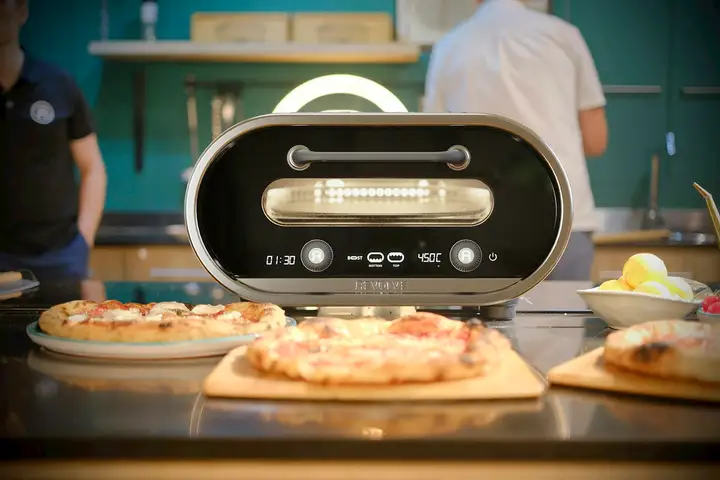
A steel takes a home oven about as far as it can go, and for New York and Detroit styles that is genuinely enough. What a steel and a 550F oven cannot do is reach the 850 to 950F that true Neapolitan pizza needs, because the ceiling is the oven, not the surface. If you find yourself wanting the 90-second Neapolitan bake, that is the point where a dedicated oven earns its price. Indoors, that means a plug-in electric pizza oven that reaches 850F on a standard outlet; for a patio or yard, our best home pizza oven guide covers the picks by use-case. For most people, though, a steel is the smart place to stop.
How to use and care for a pizza steel
A steel is nearly maintenance-free, but two habits make or break the results.
Preheat longer than you think. This is the number-one mistake. A steel is a heat battery, and an empty battery does nothing: preheated ten minutes it is hot on top and cold in the middle and gives you a pale, limp crust. Set it on an upper-middle rack, run the oven at its maximum (usually 500 to 550F), and give it a full 45 to 60 minutes before the first pizza. The whole launch-and-bake workflow is the same as a stone, covered in our how to use a pizza stone guide, and the target surface temperatures by style are in our pizza oven temperature guide.
Keep it dry and lightly oiled. Carbon steel rusts if it sits wet. Let it cool, scrape off any burnt cheese with a metal spatula, wipe it with a barely damp cloth (no soap), dry it completely, and rub on a thin film of neutral oil. Do that and it lasts decades. You can leave the steel in your oven full-time; it steadies the temperature for everything else you bake, at the cost of some extra preheat, just make sure your rack can carry 15 to 30 pounds.
What to skip
- Any steel thinner than 1/4 inch. It does not hold enough heat to justify itself over a stone. A quarter inch is the floor.
- Overpaying for a “pizza-branded” thin plate. A plain quarter-inch carbon steel slab of the right size performs like a premium one. Pay for thickness and flatness, not marketing.
- A steel too big for your oven. Measure your rack and leave clearance for air to circulate; a slab jammed edge-to-edge bakes unevenly and is a burn hazard to pull.
- Soapstone “pizza stones” and perforated pizza pans. Different categories marketed alongside steels; neither delivers the fast bottom-browning a steel does.
- Elaborate seasoning routines. A wipe of oil and keeping it dry is all a steel needs. It does not require cast-iron-style seasoning rituals to work.
The verdict
A pizza steel is the best value in home pizza gear, full stop. For most people the Baking Steel Original at $129 is the buy: the trusted quarter-inch standard from the company that invented the category. If money is tight, the Primica does the same job for about $65. And if you want to dial in the thermal mass yourself, NerdChef sells the plate in every thickness. Get a quarter inch unless you cook for a crowd, preheat it a full 45 minutes, and your home oven will make a better crust than most delivery ever will.
FAQ
Do pizza steels really work?
Yes, and the difference is dramatic. A pizza steel is a slab of solid carbon steel that conducts heat into the dough far faster than a ceramic stone or a sheet pan. Preheated at your oven's maximum, it browns and crisps the bottom of the crust in 4 to 6 minutes instead of 7 to 10, producing the leopard-spotted, puffed crust a bare oven rack never can. The physics is simple: steel is a far better heat conductor than stone, so it dumps energy into the raw dough on contact.
Is a pizza steel better than a stone?
For crust, yes, for most home cooks. Steel conducts heat much faster than stone, so it cooks the bottom harder and quicker at the same oven temperature, and it is essentially indestructible where a stone can crack. A stone is the better buy only if you are spending under $50, bake mostly occasional or frozen pizzas, or also bake artisan bread, where the stone's gentler heat helps oven spring without scorching. Our full pizza stone vs steel comparison covers the decision in depth.
Why is pizza steel so expensive?
Because it is a large, heavy piece of machined solid steel. A 1/4-inch home steel weighs around 15 pounds and a 1/2-inch closer to 30, and that raw material plus flattening, deburring, and seasoning is most of the cost. The category-defining Baking Steel Original is $129; you can pay less for a generic Amazon slab like the Primica ($65) and more for a thicker or premium plate. You are paying for thermal mass, and within reason more mass is what you want.
What can I use if I don't have a pizza steel?
A pizza stone is the closest substitute and cooks a good pizza, just more slowly. A heavy cast iron skillet or a cast iron griddle, preheated, works surprisingly well for a single pizza because it is also solid, conductive metal. An inverted heavy sheet pan is a distant last resort. What does not work is baking on a cold rack or a thin pan; the bottom stays pale and soft because there is no preheated mass to cook it.
Can I just leave my pizza steel in the oven?
Yes, and many people do. Carbon steel is happy living on your bottom or middle rack, and leaving it in means it doubles as a heat reservoir that steadies your oven's temperature for everything you bake. The two cautions: it adds preheat time to normal baking because the oven has to heat the steel too, and it is heavy, so make sure your rack and oven can carry 15 to 30 pounds. Wipe it and keep it lightly oiled to prevent rust and it will last for decades.