An electric pizza oven does the one thing your kitchen oven cannot: it gets hot enough. A standard home oven caps at 500 to 550F, which bakes a pale, bready crust in ten minutes. A plug-in electric pizza oven reaches 750 to 850F and turns out a blistered, puffed pie in 90 seconds to three minutes, all from a countertop, indoors, on a normal household outlet. That heat gap is the entire reason the category exists, and it is why an electric oven, not a cheap countertop toaster with a pizza setting, is the right buy if you cook without an outdoor space.
This guide names three picks by price tier, every one with a live-checked price and an independently measured max temperature, plus an honest list of what to skip (including one popular oven the manufacturer just discontinued). All prices and specs were checked directly against each maker’s product page in July 2026.
Quick answer: Best overall is the Ooni Volt 2 ($699), which reaches 850F on a standard outlet. Best value is the GreenPan Stanley Tucci ($299.99), the strongest indoor pizza oven under $300. Best premium is the Breville Pizzaiolo ($999.95). The full comparison table and tested numbers are below.
Who this is for: anyone in an apartment, condo, or kitchen without a yard who wants real high-heat pizza indoors, and anyone weighing an indoor electric oven against an outdoor gas one or a pizza steel.
The best electric pizza ovens at a glance
Every price, size, and maximum temperature below was checked live against the manufacturer’s own product page in July 2026. The “tested temp” column is the figure independent reviewers actually measured, which is the number that matters more than the box claim. Prices move, so treat these as the current reference rather than a permanent quote.
| Oven | Price | Max pizza | Max temp (maker) | Tested temp | Best for |
|---|---|---|---|---|---|
| Ooni Volt 2 | $699 | 12 in | 850F | 810F (Serious Eats) | Best overall |
| GreenPan Stanley Tucci | $299.99 | 13 in | 850F | 750F (Serious Eats) | Best value |
| Breville Pizzaiolo | $999.95 | ~12 in | 750F | 797F (Serious Eats) | Best premium |
Two things stand out in that table. First, the tested temperatures cluster tightly (750 to 810F) even though the prices span more than $700, so you are paying for build quality, controls, and consistency at the top end, not dramatically more heat. Second, every one of these clears 750F, which is the floor for a genuine high-heat bake. That is the bar the cheap countertop units cannot reach.
Why electric, and why your kitchen oven falls short
The whole case for a dedicated electric oven is temperature. Great pizza, especially anything in the Neapolitan and New York range, depends on heat your kitchen simply cannot produce.
A home oven’s self-clean cycle aside, the cooking maximum on nearly every domestic range is 500 to 550F. At that temperature the crust dries and colors before it can puff, so you get a stiff, pale, cracker-adjacent base instead of an airy, charred one. Testers at palapizza note that standard kitchen ovens “typically max out at around 500F to 550F,” while the pizza a Neapolitan-style pie wants needs a cooking temperature above 800F. Our own breakdown of pizza oven temperature by style covers exactly what each style needs and why.
An electric pizza oven closes that gap with a dense stone or steel floor and elements positioned close to the pizza, top and bottom. Because there is no combustion, it is safe to run indoors, which gas and wood ovens are not. The trade is that a standard 120V outlet limits how hot a plug-in oven can get: the best of them top out around 850F, which is plenty for New York, pan, and most Neapolitan pizza, but a step below the 900F-plus you get from outdoor wood or gas. If that ceiling matters to you, our best home pizza oven guide covers the outdoor options.
What to look for in an electric pizza oven
Five things separate a real high-heat electric oven from a countertop gadget. Knowing which matter to you narrows the field fast.
- Peak temperature, tested not claimed. This is the number that decides everything. Ignore the figure on the box and look at what reviewers actually measured, because they do not always match: the Breville Pizzaiolo beat its 750F rating at 797F in testing, while cheap units often fall short of theirs. Anything that cannot clear about 700F is not worth buying over a pizza steel in your existing oven.
- Standard outlet or 240V. Nearly every countertop pizza oven runs on an ordinary 120V household plug, which is convenient but caps peak heat around 850F. The enthusiast ovens that reach 900F-plus indoors need a 240V circuit, the kind an electric dryer uses, which means either the right outlet or an electrician. Decide up front whether you need that ceiling; for most people, 850F on a standard plug is plenty.
- Multiple heating elements. The best indoor pizza ovens place elements above and below the stone, and often a third at the rear, so you can brown the top and crisp the bottom independently. Single-element countertop ovens cook unevenly and cannot char a top the way a real pizza needs. Dual or triple elements are the dividing line between a proper oven and a novelty.
- Stone size and material. A dense cordierite or steel-backed stone stores and releases the heat that gives a crust its spring; a thin ceramic disc does not. Size matters too: a 12 to 13-inch surface fits a personal-to-medium pie, and going smaller means fussier launching because the pizza sits nearer the elements.
- Indoor footprint and clearance. A countertop pizza oven vents real heat from the back and top, so it needs room from cabinets and the wall, and it takes up meaningful counter space (roughly the footprint of a large microwave). Measure before you buy, especially in a small kitchen where an indoor electric pizza oven has to share the counter.
Best overall: Ooni Volt 2
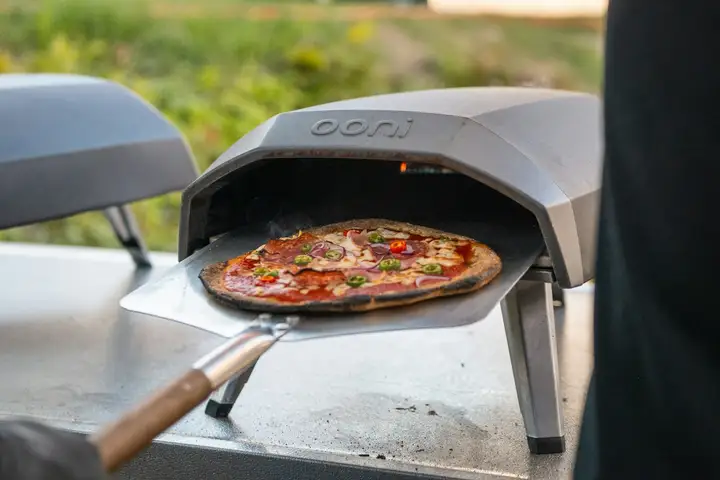
$699 - 12-inch - electric - indoor and outdoor. The Volt 2 is the default recommendation for an indoor pizza oven, and it earns it. It reaches a manufacturer-rated 850F on a standard household outlet, with no propane tank, no fire to manage, and no venting beyond ordinary counter clearance. In Serious Eats’ testing it hit 810F in 21 minutes and baked pizzas in 120 seconds; the reviewers at palapizza measured it exceeding its own spec, reading 885F on their gauge. Either way, it is the rare countertop oven that delivers a true 90-second bake in an apartment kitchen.
What makes it the best overall is not just the peak temperature but the balance: dual heating elements you can bias toward the top or bottom, a genuinely usable temperature dial, and a 12-inch stone that fits a personal-to-medium pie. Consumer Reports, which baked 14 pizzas across the category, framed the central question as whether you need to spend $900-plus on the Ooni Volt, and for most home cooks the answer is that you do not need to spend more than the Volt 2 costs. It is the pick with almost no real competition at its price. Buy it direct from Ooni.
Best value: GreenPan Stanley Tucci
$299.99 - up to 13-inch - electric - indoor and outdoor. This is the one to buy if the Volt 2’s price is more than you want to spend on a first oven. The Stanley Tucci is an electric oven (no gas, so it is safe indoors) that GreenPan rates up to 850F and sizes for up to a 13-inch pizza, which is actually larger than the Volt 2’s surface. Serious Eats tested it to 750F in 28 minutes with sub-three-minute bakes and named it their pick for beginners, praising how approachable the controls are.
At $299.99 it is the best value in a real indoor pizza oven, and it earns extra points for doubling as an outdoor unit when you want it on the patio. It preheats more slowly and tops out lower in practice than the Volt 2, so it is a notch behind on outright performance, but for someone making the jump from a kitchen oven it is a dramatic upgrade for the money. Buy it direct from GreenPan.
Best premium: Breville Pizzaiolo
$999.95 - ~12-inch - electric - indoor. The Pizzaiolo is the enthusiast’s indoor oven, engineered to replicate a wood-fired bake on a countertop. It uses three heating elements (deck, top, and a rear element for air) to build the layered heat a brick oven produces, and it is refined enough that Wirecutter, after firing 100 pizzas across the category, called it “the Ferrari” of pizza ovens. Breville rates it to 750F, but in Serious Eats’ testing it reached 797F, beating its own advertised maximum, and cooked a pizza in just over two minutes.
The case for spending a thousand dollars is not raw heat: on tested numbers the $699 Volt 2 runs hotter. It is control and repeatability. The Pizzaiolo has preset modes for different styles and holds heat with a consistency the cheaper ovens do not match, which is what a serious home pizzaiolo is paying for. If price is not the deciding factor and you want the most polished indoor bake available, it is the oven. If you want the best result per dollar, the Volt 2 is still the smarter buy. Buy it direct from Breville.
The 240V exception: when you want true Neapolitan indoors
There is one category above these three: enthusiast ovens that run on a 240V circuit rather than a standard 120V outlet. The Effeuno P134-HA is the reference here. Palapizza measured it reaching temperatures above 1,000F, comfortably into the range for a 60-second Neapolitan bake, because a 240V, roughly 3,200W supply gives it far more power than any standard-outlet oven can draw.
The catch is that 240V requirement. You either have an appropriate outlet (the kind an electric dryer or range uses) or you pay an electrician to install one, and the ovens themselves cost well north of the Volt 2. For the small number of home cooks who want authentic Neapolitan pizza indoors and are willing to deal with the wiring, it is the path. For everyone else, a standard-outlet oven that tops out around 850F is the sensible ceiling, and the outdoor gas ovens in our best home pizza oven guide reach 900F-plus without any electrical work.
What to skip
- The Cuisinart CPZ-120, now discontinued. Several roundups (including Serious Eats, as of their April 2026 update) still list the CPZ-120 as the best budget pick. Cuisinart has discontinued it: the product page now resolves to a URL that literally reads “discontinued-indoor-pizza-oven.” You may still find old stock at inflated prices, but there is no reason to chase a dead model when the GreenPan Stanley Tucci is available new at $299.99 and tests better.
- Sub-$150 no-name countertop “pizza ovens.” Many top out around 500 to 600F, barely hotter than the oven you already own. You pay for a single-purpose appliance that does not clear the one bar that matters. If your budget is under $200, put the money toward a pizza steel for your existing oven instead.
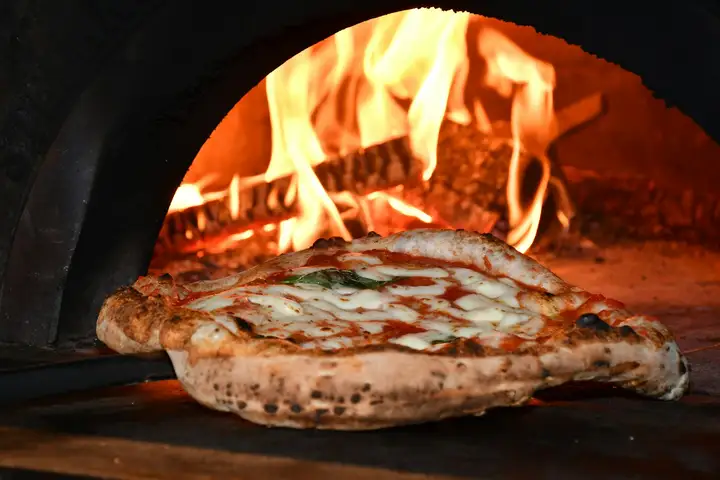
- Expecting a true wood-fired char from any standard-outlet oven. Even the best plug-in electrics stop around 850F. That makes superb New York, pan, and everyday Neapolitan pizza, but it is not the 900F-plus leopard-spotting of a live-fire oven. Match your expectations to the temperature, and read our pizza oven temperature guide for what each style actually needs.
- Buying the oven before an infrared thermometer. These ovens do not have an accurate built-in stone readout, and launching before the floor is hot enough is the most common cause of a pale, sticking first pizza. The $30 thermometer is not optional.
Electric oven, or just a pizza steel?
Before you spend $300 to $1,000, it is worth asking whether you need a dedicated oven at all. A pizza steel in your existing kitchen oven, preheated at the maximum your oven hits (usually around 550F), makes a dramatically better crust than a sheet pan for around $65 to $150. For New York and Detroit styles it is genuinely enough, and our pizza stone versus steel breakdown explains why steel outperforms stone in a home oven.
What a steel cannot do is beat your oven’s 550F ceiling. It stores and transfers heat better than a stone, but it cannot make your oven hotter, so it will never deliver the 90-second, high-char bake that a 750F-plus electric oven does. The honest path for many people: start with a steel, and if you find yourself making pizza every week and wanting the two-minute Neapolitan bake, upgrade to an electric oven then. If you already know that is what you want, skip the steel and buy the oven.
The verdict
For most people buying an indoor pizza oven, the answer is the Ooni Volt 2 at $699: it reaches 850F on a standard outlet, bakes a real 90-second pizza, and independent testers rate it the most well-rounded oven in the category. If that is more than you want to spend, the GreenPan Stanley Tucci at $299.99 is the best value under $300 and works indoors or out. If you want the most refined bake and price is not the constraint, the Breville Pizzaiolo at $999.95 is the premium pick. Whatever you choose, buy an infrared thermometer with it, give it room to vent, and match your expectations to the temperature: an electric pizza oven will not quite reach live-fire heat, but it will leave your kitchen oven far behind.
FAQ
Are electric pizza ovens any good?
The good ones are excellent, and the test data backs it up. A standard kitchen oven tops out around 500 to 550F; a dedicated electric pizza oven reaches far higher, which is the entire point. In Serious Eats' testing the Ooni Volt 2 hit 810F in 21 minutes and baked pizzas in 120 seconds, and the Breville Pizzaiolo reached 797F, higher than its own advertised maximum. That extra 250 to 350F is the difference between a pale ten-minute crust and a blistered two-minute one. Where electric ovens fall short is the very top of the Neapolitan range: most plug-in units on a standard outlet stop around 850F, so if you want a true 900F-plus wood-oven char you are looking at outdoor gas or a 240V unit.
What is the best indoor electric pizza oven?
For most people it is the Ooni Volt 2 ($699). It reaches 850F on a standard household outlet, bakes a real 90-second pizza, and independent testers (Serious Eats, palapizza) rate it the most well-rounded indoor oven available. If you want to spend less, the GreenPan Stanley Tucci ($299.99) is the best value under $300 and works indoors and outdoors. If money is no object and you want the most refined bake, the Breville Pizzaiolo ($999.95) is the premium pick. All three are covered in detail below.
How long do you bake a pizza in an electric pizza oven?
Far less time than in a kitchen oven, because these run so much hotter. At full temperature a high-heat electric oven bakes a thin pizza in 90 seconds to about three minutes, versus eight to twelve minutes in a 500F home oven. Serious Eats measured 120-second bakes in the Ooni Volt 2 and just over two minutes in the Breville Pizzaiolo. Preheating is the slower part: budget roughly 20 to 30 minutes for the stone to reach launch temperature, and use an infrared thermometer rather than trusting the dial.
Can you use an electric pizza oven indoors?
Yes, and that is the whole reason electric ovens exist. Gas and wood pizza ovens produce combustion gases and must be used outdoors with clearance; running one indoors is a carbon-monoxide risk. An electric oven has no combustion, so a plug-in countertop unit like the Ooni Volt 2 or Breville Pizzaiolo is safe on a kitchen counter in an apartment or condo. Give it clearance from cabinets and walls (these ovens vent real heat from the back and top), but there is no venting requirement beyond that.
What is the typical lifespan of an electric pizza oven?
Treat a quality electric pizza oven as a multi-year appliance rather than a seasonal gadget. The heating elements and controls are the parts that wear, and reputable brands (Ooni, Breville) back them with one to three year warranties and sell replacement stones. Real-world life depends on use: wipe the interior after it cools, avoid thermal-shocking a hot stone with cold dough or water, and store it dry. The cheap sub-$150 countertop units are the ones that fail early, which is one more reason to buy a tested oven rather than the cheapest listing.